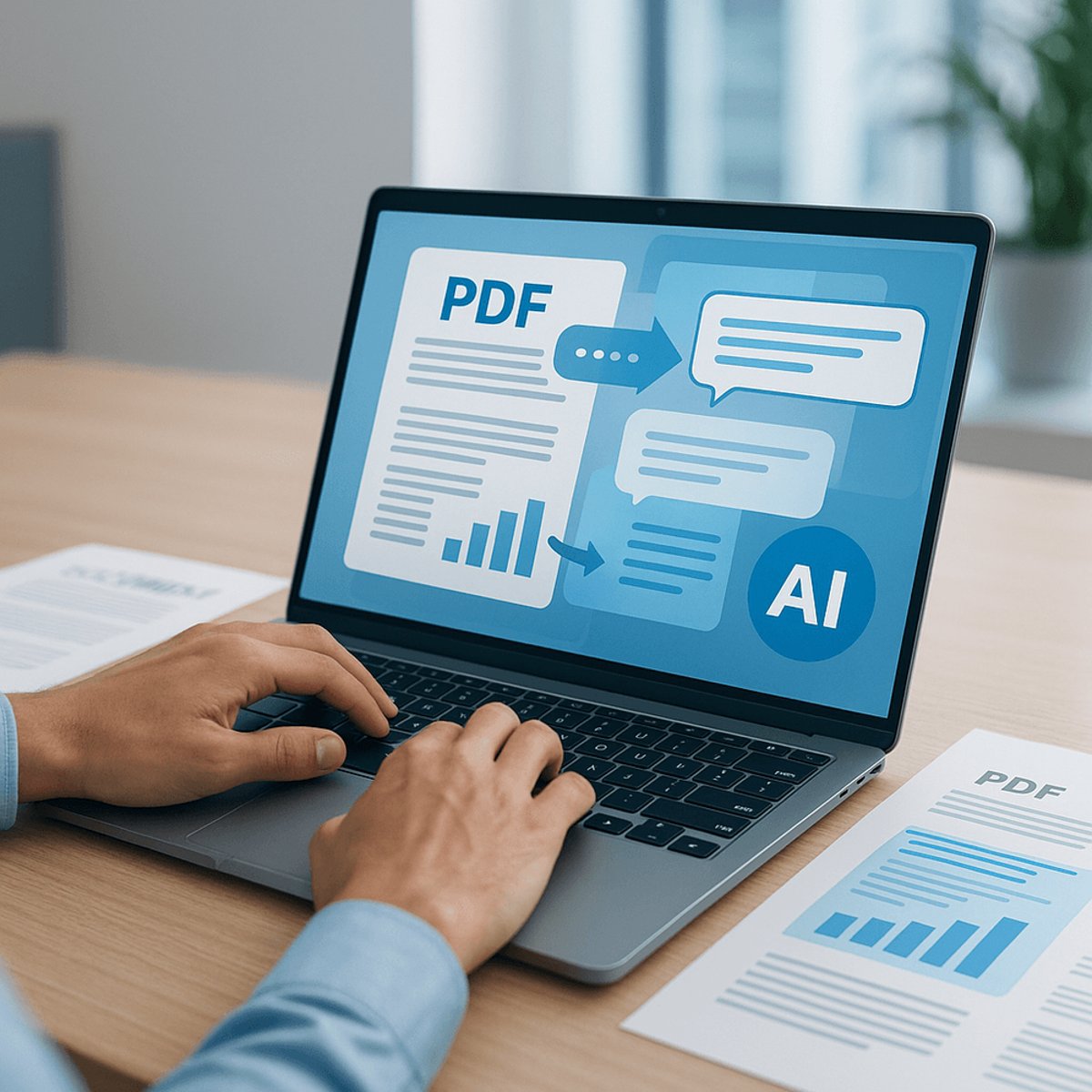
Adobe just declared the death of chatbot-free software. The company's launch of Acrobat Studio embeds generative AI directly into PDFs, transforming documents users have relied on for over three decades. This isn't just another feature update—it's Adobe betting that AI-powered interaction will become as fundamental to document management as the PDF format itself.
Adobe just fired the final shot in the war against AI-free software. The company's launch of Acrobat Studio today doesn't just add another chatbot to the pile—it fundamentally rewrites the relationship between humans and the documents they've trusted for over three decades.
The timing couldn't be more symbolic. Adobe created the PDF in 1993 as a bridge between digital and physical documents, giving everyone from government agencies to medical offices a reliable way to share information that looked and felt like paper. Now, 32 years later, the company is embedding generative AI so deeply into the experience that interacting with a PDF without a chatbot assistant becomes virtually impossible.
"We're reintroducing the brand," Adobe VP of Product Marketing Michi Alexander told WIRED. "We've been around for 32 years now, but this is the biggest inflection point for us since launch." The admission reveals just how dramatically Adobe believes AI will reshape document workflows.
Acrobat Studio builds on last year's AI assistant launch with "PDF spaces" that let users upload multiple documents and customize how the chatbot responds to queries. But the real story isn't Adobe's specific features—it's what this release represents for the broader software landscape. As Matthew Kirschenbaum, University of Maryland English professor and author of "Track Changes," explains to WIRED: "There is now AI in these very specifically human-centered document forms. And to me, that's notable."
The transformation mirrors what's already happened across the tech industry. Google Docs now greets users with AI writing suggestions, Instagram's search bar prominently features AI-powered discovery, and even Apple's iPhone settings menus showcase AI capabilities. The Pew Research Center found that US adults express more concern than excitement about AI's impact on their lives and jobs, yet the technology continues its relentless march into every corner of software.
Adobe's move carries particular weight because of the PDF's unique position in digital culture. Unlike native digital formats like emails or text messages, PDFs were designed to preserve the "cultural authority of print," as Kirschenbaum notes. Documents that emerged from "human contexts, professions, motivations" now get filtered through synthetic intelligence that can be unreliable and error-prone.
The company has form for driving industry-wide changes. When Adobe added transparency support to PDFs years ago, competitors like Apple and Microsoft scrambled to match the capability. Duff Johnson, CEO of the vendor-neutral PDF Association, recalls how "the industry had to race a lot as soon as Adobe introduced this." This AI integration could trigger a similar competitive response.
What makes this different from previous PDF evolution is the fundamental shift from human-driven document interaction to AI-mediated experiences. Users who once read, annotated, and shared documents directly now increasingly rely on chatbots to summarize, analyze, and even generate responses to their content. It's a transformation as significant as the decline of handwriting in the AI age.
"We were the ones that created the PDF," Alexander emphasized to WIRED. "And we really see this as our opportunity to redefine what a PDF is." Whether Acrobat Studio becomes as transformative as transparency support or gets lost among countless PDF features remains to be seen. But the release marks a definitive milestone: 2025 as the year AI officially consumed software.
For users already experiencing AI fatigue from the constant flood of chatbot integrations, Adobe's move represents both an inevitability and a challenge. The era of using essential software without encountering multiple generative AI tools has officially ended. The question now isn't whether AI will dominate our digital tools, but how long this particular AI-everything moment will last.
Adobe's Acrobat Studio launch officially closes the book on AI-free software. While power users may embrace these capabilities, the broader implications extend far beyond document management. This represents the completion of a fundamental shift where artificial intelligence becomes so embedded in essential tools that avoiding it becomes practically impossible. As Adobe rewrites three decades of PDF interaction patterns, we're witnessing the final transformation of software from human-centered to AI-mediated experiences. The question isn't whether other companies will follow—it's how users will adapt to a world where every digital interaction expects an AI intermediary.