While everyone's watching the AI arms race between tech titans, Wall Street analysts are quietly identifying a different set of winners. The real money isn't just in the headline-grabbing deals from Microsoft or Google - it's in the companies building the infrastructure that makes AI possible. According to new CNBC analysis, the AI supply chain is creating opportunities that most investors are completely missing.
The AI gold rush is creating winners in unexpected places. While Microsoft, Google, and OpenAI dominate headlines with their billion-dollar AI investments, analysts are spotting massive opportunities in the companies that actually make these systems work.
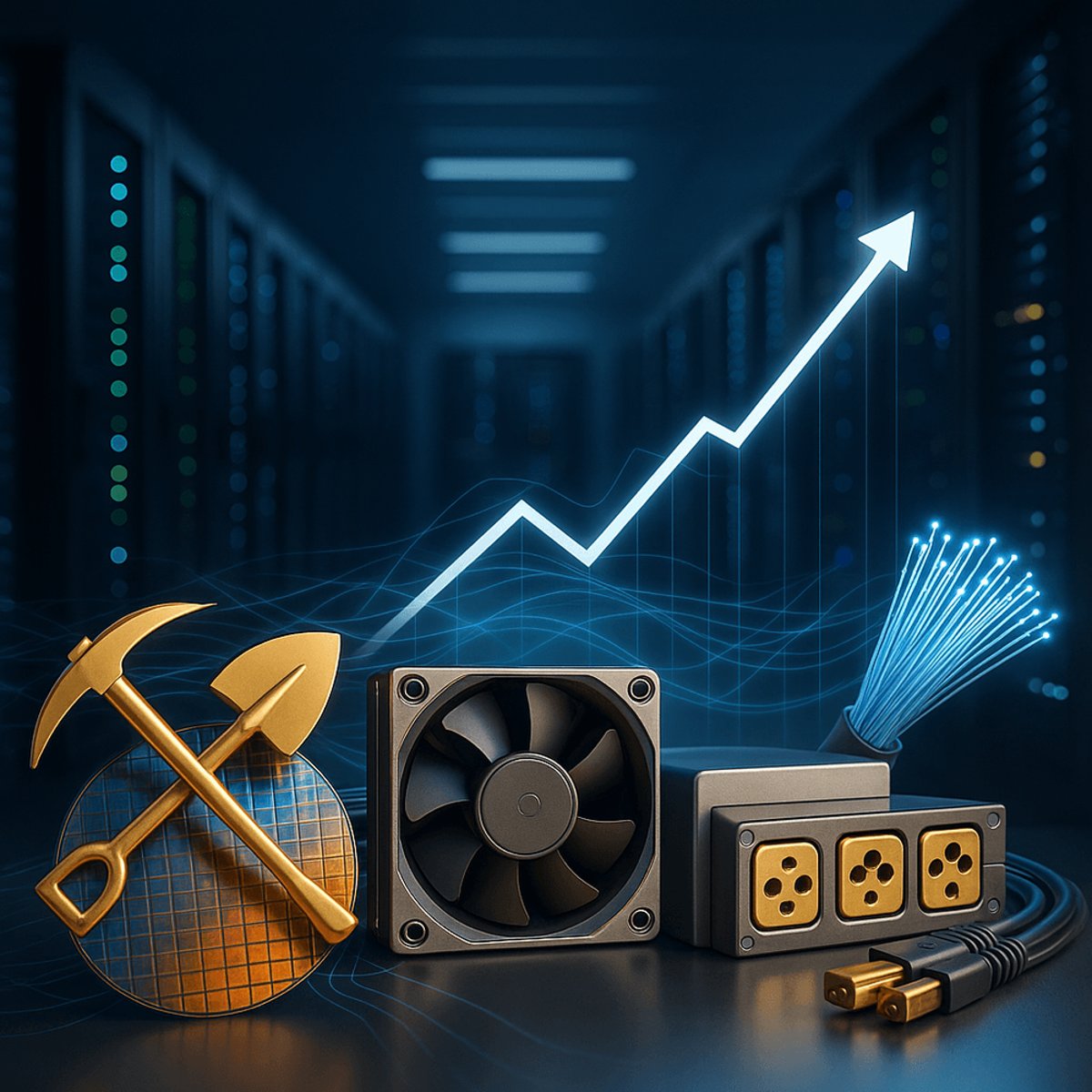
The shift is already showing up in market performance. According to CNBC's latest analysis, the real winners aren't necessarily the companies building chatbots or designing algorithms. They're the ones providing the picks and shovels - the data centers, specialized chips, cooling systems, and networking infrastructure that AI requires to function at scale.
This supply chain approach is paying off because AI deployment is fundamentally different from previous tech cycles. Unlike software rollouts that could scale cheaply, AI requires massive physical infrastructure. Every ChatGPT query needs server farms. Every autonomous vehicle needs edge computing. Every AI training run demands specialized hardware that gets replaced every few years.
"The infrastructure requirements are staggering," one analyst noted in the report. Companies that seemed boring just two years ago are now critical bottlenecks in the AI economy. Data center REITs, semiconductor equipment makers, and industrial cooling companies are seeing demand that outpaces even the most optimistic projections.
The numbers back this up. While Nvidia gets most of the attention for AI chips, the companies that manufacture the equipment to make those chips are seeing even faster growth rates. Similarly, the firms that build and operate the data centers housing AI workloads are experiencing unprecedented demand.
What makes this particularly interesting is how under-the-radar many of these opportunities remain. While retail investors pile into Meta and Microsoft for AI exposure, institutional investors are quietly building positions in infrastructure plays that most people have never heard of.
The power requirements alone create massive opportunities. AI training and inference consume exponentially more electricity than traditional computing. This is driving demand for everything from utility-scale power generation to advanced cooling systems. Companies that can solve the energy efficiency puzzle for AI workloads are becoming incredibly valuable.
But there's a timing element here that analysts are keenly aware of. The current AI boom is still in its infrastructure-building phase. Just like the internet boom of the late 1990s, we're seeing massive capital expenditure on the foundational systems before the applications fully mature. The companies building this foundation today are positioning themselves to capture value for years to come.
The supply chain advantage also provides some protection against AI bubble concerns. Even if specific AI applications fail to live up to the hype, the underlying infrastructure will still be needed. Data centers don't become worthless if one AI model gets replaced by another. Networking equipment doesn't lose value if chatbots fall out of favor.
This creates what analysts call "AI infrastructure durability" - investments that benefit from the AI trend without being completely dependent on any single AI company's success or failure. It's a more diversified way to play the AI boom, and one that historically has provided better risk-adjusted returns than betting on individual technology winners.
The AI revolution is creating two types of winners: the companies everyone's watching and the ones everyone's missing. While Big Tech captures headlines with flashy AI demos and billion-dollar investments, the real money might be in the unglamorous infrastructure that makes it all possible. For investors willing to look beyond the obvious plays, the AI supply chain offers a potentially more durable and less risky way to capitalize on the biggest technology shift since the internet. The question isn't whether AI will transform the economy - it's who will profit most from building the foundation that makes that transformation possible.