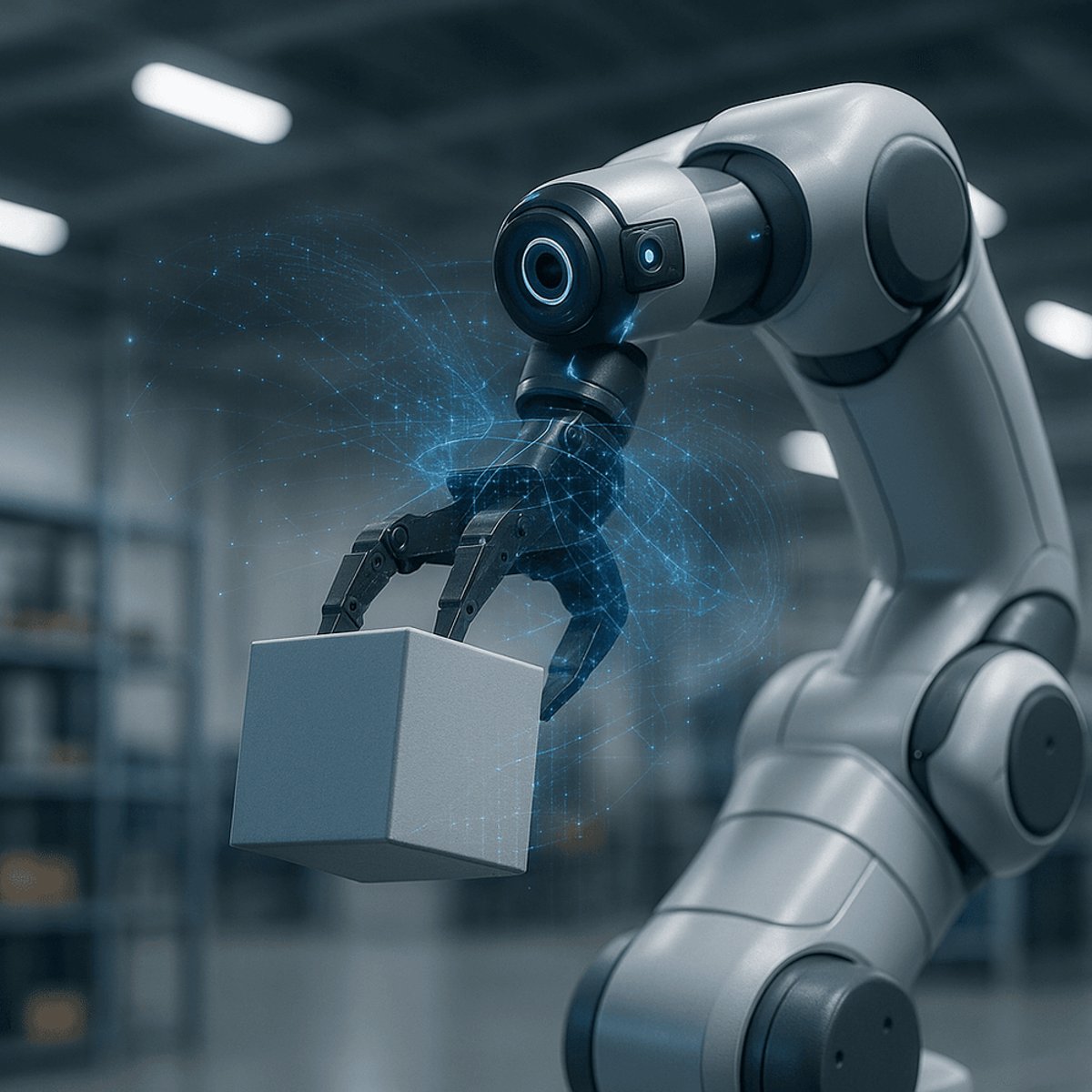
Alibaba just placed a massive bet that the future of AI isn't about better chatbots - it's about machines that understand the physical world. The Chinese tech giant led a $290 million investment in Shengshu, a startup building what it calls a 'general world model' designed to power the next generation of practical robots. The deal signals a notable shift in AI development as the industry confronts growing evidence that large language models alone won't deliver on the technology's most ambitious promises.
Alibaba is making a bold statement about where artificial intelligence is heading next. The company's cloud division just led a $290 million funding round for Shengshu, a Chinese AI startup that's ditching the text-prediction playbook entirely in favor of something more ambitious: teaching machines to understand how the physical world actually works.
The investment, reported by CNBC, comes as the AI industry grapples with a fundamental problem. Large language models can write code and summarize documents, but they're spectacularly bad at tasks that require understanding physics, spatial reasoning, or how objects interact. That's a dealbreaker for robotics, autonomous vehicles, and industrial automation - applications that represent trillions in potential market value.
Shengshu's answer is what researchers call a "world model" - AI systems trained to predict how the physical environment will change based on actions taken. Instead of predicting the next word in a sentence, these models predict the next frame of reality. If a robot arm pushes a cup, the model understands it'll tip over, not float away. That kind of common-sense physics has proven nearly impossible for traditional LLMs to grasp.
The startup, which also operates under the name Vidu, plans to use the capital to scale its general world model platform. According to the company's previous statements, the technology aims to serve as foundational infrastructure for robots that can operate in unstructured environments - warehouses, homes, construction sites - without constant human supervision.
Alibaba Cloud's involvement isn't just financial. The partnership gives Shengshu access to massive computational resources and a distribution channel into China's booming manufacturing sector, where labor shortages are accelerating robotics adoption. For Alibaba, it's a strategic hedge as competitors like OpenAI and Google double down on multimodal models that blend text, images, and video.
The timing reflects broader industry skepticism about LLM maximalism. While companies like OpenAI continue scaling up language models, a growing faction believes the path to artificial general intelligence requires grounding AI in physical reality. That's where world models come in - they're trained on video data showing cause and effect, learning the rules of physics through observation rather than language.
Several well-funded efforts are racing in parallel. Tesla has described its self-driving system as a world model trained on billions of miles of video. AI researcher Yann LeCun has argued for years that world models, not LLMs, represent the crucial breakthrough needed for human-level AI. Now capital is flowing into startups betting the same.
The $290 million round values Shengshu substantially higher than typical Series B deals, though exact valuation wasn't disclosed. That premium reflects both the technical difficulty of building world models and the massive market opportunity if the technology delivers. McKinsey estimates physical AI could unlock $4 trillion in annual economic value by 2030, primarily through manufacturing and logistics automation.
But challenges remain significant. World models require enormous amounts of high-quality video training data and computational power that dwarfs even large language model training. They also need to generalize across countless physical scenarios - a robot trained in one warehouse layout should work in another without retraining from scratch. Shengshu will need to prove its approach can scale beyond controlled demos.
Alibaba's bet also highlights the increasingly bifurcated global AI landscape. While U.S. companies dominate foundation models, Chinese firms are aggressively funding applied AI with clear commercial paths. Shengshu's focus on robotics aligns perfectly with China's national strategy to automate manufacturing and reduce dependence on foreign technology.
The investment arrives as even LLM leaders acknowledge limitations. OpenAI CEO Sam Altman recently noted that pure scaling may be hitting diminishing returns, while Meta has quietly shifted resources toward embodied AI research. The question isn't whether world models matter - it's whether they can be built reliably enough to justify the massive capital requirements.
For now, Alibaba is placing a substantial bet that the answer is yes. The $290 million infusion gives Shengshu runway to prove that AI's next breakthrough won't come from better text prediction, but from machines that finally understand the physical world humans navigate every day.
Alibaba's $290 million bet on Shengshu represents more than just another AI funding round - it's a signal that the industry's center of gravity is shifting from language to physical understanding. As LLMs plateau in capability, the race is on to build AI that can navigate the messy, unpredictable real world. Whether world models deliver on that promise remains to be seen, but the capital flowing into the space suggests the smartest investors believe we're entering a new phase of AI development. The question now is whether startups like Shengshu can execute quickly enough to justify the hype before the next wave of skepticism sets in.