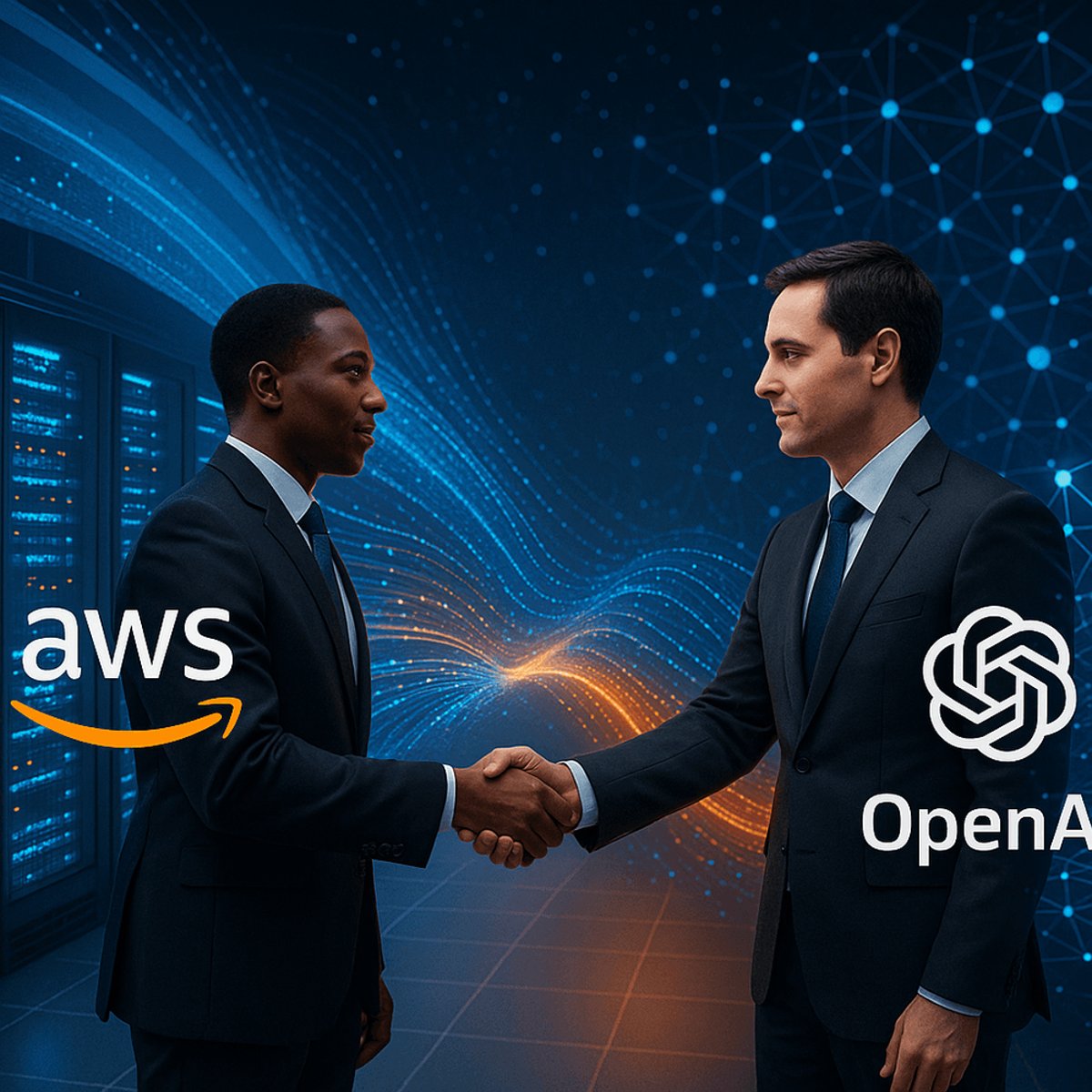
Amazon just made the biggest bet in AI history. CEO Andy Jassy confirmed a $50 billion investment in OpenAI as part of a sweeping multi-year partnership that ties the ChatGPT maker's future to AWS infrastructure. The deal, announced Friday, positions Amazon as OpenAI's primary cloud provider and marks the largest single corporate investment in generative AI to date, eclipsing Microsoft's previous commitments and fundamentally reshaping the competitive landscape for enterprise AI deployment.
Amazon CEO Andy Jassy just dropped the hammer on the AI wars. In an official company announcement, Jassy explained how Amazon's $50 billion investment in OpenAI will fundamentally rewire the enterprise AI landscape, positioning AWS as the primary infrastructure backbone for the world's most advanced AI models.
The timing couldn't be more calculated. This investment slots into OpenAI's staggering $110 billion funding round, but Amazon's stake isn't just about capital. It's about infrastructure dominance. Under the partnership terms, AWS becomes OpenAI's preferred cloud provider for training and deploying large language models, effectively routing some of the most compute-intensive AI workloads in existence through Amazon's data centers.
"This partnership represents the convergence of the world's leading AI research with the world's most comprehensive cloud infrastructure," Jassy explained in the announcement. The strategic implications hit immediately. Microsoft, which previously held an exclusive cloud relationship with OpenAI through its own multi-billion dollar investments, now faces a formidable competitor for enterprise AI deployment. Amazon's existing relationships with Fortune 500 companies give it a direct channel to push OpenAI's technology into corporate IT stacks.
The deal structure reveals Amazon's longer game. Beyond hosting OpenAI's infrastructure, AWS customers will gain streamlined access to GPT-4 and future models through native integrations, competing directly with Microsoft's Azure OpenAI Service. For enterprises already running workloads on AWS, the friction to adopt cutting-edge generative AI just dropped to near-zero. That's a massive competitive advantage in a market where deployment complexity has been a major adoption barrier.
Wall Street reacted with cautious optimism. The $50 billion commitment represents serious capital allocation, but it also positions Amazon at the center of the AI revolution that's reshaping enterprise software. Analysts note that Amazon was conspicuously behind Microsoft and Google in high-profile AI partnerships, making this move both strategic catch-up and aggressive positioning for the next phase of cloud competition.
The technical implications run deep. OpenAI's models require massive computing resources for both training and inference. By locking in AWS as the primary provider, Amazon ensures that every ChatGPT query, every API call, and every enterprise deployment potentially runs through its infrastructure. That's not just revenue from compute credits; it's data, insights, and strategic control over how businesses interact with AI.
Jassy's announcement emphasized the partnership extends beyond pure infrastructure. Amazon plans to integrate OpenAI's capabilities across its own product lines, from Alexa improvements to logistics optimization to AWS service enhancements. The vertical integration could give Amazon advantages competitors can't easily replicate, particularly in areas where Amazon's operational data combines with OpenAI's reasoning capabilities.
The competitive response is already forming. Google has ramped up its own AI infrastructure investments, while Microsoft is doubling down on its existing OpenAI relationship through Azure. But Amazon's combination of enterprise reach, infrastructure scale, and now premier AI partnership creates a formidable stack that reshapes how companies will build AI-powered applications.
Industry observers note this marks a shift from Amazon's previous AI strategy, which centered on its own Bedrock platform offering multiple model providers. The OpenAI partnership suggests Amazon recognizes that enterprise customers want access to the most capable models available, even if it means promoting a single provider more prominently. That's a significant strategic pivot that acknowledges OpenAI's technical leadership.
For OpenAI, the Amazon partnership provides something equally critical: infrastructure diversity and enterprise distribution. Relying solely on Microsoft created strategic risk and limited market reach. Amazon's enterprise relationships, particularly with companies hesitant to deepen Microsoft dependencies, open entirely new customer segments. The $50 billion also provides runway for the compute-intensive research required to maintain OpenAI's technical edge as competition intensifies from Anthropic, Google, and others.
The deal's structure allows both companies to maintain other relationships. OpenAI continues working with Microsoft, while Amazon's Bedrock will still offer competing models from Anthropic and others. But the financial scale and infrastructure commitment signal where the strategic priorities lie. In AI infrastructure, money talks, and $50 billion shouts.
Amazon's $50 billion bet on OpenAI isn't just an investment; it's a strategic realignment of the entire enterprise AI stack. By securing infrastructure primacy with the leading AI research lab, Amazon positions AWS as the default platform for the next generation of intelligent applications. For enterprises watching the AI wars unfold, the message is clear: the path to deploying cutting-edge AI just got a lot shorter if you're already on AWS. Microsoft's early mover advantage in AI just met its most serious challenge, and the competition for enterprise AI dominance enters a new, significantly more expensive phase. Watch how quickly AWS integrates OpenAI capabilities into its service catalog; that timeline will reveal just how seriously Amazon takes this opportunity to reclaim AI leadership.