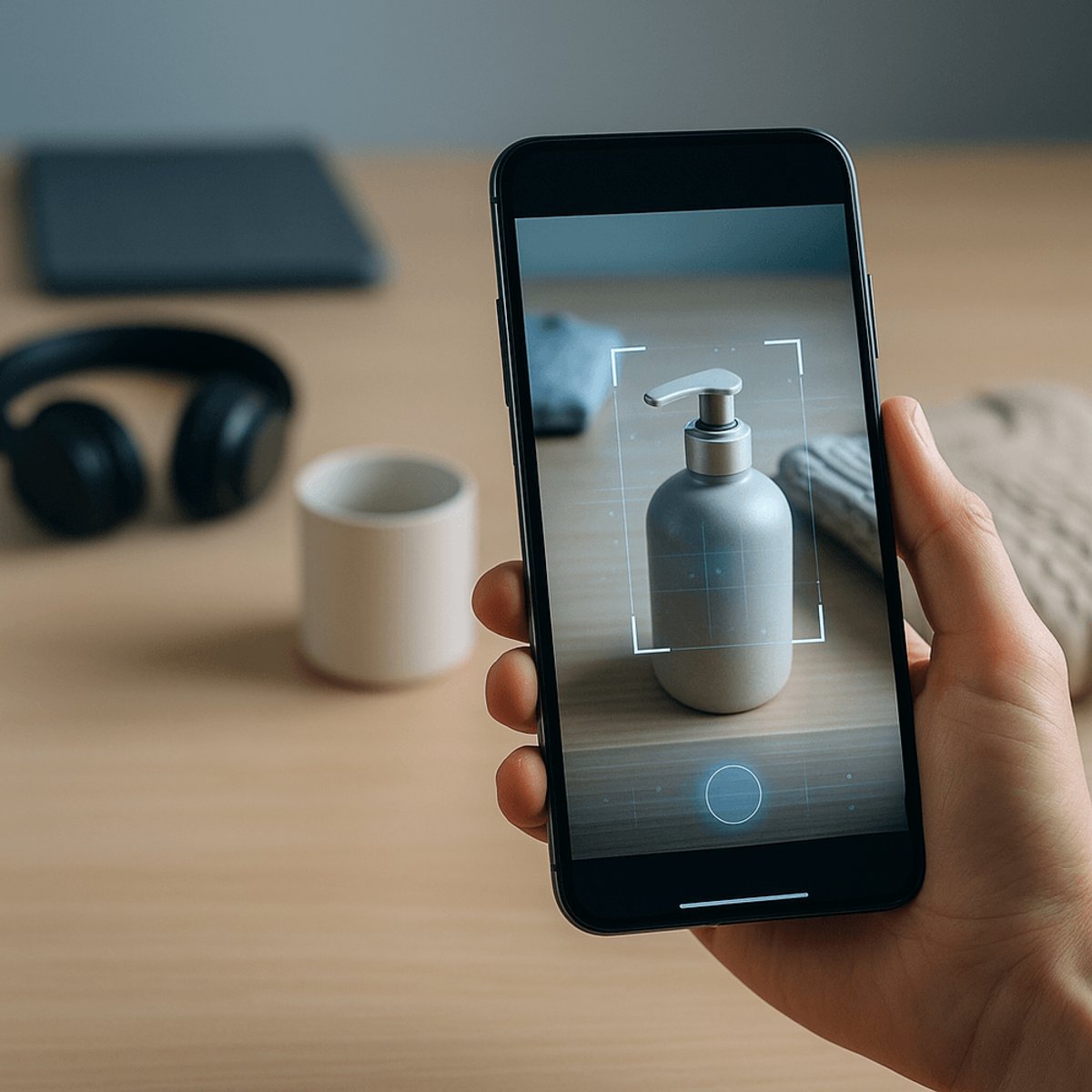
Amazon just rolled out Lens Live, an AI-powered visual search upgrade that instantly identifies products through your camera and matches them against billions of items in real-time. The launch integrates Rufus, Amazon's shopping assistant, directly into the camera view, marking the company's boldest push yet into computer vision commerce. Available to tens of millions of iOS users starting today, this signals Amazon's intention to own the visual discovery moment that increasingly drives modern shopping behavior.
Amazon just dropped a visual search bombshell that could reshape how millions discover products. Lens Live transforms the company's existing camera-based shopping tool into a real-time AI assistant that instantly recognizes products and surfaces matches from Amazon's catalog the moment you point your phone at any item.
The timing couldn't be more strategic. As social commerce explodes and visual discovery becomes the dominant shopping trigger, Amazon is betting big on owning that crucial moment when customers spot something they want. "When you spot an item you love on social media or while out and about, Amazon Lens is the quickest way to find similar items," according to Amazon's announcement.
What sets Lens Live apart is speed and intelligence. The moment customers open the camera, products start appearing in a swipeable carousel at the bottom of the screen. No more taking photos and waiting for results – the AI processes what you're seeing in real-time, matching against billions of Amazon products using what the company describes as "deep learning visual embedding models."
But here's where it gets interesting: Amazon embedded Rufus, its conversational shopping assistant, directly into the camera experience. Users now see suggested questions and product summaries without leaving the viewfinder, turning casual browsing into informed purchasing decisions. "These conversational prompts and summaries appear under the product carousel, allowing customers to perform speedy research," Amazon explains in technical documentation.
The technical architecture reveals Amazon's serious AI infrastructure investments. Lens Live runs on AWS-managed Amazon OpenSearch and Amazon SageMaker services, with lightweight computer vision models running directly on users' devices. This hybrid approach – on-device processing for speed, cloud processing for matching – suggests Amazon learned from early visual search failures that frustrated users with slow response times.
Competitive implications are massive. While Google has Google Lens and Pinterest pioneered visual discovery, Amazon controls the crucial final step: the purchase. By integrating real-time recognition with instant purchasing capabilities – users can add items to cart or wishlists without leaving camera view – Amazon eliminates the friction that kills most visual commerce attempts.
The rollout strategy shows Amazon's confidence. Starting with "tens of millions" of iOS users today, with full U.S. deployment planned for coming months, this represents one of Amazon's largest AI feature launches. The company's keeping traditional Lens options available, suggesting they're testing user adoption patterns before fully committing to the real-time approach.
Trishul Chilimbi, Vice President and Distinguished Scientist for Stores Foundational AI at Amazon, positioned this as just the beginning. "We'll continue to look for ways to build on the convenience of searching and shopping with Amazon Lens," according to the company blog.
The broader implications extend beyond shopping. If successful, Lens Live could accelerate the shift toward ambient computing where AI assistants understand and respond to our visual environment in real-time. For Amazon, it's another data collection goldmine – understanding not just what customers buy, but what catches their eye in the physical world.
Amazon's Lens Live represents more than a shopping feature upgrade – it's a glimpse into ambient AI commerce where visual discovery triggers instant, intelligent purchasing decisions. By combining real-time computer vision with conversational AI, Amazon is positioning itself at the center of how consumers will shop in an increasingly visual-first world. The success of this launch could determine whether Amazon maintains its e-commerce dominance as shopping behavior fundamentally shifts toward mobile-native, AI-assisted discovery.