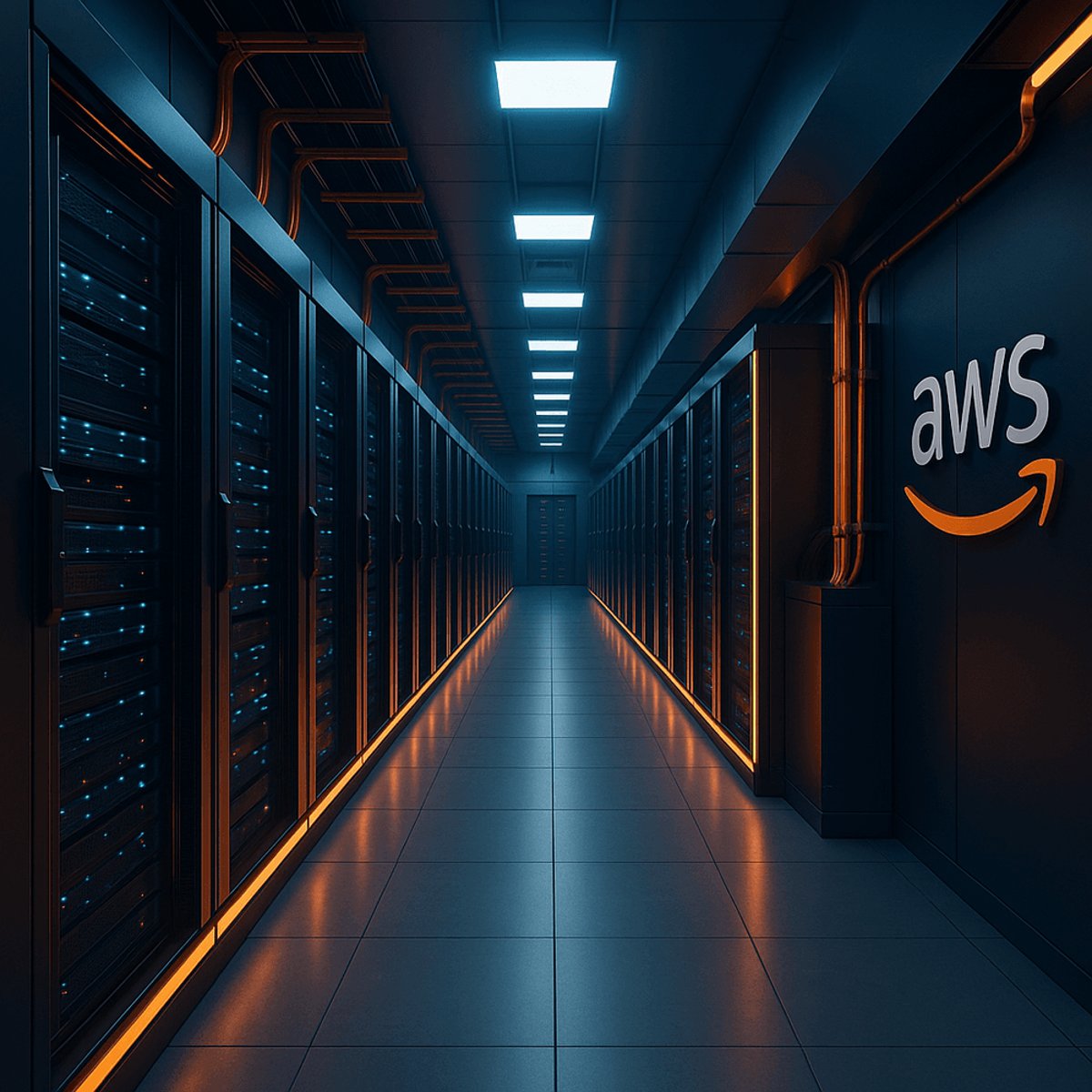
Amazon CEO Andy Jassy is pushing back hard against Wall Street's concerns over the company's eye-watering $200 billion AI spending commitment. "We're not going to be conservative," Jassy declared as Amazon shares continue their 2026 slide, with investors increasingly nervous about the scale of capital pouring into AI infrastructure. The defense comes as the tech giant bets its future on becoming the dominant force in enterprise AI through its AWS cloud division.
Amazon CEO Andy Jassy isn't backing down. As the company's stock struggles through early 2026, Jassy delivered a defiant message to skeptical investors: the $200 billion AI spending spree stays, and Amazon won't play it safe.
The declaration comes at a critical moment for the Seattle tech giant. Amazon shares have lagged the broader market this year as Wall Street questions whether the company's aggressive AI infrastructure buildout will actually pay off. It's the kind of spending that makes even seasoned tech investors nervous - we're talking about capital expenditures that exceed the entire market cap of most S&P 500 companies.
Jassy's comments, reported by CNBC, signal that Amazon sees the current AI race as existential. The company is pouring resources into data centers, custom AI chips, and infrastructure to power what it believes will be the next era of enterprise computing through AWS. This isn't just about keeping up with Microsoft and Google - it's about maintaining AWS's position as the cloud infrastructure leader when AI workloads become the primary driver of cloud spending.
The scale is staggering. To put $200 billion in perspective, that's roughly equivalent to Amazon's entire revenue for 2024. It's more than Meta spent on its metaverse pivot. It dwarfs the capital expenditure plans of traditional tech giants and represents one of the largest single technology investments in corporate history.
But investors aren't cheering. Amazon's stock performance this year reflects deep uncertainty about the return timeline on this massive bet. Unlike product launches that generate immediate revenue, infrastructure spending creates a long lag between investment and payoff. Wall Street wants to see concrete evidence that enterprises are willing to pay premium prices for Amazon's AI capabilities before committing to this level of capital deployment.
The tension reveals a fundamental clash between Amazon's long-term strategic vision and the market's demand for near-term results. Jassy, who took over from founder Jeff Bezos in 2021, has consistently emphasized that Amazon operates on longer time horizons than typical public companies. But $200 billion tests even Amazon's patient capital approach.
What Amazon is actually building with this money matters enormously. The spending encompasses custom AI chip development to reduce reliance on Nvidia, massive data center expansion across multiple continents, and the computing infrastructure to train and serve increasingly large AI models for enterprise customers. AWS already offers foundational models from OpenAI, Anthropic, and others through its Bedrock service, but Amazon wants to own more of the stack.
The competitive dynamics are fierce. Microsoft has its OpenAI partnership and is rapidly integrating AI across its enterprise suite. Google is leveraging its AI research heritage and TPU chips. Even Oracle is making aggressive moves in AI infrastructure. Amazon needs this spending to ensure AWS doesn't lose ground as enterprise workloads shift toward AI-centric architectures.
Jassy's "not going to be conservative" stance suggests Amazon sees hesitation as more dangerous than overspending. In the company's view, the risk isn't that AI infrastructure spending is too high - it's that not investing enough could permanently damage AWS's competitive position. Amazon watched Microsoft steal a march in generative AI partnerships and isn't willing to be caught flat-footed again.
The market will ultimately judge whether Jassy's bet pays off. For now, Amazon is asking shareholders to trust that the company that revolutionized e-commerce and built the dominant cloud platform can do it again in AI - even if it costs $200 billion to find out.
Amazon's $200 billion AI gamble represents one of the defining strategic bets in tech history. Jassy is betting that infrastructure dominance in the AI era will generate returns that dwarf the investment - but he's asking shareholders to wait while competitors show faster results. The stock's 2026 struggles show investors remain unconvinced. What happens next depends on whether enterprise customers actually shift workloads to AWS's AI services fast enough to justify the spending. For Amazon, there's no middle ground: either this investment cements AWS's position for the next decade, or it becomes a cautionary tale about overbuilding ahead of demand. Jassy has made his choice clear - now the market gets to render its verdict.