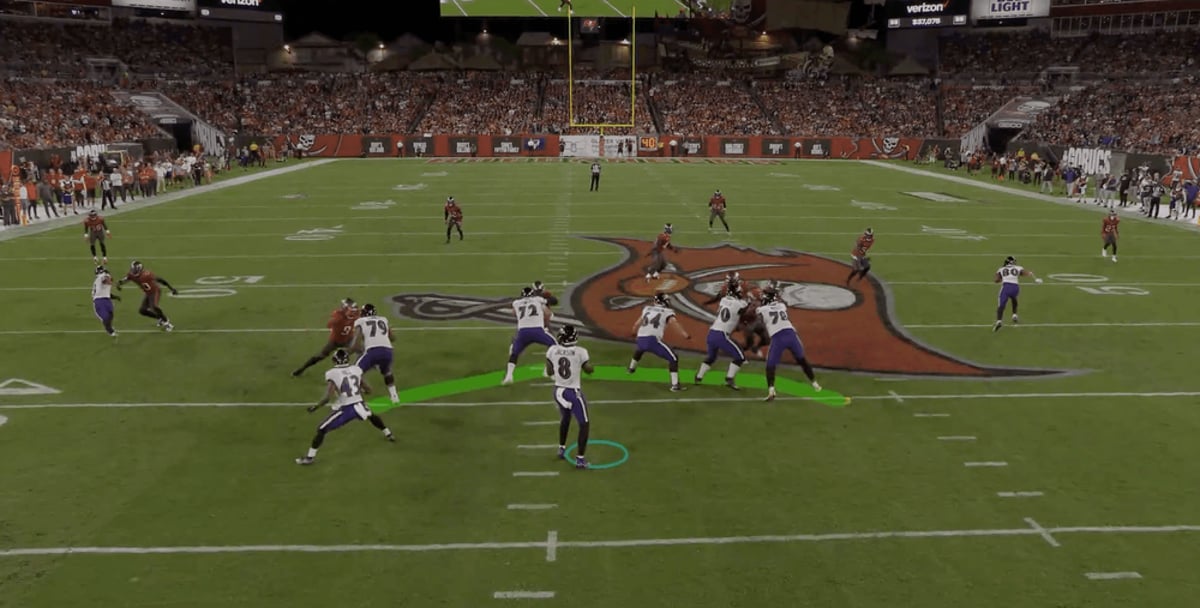
Amazon just transformed NFL viewing with AI features that predict quarterback danger and comeback scenarios in real-time. The new Pocket Health system analyzes tens of thousands of data points during each play, while End of Game tools calculate victory probabilities - marking the streaming giant's biggest push yet into sports AI analytics.
Amazon is betting big on AI-powered sports analytics, and Thursday Night Football viewers are about to see the payoff. The company's Prime Video platform just unveiled its most sophisticated AI features yet, starting with Pocket Health - a system that processes tens of thousands of data points during each offensive play to display real-time threat levels facing quarterbacks.
The timing couldn't be more strategic. As the 2025 NFL season kicks off, Amazon is positioning itself not just as another streaming service, but as the future of sports broadcasting. According to Amazon MGM Studios' announcement, these features represent the next evolution in how fans consume live sports.
Pocket Health works by analyzing offensive line formations, player positioning, and defensive pressure patterns to create visual indicators of quarterback safety. It's like having a defensive coordinator's brain translated into viewer-friendly graphics that update in real-time. The system builds on Amazon's existing AI infrastructure, which already powers features like Defensive Alerts that identify potential blitzing players before the snap.
But Amazon isn't stopping at in-game analysis. The new End of Game tools tackle what might be the most nail-biting moments in football - those final minutes when everything's on the line. One feature calculates potential possession scenarios for trailing teams, while another attempts to predict exactly how much time a team needs to mount a successful comeback or secure victory.
This represents a fundamental shift in how streaming platforms approach live sports. While traditional broadcasters rely on human analysts and basic statistics, Amazon is weaponizing machine learning to deliver insights that even seasoned football veterans might miss. "We're not just showing the game," the company seems to be saying, "we're showing you how to understand it better than anyone else."
The competitive implications are massive. Netflix just announced its own NFL broadcasting plans, while Disney's ESPN continues to dominate traditional sports media. But Amazon's AI-first approach could give it a significant edge in attracting younger, tech-savvy viewers who expect their entertainment to be as smart as their smartphones.
Industry analysts note that sports broadcasting has been ripe for AI disruption. Traditional commentary often misses subtle tactical developments, while basic statistics tell only part of the story. Amazon's approach essentially creates a new category of sports content - one where artificial intelligence becomes the ultimate color commentator.
The technical complexity behind these features is staggering. Processing tens of thousands of data points in real-time requires the kind of computational power that only cloud giants like Amazon can provide. This isn't just about better graphics - it's about fundamentally reimagining how sports analysis works.
What's particularly clever is how these features complement rather than replace human commentary. The AI provides data-driven insights while broadcasters focus on storytelling and emotional moments. It's a partnership between human intuition and machine precision that could define the future of sports media.
For NFL fans, this means Thursday nights just got a lot more interesting. Whether you're a casual viewer trying to understand why a play worked or a fantasy football fanatic looking for every possible edge, Amazon's AI tools promise to make the game more accessible and engaging than ever before.
Amazon's AI-powered Thursday Night Football features represent more than just flashy graphics - they're a preview of how artificial intelligence will reshape sports entertainment. By turning complex game data into accessible visual insights, Amazon isn't just competing with other broadcasters; it's creating an entirely new category of sports viewing that could force the entire industry to rethink how they engage audiences in the AI era.