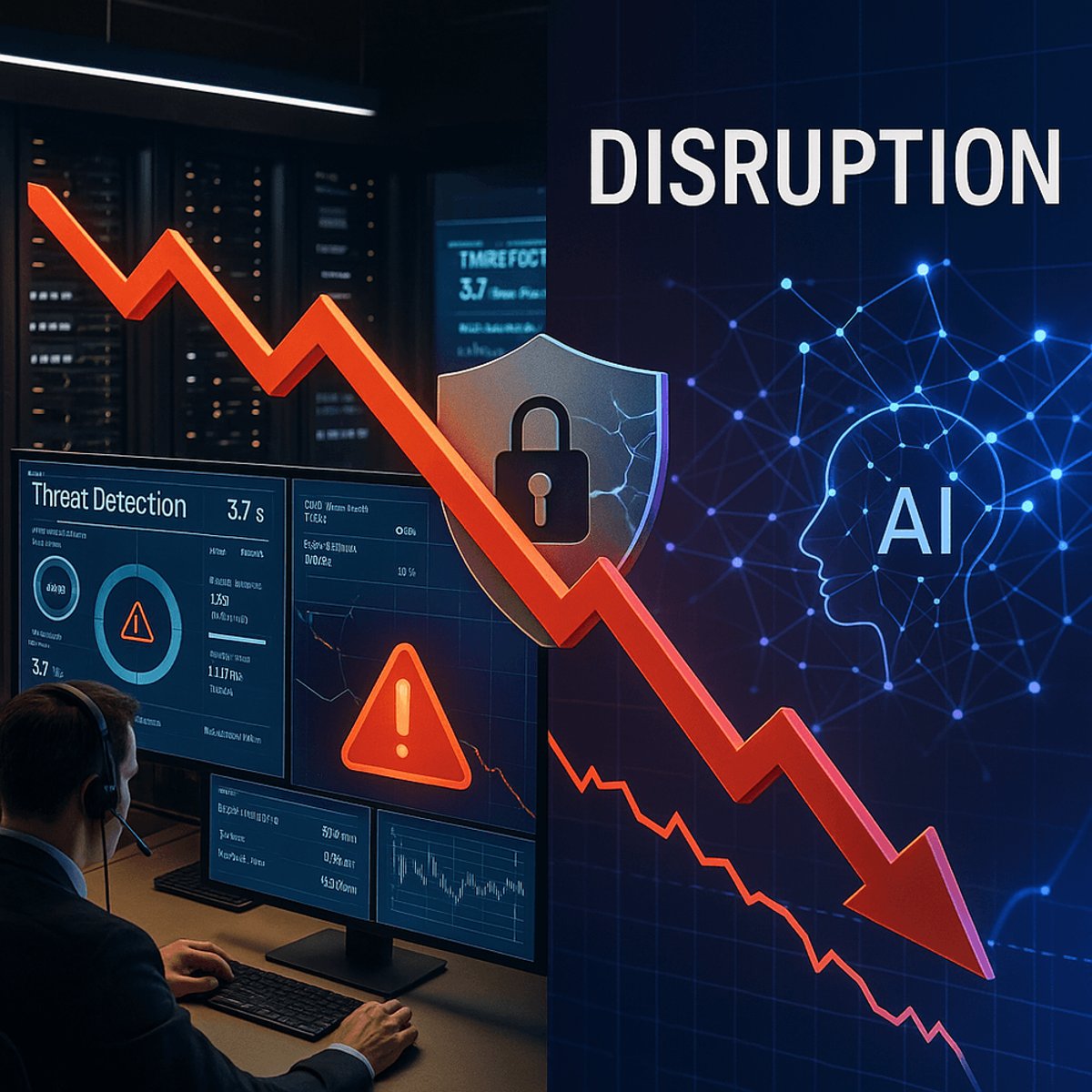
Cybersecurity stocks are getting hammered for a second straight session as Anthropic's latest AI tool stokes fears that artificial intelligence could automate away chunks of the $200 billion security software market. The selloff deepened Monday, with investors racing to reassess which enterprise software categories face existential threats from rapidly advancing AI agents capable of handling complex security tasks that currently require human analysts and expensive software suites.
Anthropic just sent shockwaves through the cybersecurity industry, and investors aren't waiting around to see how this plays out. The AI startup's latest tool - details of which remain closely guarded but appear to focus on automated threat detection and response - triggered a second day of selling pressure across security software stocks Monday, with traders dumping shares of companies that have spent decades building expensive platforms to protect corporate networks.
CrowdStrike, the endpoint security giant that's become synonymous with enterprise protection since its high-profile role in major breach investigations, saw its stock extend recent losses as the market digests what AI-powered security tools could mean for traditional software vendors. The company's platform, which commands premium pricing for its threat intelligence and rapid response capabilities, suddenly faces questions about whether AI agents could deliver similar protection at a fraction of the cost.
This isn't just theoretical anxiety. The cybersecurity sector has long relied on a business model that combines software automation with human expertise - security analysts poring over threat data, investigating anomalies, and responding to incidents. But that's exactly the kind of repetitive, pattern-recognition work that large language models and AI agents excel at. Anthropic's Claude has already demonstrated sophisticated reasoning capabilities across complex tasks, and applying that to security operations represents a natural evolution that could compress what currently requires teams of analysts into automated workflows.
The timing couldn't be worse for cybersecurity vendors. Enterprise software companies across categories have been watching nervously as AI tools chip away at markets that seemed untouchable just months ago. Customer service platforms took hits when AI chatbots proved capable of handling support queries. Coding assistant tools pressured developer tool companies. Now security software - with its high margins, recurring revenue streams, and mission-critical positioning - finds itself squarely in AI's crosshairs.
What makes cybersecurity particularly vulnerable is the industry's own success in standardizing threat detection. Modern security platforms rely heavily on signature-based detection, behavioral analysis, and threat intelligence feeds - all data-intensive tasks that AI models can process at superhuman speed. An AI agent with access to the same threat databases and security frameworks could potentially identify and respond to attacks faster than traditional software, without the hefty licensing fees that cybersecurity vendors charge.
The market's reaction reflects a broader reckoning happening across enterprise software. Investors are rapidly repricing companies based on their exposure to AI disruption, with those dependent on repetitive, data-processing tasks facing the harshest scrutiny. Security software's 60-70% gross margins - justified for years by the specialized expertise required - now look vulnerable if AI can deliver comparable protection without the human-intensive operations.
But Anthropic's move also highlights a strategic shift in AI development. Rather than focusing solely on consumer applications or general-purpose coding assistants, the company appears to be targeting specific enterprise workflows where AI can deliver immediate, measurable value. Cybersecurity fits that profile perfectly - it's a high-stakes domain with clear success metrics and desperate demand for faster, more accurate threat detection.
The selloff also reveals deep uncertainty about how quickly AI will actually transform security operations. While the technology might be capable of automating threat detection, enterprise customers move slowly, especially when it comes to security infrastructure. Compliance requirements, integration challenges, and simple organizational inertia could slow AI adoption even if the technology proves superior. But investors aren't taking chances, preferring to de-risk portfolios now rather than wait for clarity on adoption timelines.
Traditional cybersecurity vendors aren't sitting idle. Most major players have been racing to integrate AI capabilities into their existing platforms, hoping to defend their turf by offering AI-enhanced versions of familiar tools. But that strategy faces a fundamental problem - if AI can automate most security tasks, customers might not need comprehensive platforms at all, opting instead for lightweight AI agents that cost a fraction of current security budgets.
The cybersecurity selloff marks a pivotal moment for enterprise software, proving that no category is immune from AI disruption once the technology demonstrates capability in core workflows. Whether Anthropic's tool lives up to the hype or not, the market's harsh reaction shows investors believe AI will fundamentally reshape security software economics. Traditional vendors face a narrow window to prove their platforms offer value beyond what AI agents can deliver - and with billions in market cap evaporating over just two trading sessions, that window is closing fast. For enterprise buyers, the message is clear: the security tools they've relied on for years might soon face serious competition from AI-native alternatives that promise comparable protection at dramatically lower costs.