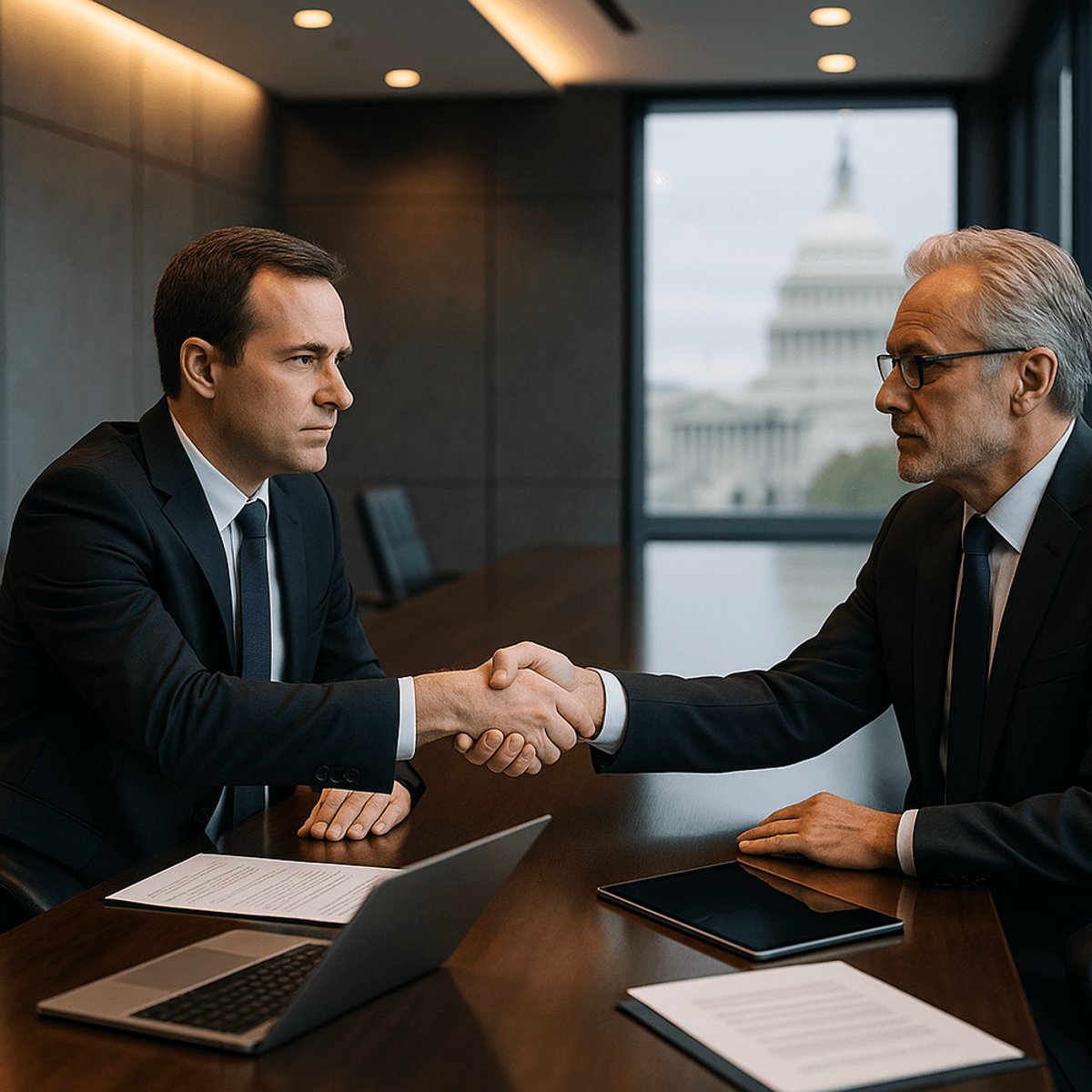
Anthropic CEO Dario Amodei is scheduled to meet with White House officials to discuss the company's Mythos project, marking a potential thaw in relations just weeks after President Donald Trump placed the AI startup on a federal blacklist. The high-stakes meeting signals the administration may be reconsidering its stance on one of Silicon Valley's most prominent AI safety companies, which has raised billions from Google and other tech giants.
Anthropic finds itself at a crossroads with the federal government. CEO Dario Amodei's scheduled White House meeting represents the first formal dialogue between the AI safety startup and the Trump administration since the company was abruptly added to a federal blacklist in late February 2026.
The blacklisting sent shockwaves through Silicon Valley, where Anthropic had positioned itself as a leader in responsible AI development. The company, which develops the Claude family of large language models, suddenly found itself cut off from federal contracts and partnerships - a devastating blow for a startup that had been courting government agencies as potential customers.
Now the Mythos project appears to be opening a door. While details about Mythos remain scarce, the fact that White House officials are willing to discuss it with Amodei suggests the initiative may address some of the administration's national security concerns. The timing is critical for Anthropic, which has raised over $7 billion from investors including Google, Salesforce, and Spark Capital.
The February blacklisting caught the AI industry off guard. Unlike OpenAI and Microsoft, which have cultivated close relationships with the Defense Department, Anthropic had primarily focused on commercial applications and AI safety research. The company's constitutional AI approach - which attempts to train models with built-in ethical guidelines - was seen as a differentiator in the market.
But that focus on safety apparently wasn't enough to satisfy Trump administration officials, who cited unspecified national security risks when imposing the blacklist. The move raised questions about whether the administration was concerned about Anthropic's foreign investor base, its AI safety philosophy, or something else entirely.
The blacklist's impact has been immediate and painful. Anthropic was reportedly in advanced talks with several federal agencies about deploying Claude for document analysis and other tasks. Those discussions went dark overnight. The company also faced uncomfortable questions from enterprise customers worried about associating with a blacklisted AI provider.
Competitors haven't been shy about exploiting Anthropic's troubles. OpenAI has aggressively pitched its GPT-4 and GPT-5 models to government agencies, while Microsoft's Azure AI services have benefited from having a security clearance that Anthropic now lacks. The competitive dynamics in enterprise AI have shifted dramatically in just eight weeks.
Amodei's White House visit represents a potential turning point. If the Mythos discussion goes well, Anthropic could find a path back to federal favor. If it goes poorly, the company may need to permanently write off government business and focus entirely on commercial markets - a strategic limitation that would put it at a disadvantage against rivals with Pentagon contracts.
The broader implications extend beyond one company. The AI industry is watching closely to see how the Trump administration handles AI regulation and national security. If Anthropic can rehabilitate its standing through a single project like Mythos, other AI startups may pursue similar strategies. If the blacklist proves permanent despite cooperation efforts, it will send a chilling message about the risks of running afoul of federal security priorities.
Anthropic's investors are also paying attention. Google has poured billions into the startup as part of its strategy to compete with Microsoft and OpenAI. A permanent government blacklist would significantly impair Anthropic's growth prospects and raise questions about the wisdom of that investment.
The meeting's outcome could reshape the competitive landscape in enterprise AI. Government contracts represent a massive opportunity - federal agencies are expected to spend tens of billions on AI services over the next five years. Being locked out of that market would be a strategic catastrophe for any major AI company.
The stakes couldn't be higher for this White House meeting. Anthropic needs to convince skeptical administration officials that it can be a trusted partner on national security matters, while the Trump administration needs to signal how it will handle AI governance going forward. Whatever happens in that meeting room will reverberate through Silicon Valley and set precedents for how the government engages with AI companies that find themselves on the wrong side of federal security concerns. For Dario Amodei, it's a chance to pull his company back from the brink - or confirm that the blacklist is here to stay.