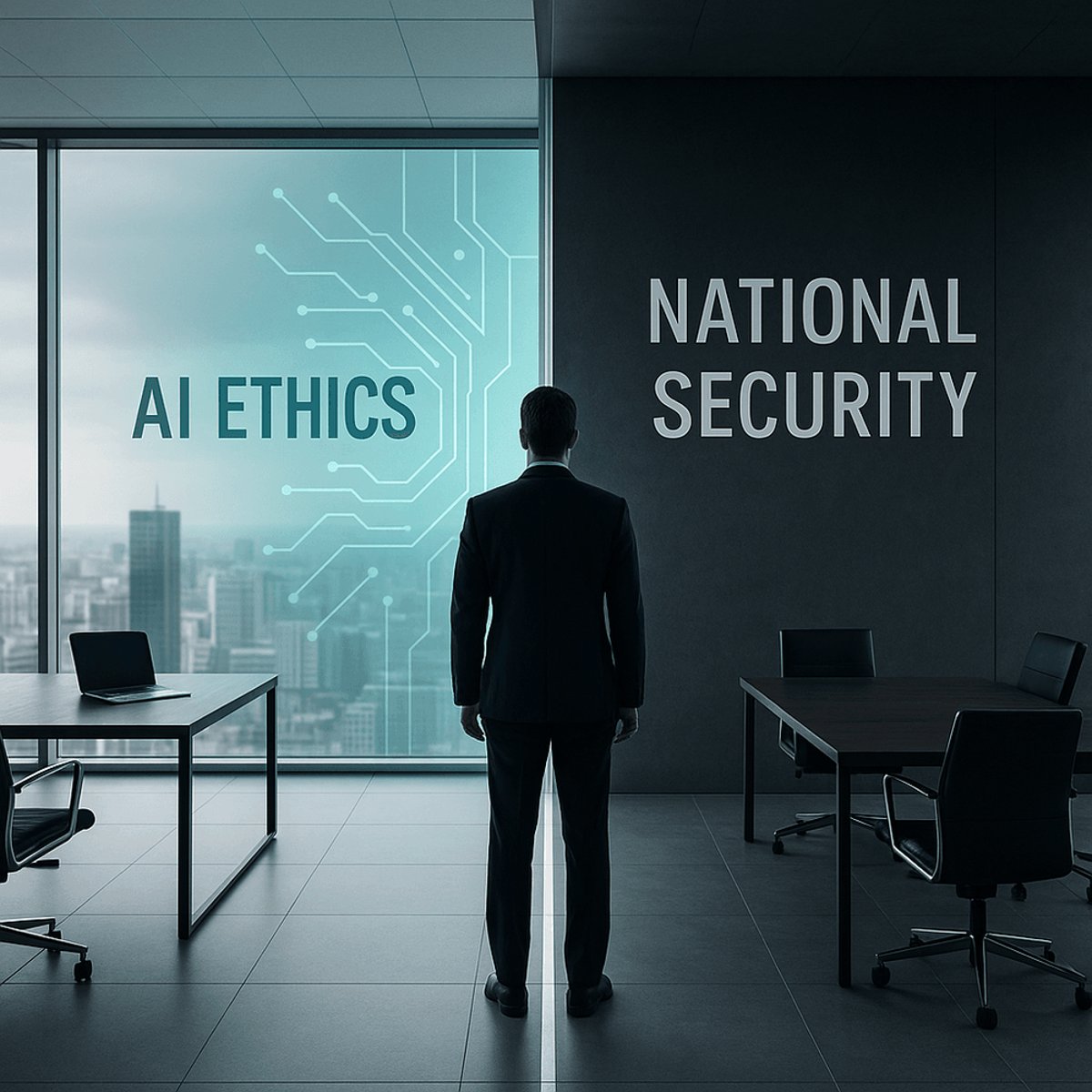
Anthropic CEO Dario Amodei is drawing a hard line against the Pentagon, publicly refusing to grant the military unrestricted access to the company's AI systems despite mounting pressure and an approaching deadline. In a statement Thursday, Amodei declared he "cannot in good conscience accede" to the Department of Defense's demands, setting up a potential showdown between one of AI's most safety-focused companies and the U.S. military establishment. The standoff marks a critical inflection point for AI governance, forcing the industry to choose between national security priorities and ethical guardrails.
Anthropic just threw down the gauntlet in what's shaping up to be the AI industry's most consequential ethics battle yet. CEO Dario Amodei told the Pentagon on Thursday that he won't hand over unrestricted access to the company's AI systems, no matter the consequences. "I cannot in good conscience accede" to the military's demands, Amodei stated, according to TechCrunch.
The timing couldn't be more dramatic. Sources familiar with the negotiations say the Department of Defense has set an undisclosed deadline for Anthropic to comply, though neither party will confirm the exact date. What's clear is that the military wants full, unfiltered access to Claude and Anthropic's other AI models for defense applications - something that directly contradicts the company's founding principles around AI safety.
Anthropic has built its entire brand on responsible AI development. The company emerged in 2021 when former OpenAI researchers, including Amodei and his sister Daniela, left over disagreements about safety protocols. They've since raised billions from investors like Google and Salesforce Ventures specifically to build AI systems with robust ethical guardrails baked in from day one.
But the Pentagon's demand puts that mission to the test. Military officials reportedly want access that would bypass Anthropic's constitutional AI framework - the technical architecture that constrains Claude's outputs to align with human values and prevent harmful applications. Defense officials argue that national security requires AI capabilities without artificial limitations, especially as rivals like China race ahead with military AI development.
The standoff reveals a growing fracture in the tech industry's relationship with the military-industrial complex. While Microsoft and Palantir have eagerly pursued Pentagon contracts worth billions, and OpenAI recently reversed its ban on military applications, Anthropic appears willing to sacrifice lucrative defense business to maintain its principles.
This isn't Anthropic's first rodeo with thorny ethical questions. The company's constitutional AI approach involves training models to follow explicit ethical guidelines through a process called reinforcement learning from AI feedback. But critics have questioned whether any company can truly maintain independence when faced with government pressure, especially from defense and intelligence agencies.
The broader AI industry is watching closely. If Anthropic holds firm and faces penalties - whether financial, regulatory, or competitive - it could discourage other companies from establishing similar ethical boundaries. Conversely, if Amodei's stance gains public support, it might embolden other AI labs to resist government demands that conflict with safety principles.
Defense Secretary Pete Hegseth hasn't commented directly on the Anthropic dispute, but his recent speeches have emphasized the urgency of AI dominance for American military superiority. Pentagon officials have privately expressed frustration with what they view as Silicon Valley's naivety about geopolitical threats, according to defense industry sources.
The clash also comes at a delicate moment for AI regulation. Congress is still debating comprehensive AI legislation, and how the Anthropic-Pentagon standoff resolves could influence whether future laws prioritize innovation, safety, or national security. Some lawmakers have already suggested that companies receiving federal research funding or operating critical AI infrastructure should be required to cooperate with defense requests.
Investors seem split on Amodei's decision. While Anthropic's safety-first positioning has attracted mission-aligned capital, some backers worry that alienating the government could limit the company's growth potential or invite regulatory retaliation. Google, which has invested heavily in Anthropic, faces its own complicated relationship with military contracts after employee protests derailed Project Maven in 2018.
What happens next could reshape the entire AI landscape. If Anthropic maintains its refusal, the Pentagon might turn to more compliant competitors, potentially giving them a decisive advantage in both military applications and commercial spin-offs. Or the government could escalate with regulatory pressure, export controls, or other mechanisms that make it harder for Anthropic to operate independently.
For now, Amodei appears willing to find out. His public statement marks a rare moment of transparency in an industry that typically negotiates government relationships behind closed doors. Whether it's a principled stand that inspires a movement or a miscalculation that costs the company its independence, the outcome will reverberate far beyond one CEO's conscience.
Anthropic's collision course with the Pentagon isn't just about one company's ethics - it's a preview of battles to come as AI capabilities outpace our frameworks for governing them. Amodei's refusal forces an uncomfortable question the industry has mostly avoided: can AI companies maintain meaningful principles when governments demand compliance? The answer will determine whether AI safety remains a genuine constraint on development or just marketing language that evaporates under pressure. As the deadline approaches, every AI lab is watching to see if conscience can coexist with power, or if national security arguments will ultimately trump all other considerations. What's certain is that the era of AI companies operating independently from government priorities is ending, one ultimatum at a time.