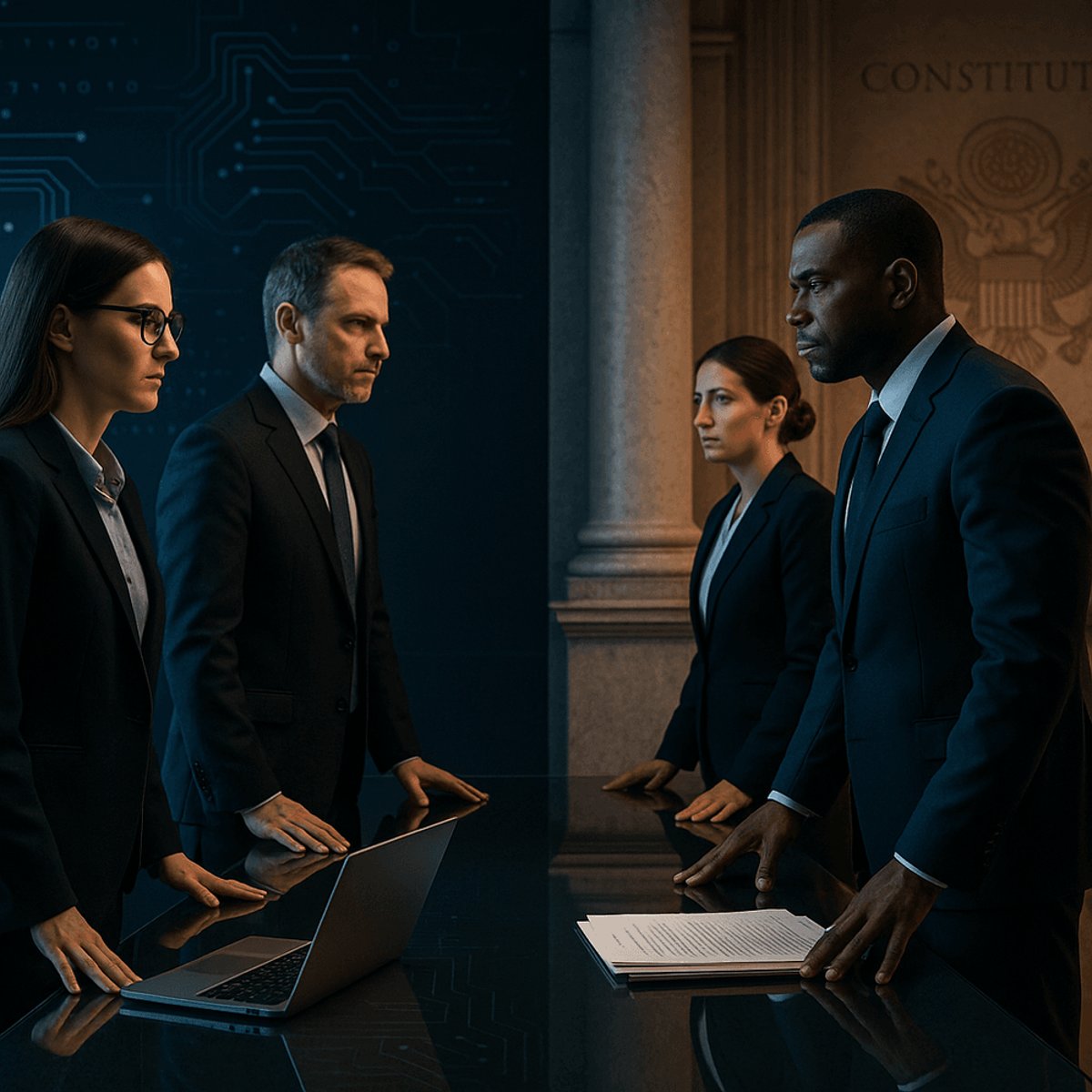
The Pentagon's unprecedented move to label Anthropic a supply chain risk just hit a major roadblock. The AI safety-focused startup is pushing back hard, calling the potential blacklist "legally unsound" after negotiations over military use of its Claude AI models broke down entirely. It's the first time a major AI company has openly challenged the Defense Department's authority to restrict its technology, setting up what could become a landmark constitutional battle over who controls AI deployment in national security contexts.
Anthropic just threw down the gauntlet against the US military establishment. The AI startup, known for building Claude with a focus on safety and constitutional principles, is openly disputing the Pentagon's authority to blacklist its technology after talks over military applications fell apart.
The confrontation escalated rapidly. According to sources familiar with the matter speaking to Wired, negotiations between Anthropic and Defense Department officials had been ongoing for months about potential military use cases for the company's large language models. Those discussions hit an impasse, and the Pentagon responded by designating Anthropic as a supply chain risk - a label typically reserved for foreign adversaries and companies with questionable security practices.
Anthropic's legal team fired back immediately, arguing the designation would be "legally unsound." The company maintains that its AI safety principles and refusal to commit to unfettered military access shouldn't trigger the same national security mechanisms used against hostile actors. It's a bold stance that puts the startup at odds with the entire defense apparatus at a time when AI capabilities are increasingly viewed as critical to national security.
The timing couldn't be more fraught for Silicon Valley. OpenAI, Google, and Microsoft have all secured various partnerships with defense and intelligence agencies, integrating their AI models into government systems. Anthropic's resistance creates an awkward split in the industry - one that raises uncomfortable questions about whether AI companies can maintain ethical red lines while operating in the US market.
What's at stake goes beyond one startup's government contracts. The supply chain risk designation, if it sticks, would effectively prohibit federal agencies and potentially contractors from using Claude. That's a serious business threat for Anthropic, which has raised over $7.3 billion from investors including Amazon and Alphabet's Google. Both tech giants have deep ties to government work, adding another layer of complexity to the standoff.
But Anthropic appears willing to test the legal boundaries. The company has built its brand on "constitutional AI" - systems trained to be helpful, harmless, and honest according to explicitly defined principles. Founder Dario Amodei, a former OpenAI safety researcher, has repeatedly emphasized that certain use cases should be off-limits regardless of who's asking. The Pentagon talks apparently crossed one of those lines.
Defense Department officials haven't publicly detailed what triggered the supply chain designation, but the label suggests serious concerns about either technology access or Anthropic's willingness to comply with security requirements. The military has been racing to integrate AI across everything from logistics to battlefield decision-making, and any vendor unwilling to play ball faces potential exclusion.
Legal experts say Anthropic's challenge could force courts to weigh government national security powers against private companies' rights to set their own ethical guidelines. There's limited precedent for this kind of dispute in the AI context. Previous supply chain battles involved hardware manufacturers and foreign ownership issues - not American startups refusing to bend on safety principles.
The ripple effects are already visible across the industry. Several AI startups with government contracts are quietly reassessing their own red lines, according to executives who spoke on background. Nobody wants to be next on the Pentagon's risk list, but Anthropic's public fight has emboldened safety-focused researchers who've felt pressured to accommodate military demands.
What happens next depends largely on whether Anthropic can marshal legal and public support for its position. The company will need to convince courts (and potentially Congress) that the Pentagon overstepped its authority by treating a safety-focused American company like a national security threat. That's a tough argument when China and other rivals are sprinting ahead on military AI development.
But if Anthropic succeeds in blocking or overturning the designation, it could establish important precedent for AI companies to maintain ethical boundaries even when the government comes calling. The alternative - capitulation under threat of blacklist - would effectively give the Pentagon veto power over the entire industry's safety standards.
This isn't just a contract dispute - it's a defining moment for how AI gets governed in America. Anthropic's willingness to challenge the Pentagon's authority sets up a test case that will influence every AI company's relationship with government for years to come. If the startup can successfully argue that safety principles trump military demands, it preserves crucial space for ethical AI development. If the Pentagon prevails, expect the industry to fall in line fast. Either way, the days of AI companies quietly navigating government relationships behind closed doors are over. The battle lines are now drawn in public, and the stakes couldn't be higher for both national security and the future of AI safety research.