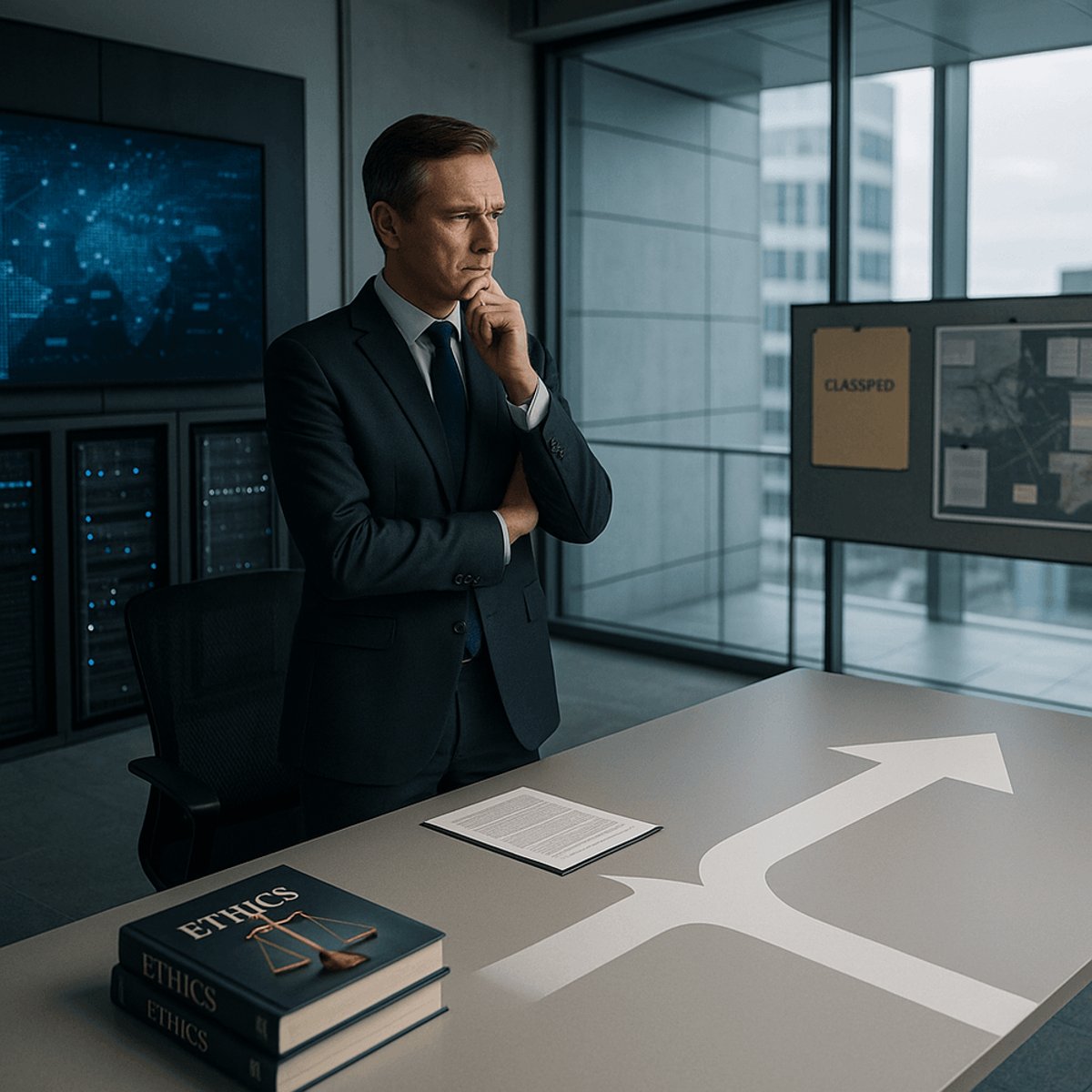
Anthropic is standing at a crossroads that could define the future of AI safety principles. The company's strict policy against letting its AI power autonomous weapons or government surveillance systems is now threatening to cost it a major Pentagon contract, according to a report in Wired. It's a stark test of whether AI safety commitments can survive contact with the defense sector's deep pockets - and a signal moment for an industry increasingly torn between ethics and economics.
Anthropic built its reputation on doing AI differently. Founded by former OpenAI executives who left over safety concerns, the company has long positioned itself as the industry's conscience - the one willing to leave money on the table if it means keeping its technology out of harmful applications. Now that commitment is being tested in the most literal way possible.
The San Francisco-based AI lab is in active negotiations with the Pentagon over what could be a transformative contract, but talks have hit a wall over Anthropic's acceptable use policy. The company explicitly prohibits its Claude AI system from being used in autonomous weapons systems or large-scale government surveillance operations. For the Defense Department, those carve-outs aren't just inconvenient - they may be deal-breakers.
The timing couldn't be more fraught. AI companies are racing to secure government contracts as defense budgets for AI capabilities balloon into the billions. OpenAI has already signaled openness to military applications, while Google famously backed away from Project Maven in 2018 after employee protests, only to later re-engage with defense work through Google Cloud. Microsoft has faced no such hesitation, openly pursuing Pentagon deals worth hundreds of millions.
Anthropicis walking a different path. The company's acceptable use policy draws bright red lines around what it calls "weapons development and military or warfare" applications, specifically calling out autonomous weapons that can select and engage targets without human oversight. The policy also blocks use in "Surveillance and Privacy Violations" including "Tracking or monitoring people without their consent."
For the Pentagon, which is actively developing AI-powered systems for everything from intelligence analysis to targeting assistance, those restrictions create obvious friction. Defense officials have made clear they want flexibility in how AI tools are deployed, particularly as rivals like China pour resources into military AI with no ethical guardrails whatsoever.
The dispute reveals a fundamental tension in the AI safety movement. It's one thing to publish principles about responsible AI development when you're a startup courting venture capital. It's another to stick to those principles when saying no means potentially watching competitors capture billions in government revenue. Anthropic has raised over $7 billion in funding, including major investments from Google and Amazon, but government contracts represent an entirely different scale of opportunity.
Industry insiders say the Anthropic-Pentagon standoff is being watched closely across Silicon Valley. Several AI companies have adopted safety-focused rhetoric in recent years, but few have been forced to make the kind of costly choice Anthropic now faces. If the company walks away from the deal, it sends a powerful signal about the durability of AI safety commitments. If it finds a way to thread the needle - or quietly relaxes its restrictions - the entire framing of "responsible AI" may need recalibration.
The debate also exposes uncomfortable realities about how AI safety principles interact with national security imperatives. Some defense experts argue that keeping advanced AI out of U.S. military hands doesn't prevent harmful applications - it just ensures America's adversaries get there first. Others counter that autonomous weapons represent an existential line that shouldn't be crossed regardless of competitive pressure.
Anthropichasn't commented publicly on the specific contract negotiations, maintaining its usual tight-lipped approach to business discussions. But the company's leadership has been vocal about viewing AI safety as non-negotiable. CEO Dario Amodei has repeatedly emphasized that Anthropic's mission is to build AI systems that are safe and beneficial, even when that means constraining commercial opportunities.
The question now is whether the Pentagon will accept Anthropic's terms, find a different vendor, or pressure the company to revise its policy. Defense procurement typically favors vendors willing to meet government requirements, not the other way around. But Anthropic's Claude models are considered among the most capable in the industry, potentially giving the company unusual leverage.
What happens next will likely shape how other AI companies approach defense contracts. If Anthropic successfully maintains its ethical boundaries while still landing government business, it could provide a template for responsible engagement with military applications. If the deal falls apart, it may signal that AI safety and defense dollars simply can't coexist - forcing companies to choose which side of that divide they're on.
Anthropic's standoff with the Pentagon isn't just about one contract - it's about whether AI safety principles can survive in an industry increasingly dominated by defense spending and geopolitical competition. The company's willingness to walk away from a major military deal over autonomous weapons concerns will either establish a new standard for responsible AI development or prove that ethics are negotiable when the checks get big enough. Either way, every AI company is watching closely, knowing they'll eventually face the same choice.