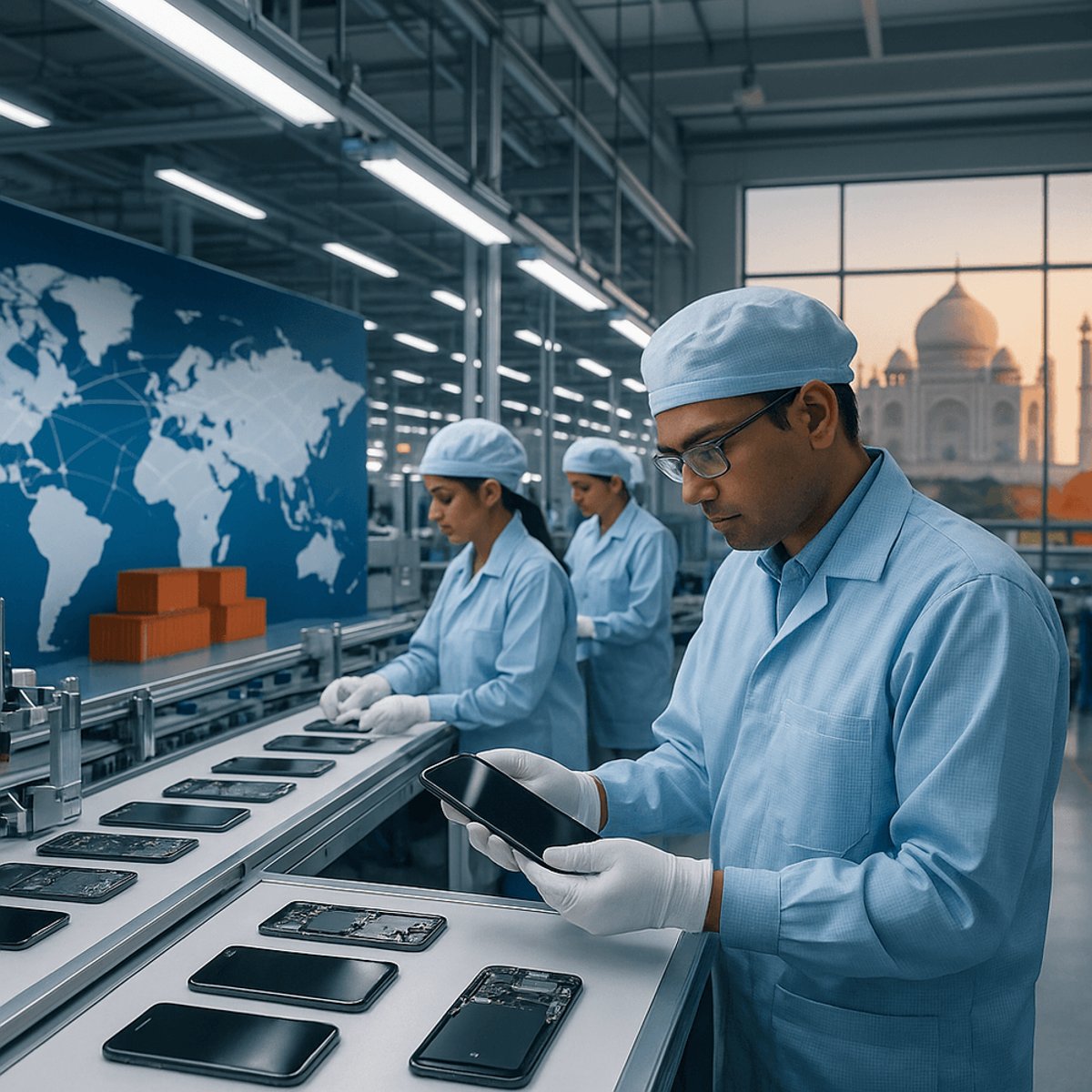
Apple is ramping up iPhone production across five Indian factories just as the White House escalates pressure on New Delhi over its Russian oil purchases. The timing isn't coincidental—as Treasury Secretary Scott Bessent accuses India of "profiteering" from the Ukraine war, Apple's supply chain diversification strategy suddenly looks prescient.
Apple just made its biggest bet on Indian manufacturing yet, and the timing couldn't be more loaded with geopolitical significance. As Treasury Secretary Scott Bessent publicly accused India of "profiteering" from Russian oil sales during a heated CNBC Squawk Box interview Tuesday, news broke that the iPhone maker has quietly expanded production across five Indian factories in preparation for its iPhone 17 launch.
The escalation is swift and serious. President Donald Trump already hiked tariffs on India to 50% earlier this month, with Bessent warning that "secondary tariffs for buying the sanctioned Russian oil" are now in play. Trump's ultimatum is stark: reach a Ukraine peace deal by September, or face tariffs "at about 100%" on Russia's trading partners.
Bloomberg's exclusive reporting reveals Apple's expansion includes new plants operated by Tata Group and contract manufacturer Foxconn Technology, with sources indicating the company plans to manufacture a new iPhone 17e model in India next year. Apple declined to comment, but the strategic implications are clear.
This isn't Apple's first rodeo with supply chain geopolitics. The company has been systematically reducing its China dependence since trade tensions first flared, and the numbers tell the story. Canalys data from May showed iPhone shipments from India to the US exploded 76% as companies scrambled to diversify ahead of potential restrictions.
But Apple appears to be playing both sides of the tariff game masterfully. While expanding in India, the company simultaneously committed over $600 billion to US manufacturing over the next four years. This month alone brought a $100 billion spending expansion, including $2.5 billion to boost Corning's iPhone glass production domestically.
The math works in Apple's favor. "This commitment to building in the U.S. should put Apple in the clear on India-related tariffs," according to CNBC's analysis, effectively giving the company a geopolitical hedge most competitors lack. While other tech giants scramble to navigate Trump's secondary sanctions threat, Apple's dual-manufacturing strategy creates optionality.
India's position grows increasingly precarious as Trump's September deadline approaches. The country has become a major buyer of discounted Russian crude oil since the Ukraine invasion began, purchasing it at below-market rates and refining it for global resale. Bessent's "profiteering" accusation signals the White House views this as direct undermining of Western sanctions—a stance that puts India's booming tech manufacturing ambitions at risk.
For Apple, the timing of this production expansion suggests months of quiet preparation for exactly this scenario. The iPhone 17 launch represents the company's most significant product cycle since the iPhone 15, and having Indian manufacturing capacity online before potential tariff storms hit gives Apple operational flexibility competitors desperately need.
Apple's Indian production expansion isn't just about supply chain diversification—it's a masterclass in geopolitical hedging. While the White House cranks up pressure on India over Russian oil purchases, Apple has positioned itself to benefit from both countries' manufacturing capabilities without getting caught in the crossfire. As Trump's September Ukraine deadline approaches and secondary tariffs loom, Apple's dual-track strategy of Indian expansion plus massive US investment gives it the kind of optionality that could prove invaluable if trade tensions continue escalating. The question now is whether other tech giants can move fast enough to build similar geopolitical insurance policies.