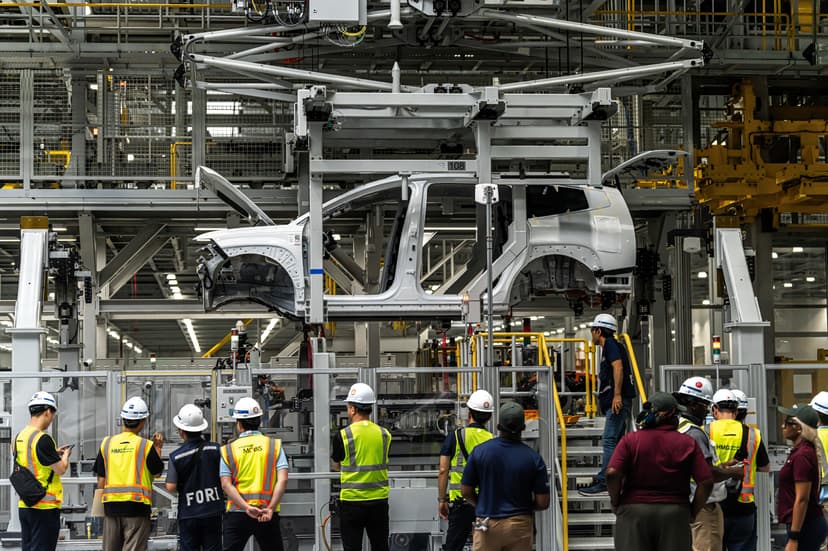
Apple just started shipping AI servers from its new Houston factory, marking a major milestone in the company's $600 billion commitment to US manufacturing. The move comes as President Trump continues pushing tech giants to bring more production stateside, and these servers will directly power Apple Intelligence and Private Cloud Compute services that millions of users rely on daily.
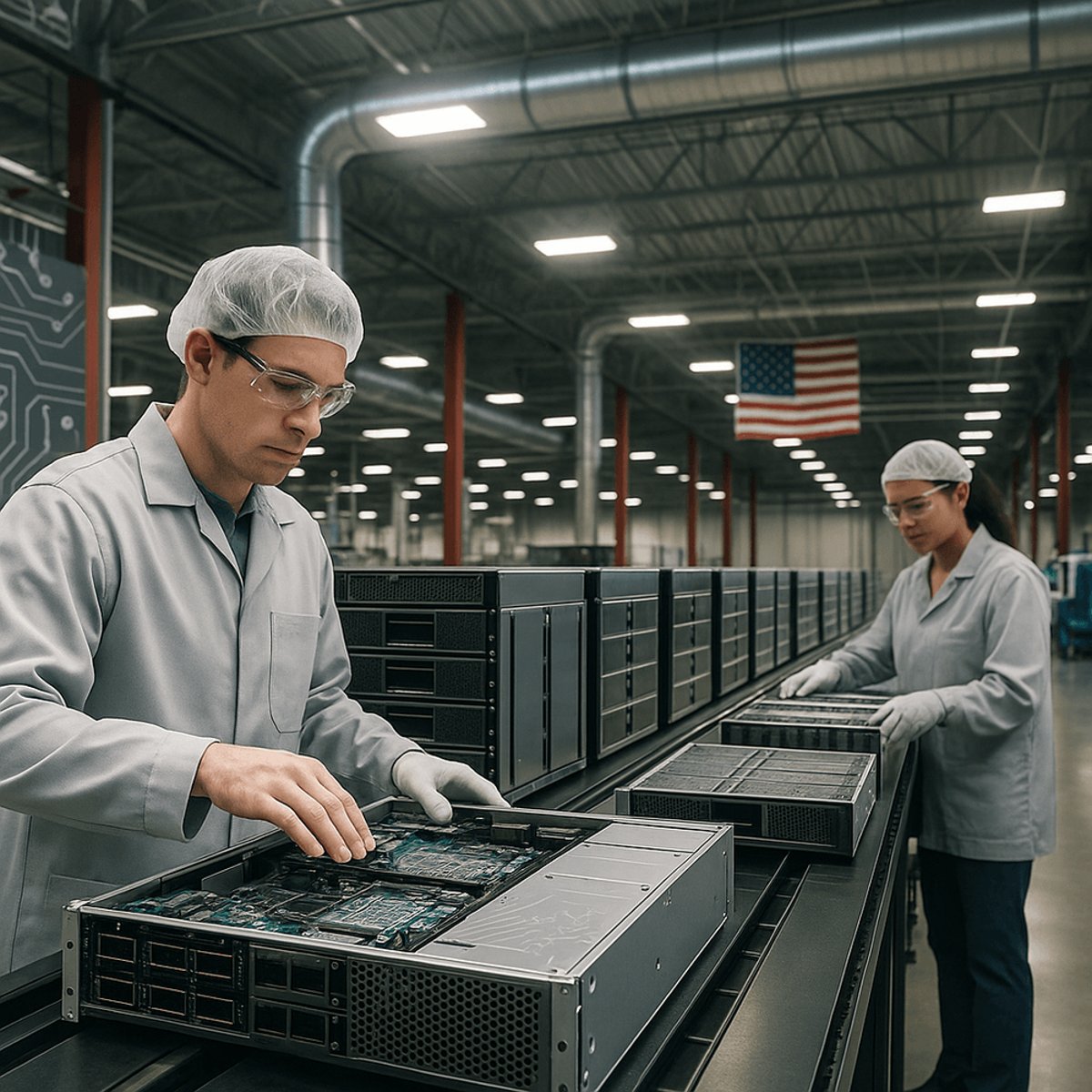
Apple just hit a significant milestone in its push to bring high-tech manufacturing back to American soil. The company announced Thursday it's now shipping advanced AI servers from a brand-new Houston factory, marking the first time these critical components are being built in the US instead of overseas.
The timing couldn't be more strategic. These servers directly power Apple Intelligence and Private Cloud Compute - the AI services that handle everything from Siri requests to photo recognition for millions of iPhone users. Apple Chief Operating Officer Sabih Khan revealed the servers run on Apple's own silicon, giving the company complete control over both hardware and software in its AI infrastructure.
"Our teams have done an incredible job accelerating work to get the new Houston factory up and running ahead of schedule and we plan to continue expanding the facility to increase production next year," Khan said in a statement. The factory is already on track to create thousands of jobs, according to Apple.
This Houston facility represents a key piece of Apple's massive $600 billion commitment to US manufacturing, suppliers, and related initiatives. The company first revealed plans to assemble servers domestically back in February, but few expected production to ramp up this quickly.
For President Trump, who's repeatedly called on Apple and other tech giants to do more manufacturing on US shores, this development delivers exactly what he's been pushing for. The president has maintained a complex relationship with CEO Tim Cook - praising the company's US spending commitments while also pressuring Apple to manufacture iPhones domestically, something experts say would take years and cost significantly more.
The political implications run deeper than job creation. Apple imports most of its consumer devices from China, India, and Vietnam, making the company vulnerable to tariff battles that the Trump administration has both threatened and occasionally walked back. By manufacturing these AI servers in Texas, Apple demonstrates it can successfully bring sophisticated production to American factories when the economics and strategy align.
Cook has been actively courting the administration's favor. In August, he met with Trump to announce additional US spending focused on semiconductor companies through Apple's American Manufacturing Program. Cook even presented Trump with a gift made from US-produced Corning glass used in iPhones and Apple Watches.
The company's also been building out its domestic footprint in other ways. Apple opened a manufacturing academy in partnership with Michigan State University in July, training workers for advanced manufacturing roles. Cook told CNBC in September that Apple's strategy focuses on working with US-based semiconductor suppliers to enable chips to be "fabricated and packaged entirely in the US."
"You can add a lot by making it global and then stitching together the end-to-end supply chain in semiconductors," Cook explained. "I can't stress how important this is and how much that will add to what we're doing."
The Houston facility's success could serve as a blueprint for bringing more high-value tech manufacturing back to America. Unlike consumer electronics assembly, server manufacturing involves lower volumes but higher complexity - making it potentially more viable for US production despite higher labor costs.
What makes this particularly significant is the strategic nature of what's being built. These aren't generic servers - they're specialized AI infrastructure running Apple's custom silicon and powering services that process sensitive user data. By keeping this production domestic, Apple strengthens both its supply chain security and its political positioning as Washington increasingly scrutinizes foreign technology dependencies.
Apple's Houston server factory represents more than just manufacturing - it's a strategic play that satisfies political pressure while strengthening the company's AI infrastructure. As Apple prepares to expand the facility next year, this could become the template for bringing more high-value tech production back to America. The real test will be whether other tech giants follow suit or if this remains a uniquely Apple approach to balancing global supply chains with domestic political realities.