TL;DR:
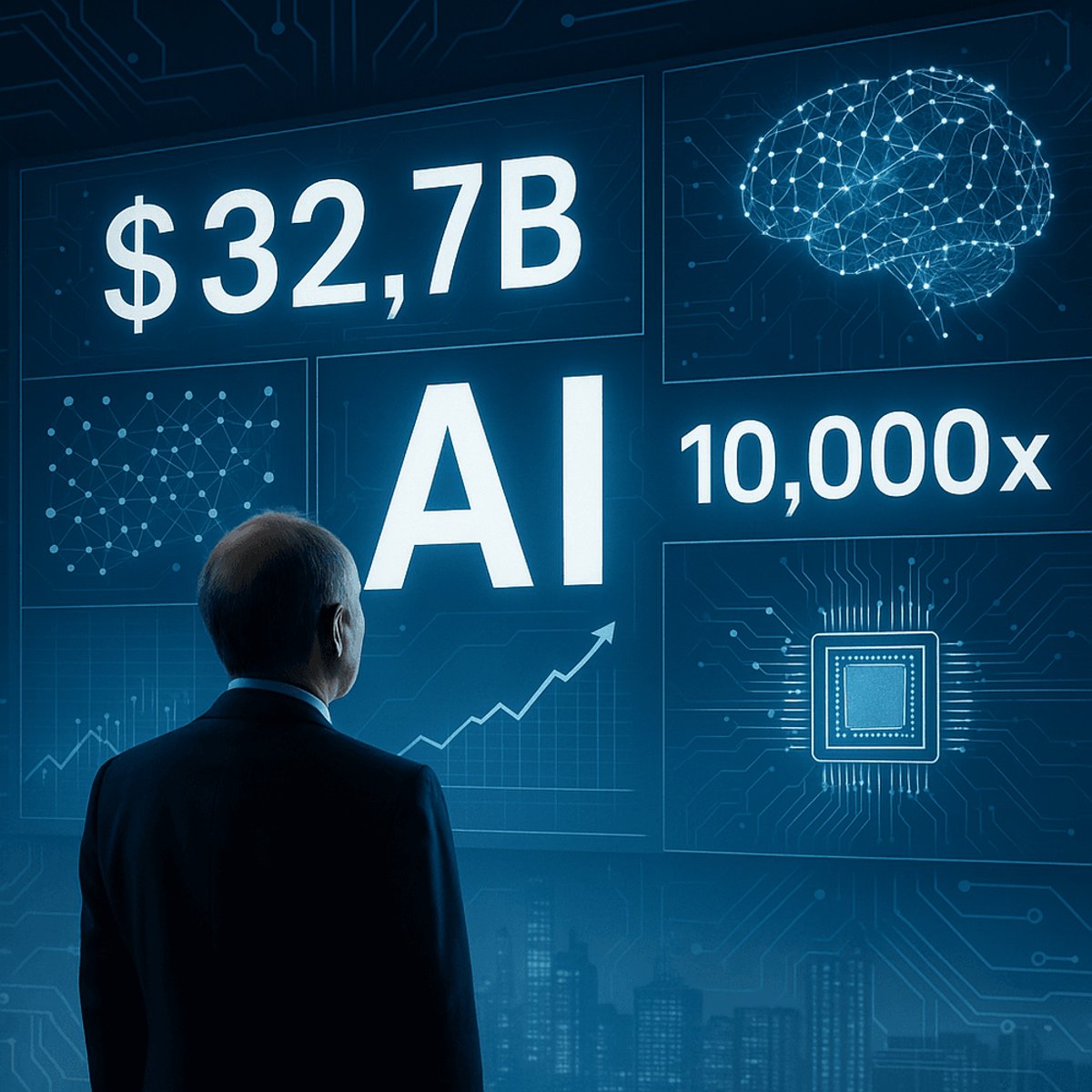
• SoftBank commits $32.7B to OpenAI, Son's largest AI bet yet
• Predicts artificial superintelligence in 10 years, 10,000x smarter than humans
• Arm's $32B acquisition now worth $145B as AI infrastructure play
• Vision Fund portfolio restructured around comprehensive AI ecosystem strategy
SoftBank founder Masayoshi Son is making his boldest prediction yet: artificial superintelligence 10,000 times smarter than humans will arrive within a decade. The billionaire is backing this vision with SoftBank's largest investment spree ever, including a massive $32.7 billion commitment to OpenAI that caps more than 10 years of calculated AI positioning.
SoftBank just doubled down on the biggest technology bet in corporate history. Masayoshi Son's announcement that artificial superintelligence will arrive in 10 years isn't just bold forecasting—it's the culmination of a strategy that's been quietly building for over a decade, now backed by an unprecedented $32.7 billion commitment to OpenAI.
The timing couldn't be more critical. While Microsoft locked up early OpenAI partnerships and Nvidia dominates chip infrastructure, Son is positioning SoftBank as the connective tissue of the entire AI revolution. "SoftBank was founded for what purpose? For what purpose was Masa Son born? I think I was born to realize ASI," Son declared, revealing the personal conviction driving SoftBank's transformation.
This isn't sudden AI fever—it's strategic vindication. Former SoftBank finance chief Alok Sama recalls Son discussing "singularity" over wine at his home years before ChatGPT existed. "He was in very early and he has been thinking about this obsessively for a long time," Sama told CNBC. The foundation was laid in 2010 with Son's "brain computers" vision, followed by the prescient 2016 acquisition of chip designer Arm for $32 billion.
That Arm bet now looks genius. Originally purchased as smartphone infrastructure, Arm's market value has exploded to $145 billion as its chip blueprints became essential for AI data centers. Arm-based processors now power Nvidia's systems, placing SoftBank at the hardware foundation of the AI boom. The March acquisition of Ampere Computing for $6.5 billion further solidifies this infrastructure play.
Son's timing hasn't always been perfect. The Vision Fund's aggressive 2017-2021 investment spree, including bets on Uber and failed startup WeWork, preceded the AI breakthrough moment. "When those companies came to head in 2021, 2022, Masa would have been in a perfect place but he had used all his ammunition on other companies," a former Vision Fund executive told CNBC. SoftBank wanted to invest in OpenAI as early as 2019, but Microsoft secured the partnership while SoftBank was in "defense mode" after record losses.
Now Son is making up for lost time with surgical precision. SoftBank's AI portfolio spans the entire technology stack—from Arm's foundational semiconductors through cloud infrastructure to robotics applications. "SoftBank's AI strategy is comprehensive, spanning the entire AI stack," Neil Shah of Counterpoint Research explained to CNBC, noting the vision to "cohesively connect and deeply integrate these components."
The stakes couldn't be higher in today's AI landscape. DeepSeek's recent breakthrough—developing advanced reasoning models more cheaply than U.S. rivals—sent shockwaves through markets betting on American AI dominance. "The potential of surprise advances in technology at such an early stage in AI remains a big risk," Morningstar analyst Dan Baker cautioned, highlighting the volatility facing SoftBank's concentrated bet.
But Son isn't just investing in AI—he's architecting SoftBank's 300-year survival strategy around it. The company's internal thesis is clear: portfolio companies should use advanced intelligence to become more competitive and better serve customers. This philosophy connects everything from autonomous vehicle investments like Wayve to the emotional robotics experiments with Pepper that seemed ahead of their time.
Son's $32.7 billion OpenAI commitment represents more than capital deployment—it's validation of a decade-long thesis that AI will fundamentally reshape every industry. While the Vision Fund's earlier missteps cost SoftBank prime positioning in the initial AI wave, Son's comprehensive ecosystem approach from chips to applications positions the company for the longer game. With artificial superintelligence potentially arriving within 10 years, SoftBank is betting its entire future that Son's early AI vision will finally pay off at unprecedented scale.