Dolby just threw out the home theater rulebook. The audio giant's new FlexConnect platform lets users place wireless speakers anywhere in their room while maintaining full Dolby Atmos immersion—no more precise positioning required. Currently exclusive to TCL's 2025 QD-Mini LED TVs, the technology could reshape how consumers build home theater systems by making professional-grade audio setup as simple as pairing Bluetooth devices.
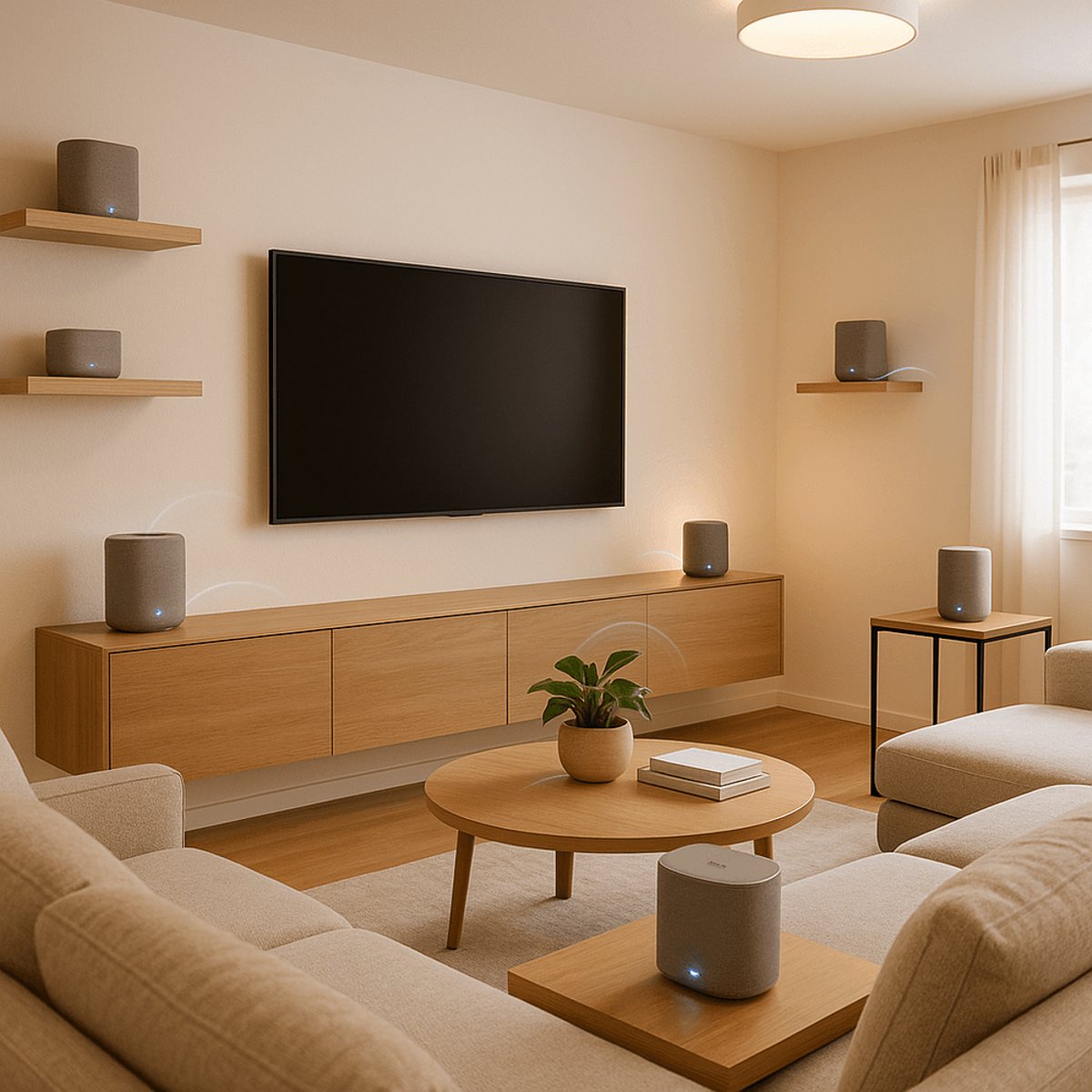
Dolby is rewriting the rules of home theater setup. The audio technology pioneer just unveiled Dolby Atmos FlexConnect, a wireless speaker platform that promises to deliver immersive surround sound regardless of where you place speakers in your room. After decades of demanding precise speaker positioning for optimal Dolby Atmos performance, the company is betting consumers want convenience over perfection.
TCL has secured exclusive launch rights for the technology, integrating FlexConnect into all of its 2025 QD-Mini LED TVs. The system works by automatically detecting each wireless speaker's capabilities—power output, frequency response, and physical positioning—then calibrating the audio to maximize Dolby Atmos performance across height and surround channels.
"For years, there have been just two options for better TV sound: A traditional, AV receiver-based home theater system or a soundbar," according to Wired's hands-on coverage of a Santa Monica demo event. FlexConnect represents a third path that could appeal to consumers who want immersive audio without the complexity of traditional setups.
The technology addresses a fundamental pain point in home audio. Traditional Dolby Atmos systems require speakers to be positioned "just so" to create the signature dome-of-sound experience. Even premium soundbars with satellite speakers demand careful placement for optimal performance. FlexConnect's algorithmic approach promises to solve this by incorporating the TV's built-in speakers as part of the system, then optimizing wireless speakers to fill gaps.
TCL's implementation allows pairing up to four wireless Z100 FlexConnect speakers ($400 each) with compatible TVs. Each Z100 delivers 170 watts RMS through three front-facing drivers plus an up-firing unit for height effects. Users can optionally replace one speaker with a Z100-SW subwoofer ($500), bringing a complete system cost to around $1,700.
The setup process takes under five minutes according to demo reports. The TV's onboard microphones detect speaker presence and position, with users only needing to input their distance from the screen. This contrasts sharply with traditional AV receiver setups that can require hours of calibration and room correction.
However, Dolby faces compatibility challenges that could limit adoption. Each manufacturer's FlexConnect implementation appears proprietary—TCL speakers won't work with future FlexConnect products from other brands. While Dolby says brand lock-in isn't built into the platform, it doesn't require cross-brand compatibility either.
"When other companies eventually make their own FlexConnect TVs, speakers, or soundbars, will they only work within that brand's family of products?" Wired noted during testing. Dolby representatives have refused to comment on which other manufacturers have signed licensing agreements.
The exclusive TCL partnership mirrors other recent audio technology launches where single-brand exclusivity has limited market penetration. Apple's spatial audio and Google's Project Starline both faced similar adoption hurdles before broader industry support emerged.
Early impressions suggest FlexConnect delivers on its core promise. The Wired demo featuring three Z100 speakers and a subwoofer produced "plenty of dialog clarity" and "a strong sense of surround sound." Dolby Atmos music tracks reportedly performed best, showcasing the system's 3D soundstage capabilities.
Future FlexConnect products may embed hub functionality in soundbars or smart speakers, potentially eliminating the TV requirement. This expansion could position Dolby to compete directly with Sonos's multiroom ecosystem and Amazon's Echo spatial audio features.
The timing aligns with broader industry trends toward simplification of premium audio. Apple's HomePod mini array setup and Google's Nest Audio speaker groups both prioritize ease of use over audiophile-grade positioning requirements.
For Dolby, FlexConnect represents a strategic shift from licensing immersive audio formats to providing complete platform solutions. The company has historically focused on enabling technologies rather than consumer-facing products, making this direct-to-consumer approach noteworthy.
Dolby's FlexConnect gambit could fundamentally change home theater adoption by removing the biggest barrier to quality surround sound: complex setup requirements. However, success depends on expanding beyond TCL's exclusive implementation. If other major TV and audio manufacturers embrace the platform with cross-brand compatibility, FlexConnect could become as ubiquitous as Dolby Atmos itself. Without broader industry support, it risks becoming another promising technology trapped in a single ecosystem.