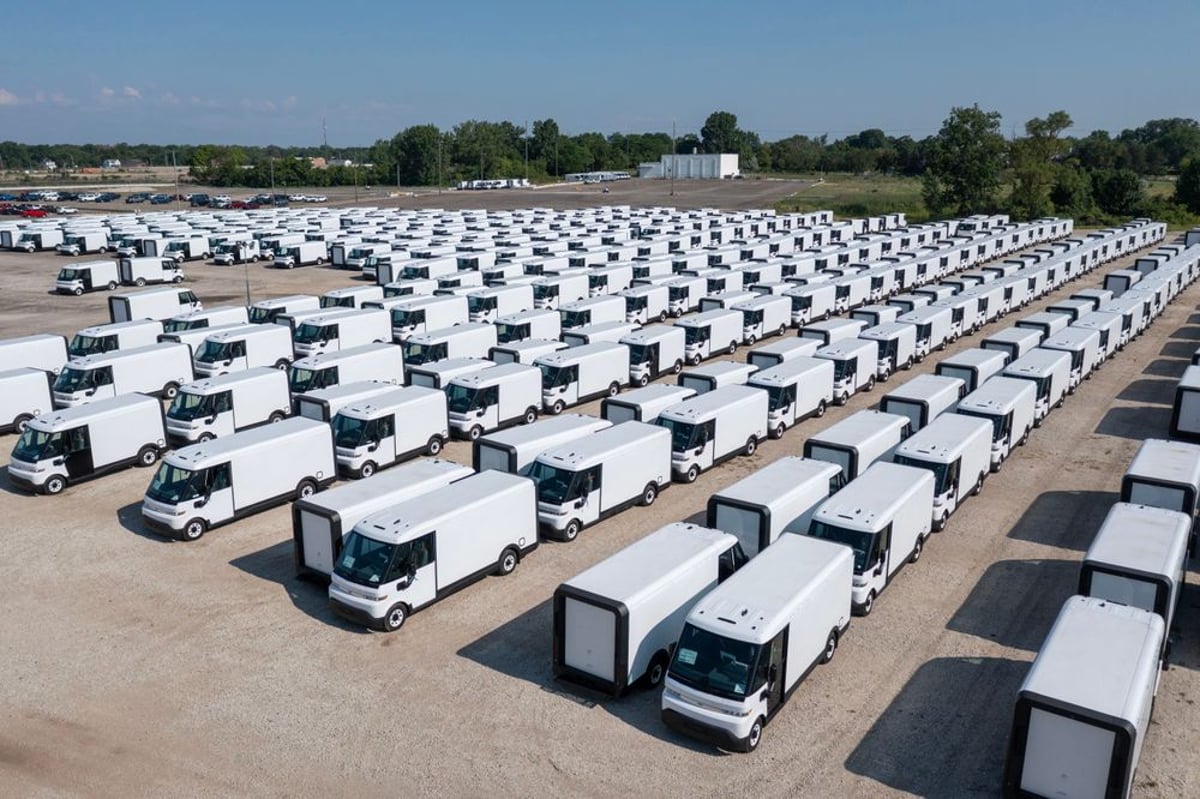
General Motors just pulled the plug on its BrightDrop electric van venture, announcing during Tuesday's earnings call that it will shut down production at its Ontario factory. The decision comes as hundreds of unsold vans pile up in dealer lots across North America, highlighting the brutal reality facing commercial EVs after federal tax credits expired. With BrightDrop vans priced at $74,000 versus Ford's $51,600 E-Transit, GM couldn't make the math work for fleet buyers.
General Motors just delivered a harsh reality check to the commercial EV market. The automaker announced it's shutting down production of its BrightDrop electric delivery vans, marking the end of what was supposed to be GM's big play for the lucrative fleet market.
The news broke during GM's third-quarter earnings call Tuesday, where CEO Mary Barra didn't mince words about the decision. "This is not a decision we made lightly because of the impact on our employees," she told analysts, according to The Verge's coverage. "However, the commercial electric van market has been developing much slower than expected, and changes to the regulatory framework and fleet incentives has made the business even more challenging."
The writing was already on the wall - literally. Earlier this year, the Detroit Free Press reported that hundreds of BrightDrop vehicles were sitting unsold in lots scattered across Michigan and Ontario. The image of rows of gleaming electric vans gathering dust became a symbol of the disconnect between EV ambitions and market reality.
BrightDrop launched in 2021 with serious momentum. GM positioned it as a comprehensive commercial EV solution, complete with delivery vans, fleet management software, and even electric cargo carts. The company secured high-profile partnerships with Walmart, FedEx, and other major retailers who seemed eager to electrify their delivery fleets.
But the business case always had a problem - price. BrightDrop vans started at $74,000, making them significantly more expensive than Ford's E-Transit van with extended range, which sold for $51,600. That $22,400 price gap was tough to justify even when federal incentives helped close the gap.
The expiration of the $7,500 federal EV tax credit on September 30th essentially delivered the final blow. Commercial buyers under 18,000 lbs had been eligible for the same $7,500 discount, making BrightDrop's premium pricing somewhat palatable. Without that cushion, fleet managers started doing the math and walking away.
GM's struggle with BrightDrop also reflects the company's broader challenge of finding the right organizational structure for new ventures. Initially launched as a standalone brand, GM reabsorbed BrightDrop in 2023 and later folded it into Chevrolet to leverage the brand's established dealer network. The constant restructuring suggested internal uncertainty about how to position the product.
The commercial EV market that looked so promising just a few years ago is proving more challenging than automakers anticipated. While consumer EV adoption has grown steadily, fleet buyers operate on different economics. They need vehicles that can handle specific routes, offer predictable operating costs, and integrate seamlessly with existing logistics systems.
Ford has found more success with its E-Transit partly because of aggressive pricing and Ford's deep relationships with commercial customers. The company leveraged decades of experience selling work trucks to understand what fleet buyers actually need versus what sounds good in a press release.
GM now faces the challenge of retooling its CAMI assembly plant in Ingersoll, Ontario. Barra said the company would "assess the plant for future opportunities," but didn't provide specifics. The facility employed hundreds of workers who now face an uncertain future as GM figures out its next move.
The BrightDrop shutdown also raises questions about GM's broader EV strategy. While the company has committed to going all-electric by 2035, setbacks like this highlight how difficult it is to execute that transition profitably across all vehicle segments.
GM's decision to kill BrightDrop reflects the harsh economics facing commercial EVs after federal incentives expired. While the technology worked, the business case didn't - especially at a $74,000 price point that made Ford's E-Transit look like a bargain. For the broader EV market, BrightDrop's demise serves as a reminder that good intentions and solid engineering aren't enough without competitive pricing and clear value propositions for buyers who care more about bottom lines than environmental impact.