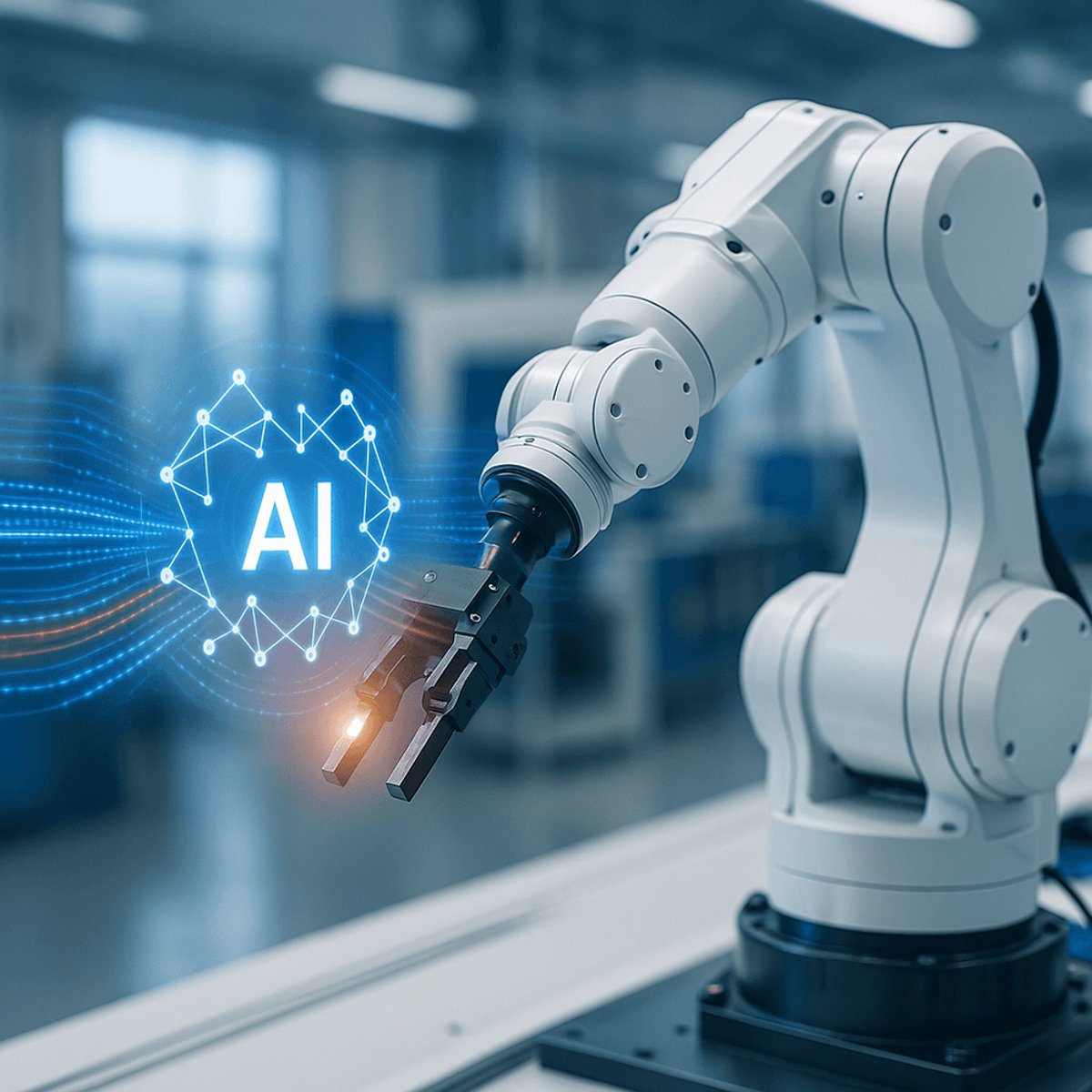
In a major restructuring that signals Google's renewed focus on physical AI, Alphabet is folding its robotics software company Intrinsic back under Google's umbrella. The move ends nearly five years of independence for Intrinsic, which graduated from Google's experimental X lab in 2021 to become a standalone Alphabet subsidiary. The consolidation comes as tech giants race to integrate AI into physical systems, from warehouse robots to manufacturing automation.
Google is bringing Intrinsic back into the fold. The robotics software company, which has operated as an independent Alphabet subsidiary since spinning out of X lab in 2021, is now moving under Google's domain in a restructuring that underscores how seriously the search giant is taking physical AI.
The timing is hardly coincidental. As Amazon deploys thousands of warehouse robots and Tesla pushes its Optimus humanoid platform, Google appears to be consolidating its robotics assets for a more coordinated assault on the enterprise market. Intrinsic's core technology - AI software that dramatically reduces the time needed to program industrial robots for new tasks - fits squarely into Google's enterprise AI ambitions.
Intrinsic emerged from X with a compelling pitch: make industrial robotics accessible to companies that can't afford teams of specialized programmers. The company's software uses machine learning to let robots learn new tasks through demonstration and simulation, rather than requiring hand-coded instructions for every movement. Early customers have included manufacturers looking to automate complex assembly tasks and logistics companies seeking more flexible warehouse automation.
But operating as an independent Alphabet company came with constraints. While Intrinsic could tap Alphabet's resources, it couldn't fully leverage Google's cloud infrastructure, enterprise sales force, or the tight integration with Google's AI models that competitors like Microsoft are offering through Azure. By moving under Google, Intrinsic gains immediate access to Google Cloud's enterprise customer base and can integrate more deeply with Google's AI platforms.
The consolidation reflects a broader shift in Alphabet's strategy. When the company restructured in 2015, creating Alphabet as a holding company with Google as one of several subsidiaries, the goal was to give experimental projects room to breathe outside Google's core business. Projects that graduated from X - like Intrinsic, self-driving car unit Waymo, and life sciences company Verily - were supposed to mature into independent businesses.
But the economics of that model have proven challenging. Most Alphabet companies outside Google continue to lose money, and investors have increasingly questioned the value of maintaining separate structures. Last year, Alphabet reportedly discussed bringing several companies back under Google's umbrella to reduce overhead and improve coordination. Intrinsic appears to be the first significant move in that direction.
For the robotics industry, the integration signals that physical AI is moving from research project to serious business priority. Google has dabbled in robotics for over a decade, acquiring and then selling Boston Dynamics, shuttering various robot projects, and keeping much of its work confined to research labs. Bringing Intrinsic into Google suggests a more sustained commitment.
The competitive landscape is intensifying rapidly. Amazon has been the most aggressive, acquiring warehouse robotics company Kiva Systems in 2012 and steadily expanding its automation efforts. The company now deploys over 750,000 robots across its fulfillment network and recently introduced Sequoia, an AI-powered system that can identify and store inventory 75% faster than previous methods. Tesla is betting that the AI technology powering its self-driving cars can translate to humanoid robots for manufacturing and eventually consumer applications.
Microsoft and Nvidia are also making moves, with Microsoft integrating robotics simulation into Azure and Nvidia offering chips and software specifically designed for AI-powered robots. Even OpenAI briefly explored physical AI before refocusing on software, though CEO Sam Altman has hinted the company might return to robotics.
Intrinsic's technology could give Google a differentiated enterprise offering. Rather than building robots, the company focuses on the software layer that makes existing industrial robots smarter and more adaptable. That positions it as a potential partner to robot manufacturers rather than a competitor, similar to how Google Cloud provides AI infrastructure without trying to replace customer applications.
The integration also gives Google access to Intrinsic's talent and research. The robotics team includes veterans from Google's previous robotics efforts and experts in reinforcement learning, simulation, and robot control. As Google pushes to embed AI throughout its product line, having robotics expertise in-house could inform everything from manufacturing its own hardware to developing new AI capabilities.
What remains unclear is how much autonomy Intrinsic will retain under Google. Some Alphabet companies that moved closer to Google, like Nest, struggled with culture clashes and strategic shifts. Others, like DeepMind, have maintained significant independence while collaborating more closely. How Google handles the integration could determine whether this consolidation unlocks Intrinsic's potential or simply adds it to the pile of Google's past robotics experiments.
Google's absorption of Intrinsic marks more than just another corporate reorganization. It's a signal that physical AI has graduated from moonshot to strategic priority, and that Alphabet's decade-long experiment with independent subsidiaries is giving way to a more focused approach. Whether this consolidation helps Intrinsic scale faster or simply buries it deeper in Google's bureaucracy will depend on execution. But one thing is clear: the race to bring AI into the physical world is accelerating, and Google is betting it can compete more effectively with its robotics assets united rather than scattered. As Amazon automates warehouses, Tesla builds humanoid robots, and startups raise billions for physical AI, Google appears to have decided that coordination trumps autonomy. The question now is whether bringing Intrinsic back home will help it catch up to competitors who never left.