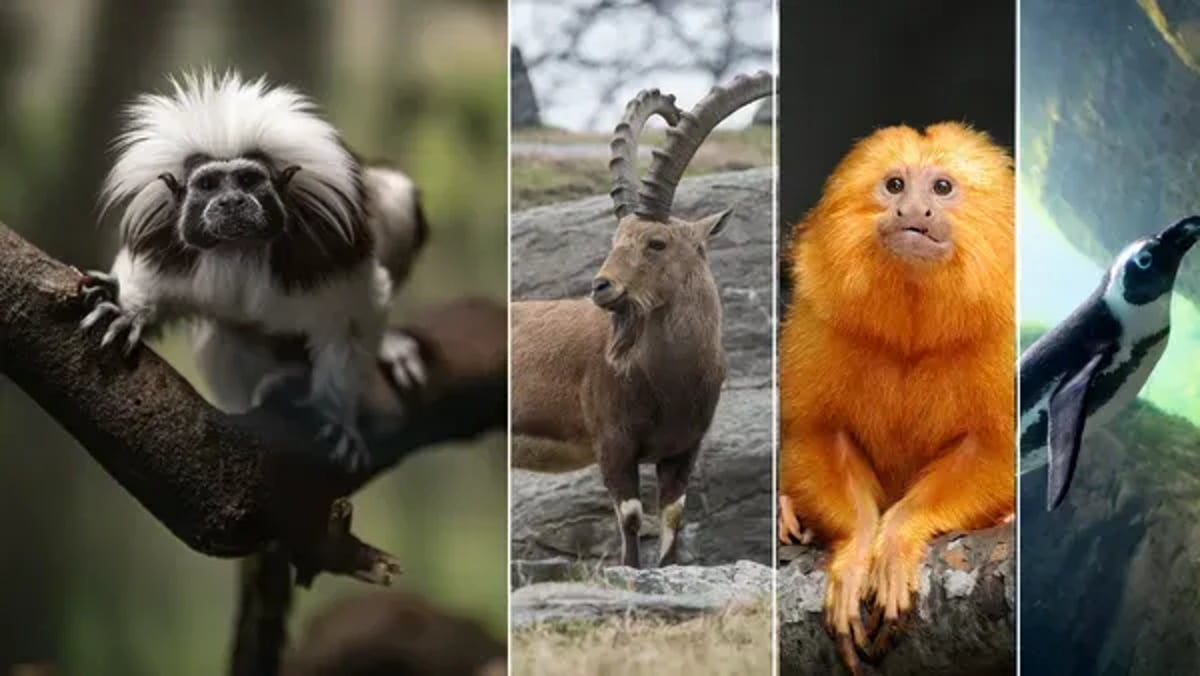
One million species face extinction, and Google just threw a lifeline to 13 of them. The company's using AI tools like DeepPolisher to sequence endangered animal genomes at unprecedented speed and cost - a process that once took 13 years and $3 billion now happens in days for a few thousand dollars. Through partnerships with the Vertebrate Genomes Project and Earth BioGenome Project, Google's making this genetic data freely available to conservation researchers, with funding to expand coverage to 150 more species.
Google is racing against extinction with a new weapon: artificial intelligence that can read the genetic instruction manual of endangered animals before they disappear forever.
The tech giant revealed it's helped sequence the complete genomes of 13 endangered species spanning mammals, birds, amphibians, and reptiles - from Colombia's critically endangered cotton-top tamarin to African penguins facing collapse in their native South African waters. The genomes are now freely available to conservation researchers worldwide, according to a company announcement posted Monday.
This isn't just archiving animal DNA for posterity. Scientists predict one million species may be at risk of extinction, and without capturing their genetic information now, we risk destabilizing ecosystems that underpin food security, climate regulation, and the biological foundations for modern medicine. "If we don't accurately capture their genetic information now, we risk losing many of them forever," Google product managers Lizzie Dorfman and Andrew Carroll wrote in the blog post.
The breakthrough hinges on AI tools Google's been developing for over a decade. DeepPolisher, DeepVariant, and DeepConsensus have collapsed what once seemed impossible into routine science. Sequencing the first human genome took 13 years and cost $3 billion. Today, Google's AI can sequence humans, animals, and plants in days for a few thousand dollars with what the company calls "stellar accuracy."
Google is backing two ambitious initiatives tackling this challenge: the Vertebrate Genomes Project led by Erich Jarvis at The Rockefeller University, and the Earth BioGenome Project, which aims to sequence all known species on Earth. The company's supplying funding, technical support, and its cutting-edge AI toolkit to both efforts.
The 13 sequenced species showcase the breadth of what's at stake. The golden mantella frog, one of Earth's smallest and rarest frogs, survives only in fragmented forest habitats in remote Madagascar. Grevy's zebras, the largest wild equids, have seen substantial population crashes over recent decades. The elongated tortoise faces critical endangerment across South and Southeast Asia, while Eld's deer populations suffer from inbreeding that threatens their genetic viability for wild reintroduction.
Genome sequencing isn't just documentation - it's a conservation playbook. Researchers at the University of Otago analyzed the genome of every living kākāpō, the world's only nocturnal and flightless parrot, then executed a breeding plan that's now pulling the bird back from extinction's edge. By understanding how species adapted to their environments and comparing DNA sequences across different animals, biologists gain insights critical to breakthroughs in conservation, agriculture, and global health.
The AI tools doing this work represent years of Google Research development. DeepPolisher enhances the accuracy of genome assembly, while DeepVariant identifies genetic variants with deep neural networks. DeepConsensus, built for Pacific Biosciences' sequencing technology, dramatically improves the quality of long-read sequencing data that's essential for assembling complete genomes.
But Google's not stopping at 13 species. Google.org just named The Rockefeller University as a recipient of its AI for Science fund, earmarking resources to sequence 150 additional endangered species. All genomic data will be openly released to the scientific community and public, creating a comprehensive biological catalog that could change conservation science.
The initiative comes as Big Tech companies increasingly position AI as a tool for scientific moonshots beyond commercial applications. While Microsoft partners with nonprofits on AI for Earth and Amazon applies machine learning to rainforest monitoring, Google's genome sequencing effort tackles a uniquely foundational challenge: preserving the basic genetic blueprints of life before species vanish.
What once felt like science fiction - a complete catalog encapsulating the biological picture of life on Earth - is now within reach. The Vertebrate Genomes Project and Earth BioGenome Project are building toward that comprehensive archive, with Google's AI compressing timelines that would have stretched across generations into work achievable within years.
The species Google helped sequence read like a conservation crisis inventory. Golden lion tamarins in southeastern Brazil dwindled to just hundreds before intensive intervention. Hog deer across South and Southeast Asia face serious decline and genetic diversity loss. The Nubian ibex, once widespread across Northeast Africa and the Middle East, now clings to dwindling populations. Each genome sequenced represents both a species on the brink and a potential roadmap for pulling it back.
For Google researchers who've spent over a decade building AI for scientific breakthroughs - from flood forecasting to mapping human brain connections - the endangered species work represents technology meeting urgent real-world need. "The technologies we build at Google have the strongest impact when scientists use them to solve real-world problems," Dorfman and Carroll noted.
The open-access approach ensures the genomic data reaches conservationists, researchers, and wildlife managers who need it most. By making these genetic blueprints freely available, Google's betting that distributed scientific collaboration will unlock conservation strategies faster than any single institution could achieve alone.
Google's AI-powered genome sequencing marks a shift from tech companies treating conservation as corporate social responsibility to deploying their core technological advantages on existential biological challenges. With one million species potentially facing extinction, the race to capture genetic diversity before it vanishes forever has found an unlikely accelerant in deep learning tools originally built for other purposes. As Google expands from 13 species to 150 and beyond, the question isn't whether AI can help preserve endangered animals - it's whether this technological sprint can outpace the extinction crisis already underway.