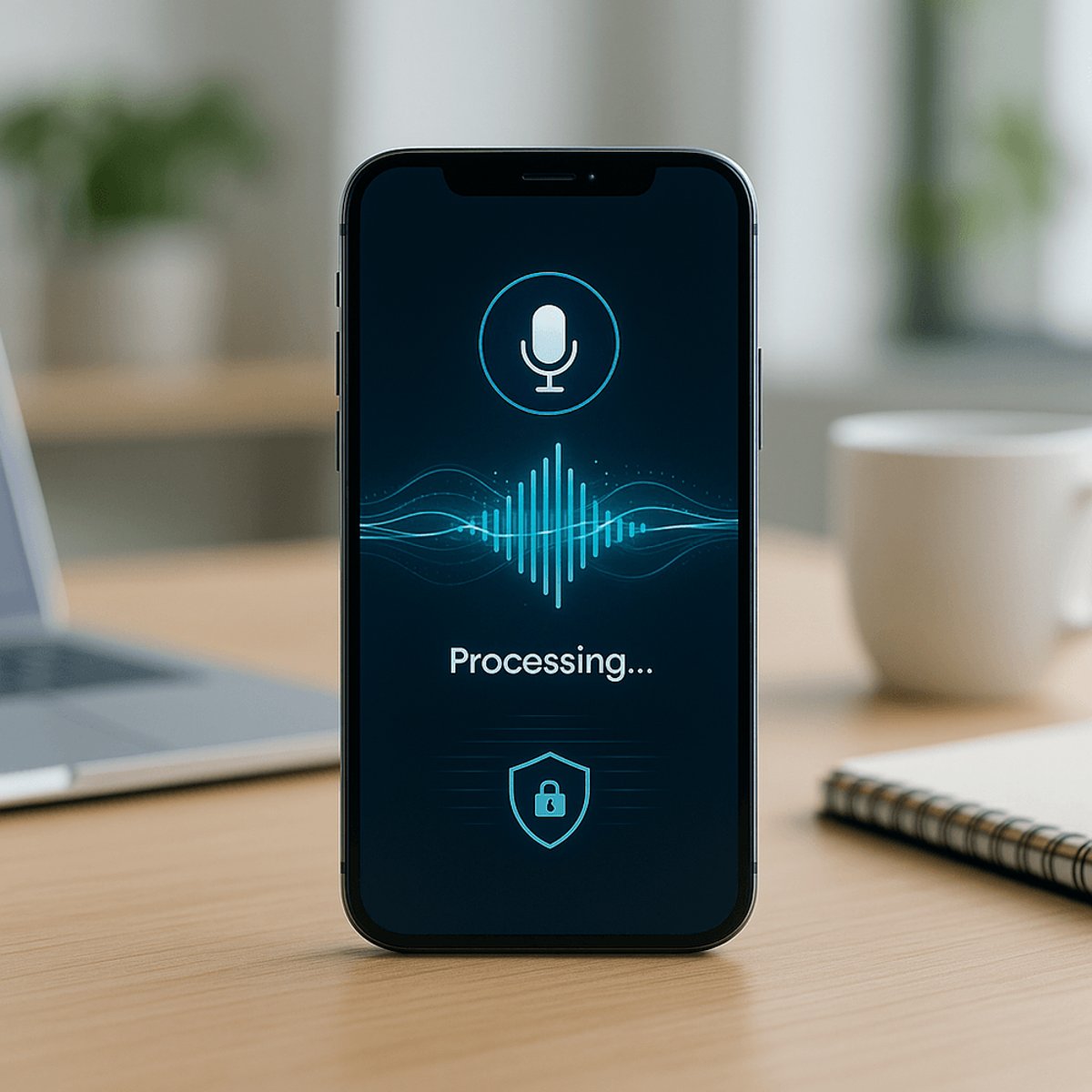
Google just made a surprise move in the voice AI race. The company quietly released an offline-first dictation app for iOS that runs entirely on-device using its Gemma AI models, directly challenging upstart Wispr Flow and signaling a broader industry shift toward privacy-focused, local AI processing. The stealth launch, first reported by TechCrunch, marks Google's latest experiment in deploying lightweight AI models for consumer productivity tools.
Google is making a quiet but significant play in the AI dictation space. The company released an offline-first dictation app for iOS that processes voice input entirely on-device using its Gemma AI models, according to TechCrunch. The launch flew under the radar with no official announcement or press release, a departure from Google's typical product rollout strategy.
The timing puts Google in direct competition with Wispr Flow, a buzzy startup that's been gaining traction with its own offline dictation technology. Wispr Flow has carved out a niche among productivity-focused users who want accurate voice-to-text without sending their conversations to the cloud. Now Google's throwing its considerable AI muscle into the same fight.
What makes this launch notable isn't just the product itself but what it represents. Google's decision to use its Gemma model family - lightweight AI models designed specifically for on-device deployment - shows the company is serious about making AI work locally on phones and tablets. The Gemma models, which Google released earlier as part of its broader AI strategy, are optimized to run efficiently on mobile hardware without requiring constant internet connectivity or server-side processing.
The offline-first approach addresses growing privacy concerns around voice AI. Traditional dictation tools like Google's own Gboard send audio snippets to cloud servers for processing, raising questions about data collection and surveillance. By keeping everything local, Google's new app sidesteps those concerns entirely. Your voice never leaves your device, and the AI does all its work using the phone's own computing power.
This matters because voice AI is becoming table stakes for productivity apps. Microsoft has been integrating voice capabilities across its Office suite, while Apple continues refining Siri's dictation features. The difference is that most of these tools still rely on cloud processing. Google's betting that users will value the privacy and reliability of offline processing, especially in situations where internet connectivity is spotty or nonexistent.
The competitive landscape is shifting fast. Wispr Flow proved there's real demand for offline voice AI, particularly among professionals who spend hours writing emails, documents, and messages. The startup's approach resonated with users tired of accuracy issues and privacy trade-offs in existing tools. Google's entry validates the market but also threatens to commoditize what made Wispr Flow special in the first place.
For Google, this app is likely a testing ground for broader ambitions. The company's been pushing hard on on-device AI capabilities across its product lineup, from smart replies in Gmail to photo processing in Google Photos. An offline dictation app lets Google gather real-world usage data on how well Gemma models perform under everyday conditions, informing future iterations of the technology.
The iOS launch is particularly interesting given Google's Android roots. By debuting on Apple's platform first - or at least simultaneously - Google signals this isn't just an Android experiment. It's a serious cross-platform play aimed at capturing users regardless of their device ecosystem. That suggests confidence in the underlying technology and ambitions beyond a limited pilot program.
Industry watchers are already speculating about what comes next. If the dictation app gains traction, expect Google to fold similar offline AI capabilities into existing products like Gboard, Google Docs, and Gmail. The company's shown it can iterate quickly once it finds product-market fit, and voice AI is clearly a priority area given the broader competition with OpenAI, Microsoft, and others in the generative AI space.
The quiet launch strategy raises questions too. Google might be testing the waters before committing to a full marketing push, or it could be deliberately flying under the radar to avoid drawing regulatory scrutiny. Either way, the app's now available for download, and early adopters will determine whether Google's cracked the code on practical, privacy-respecting voice AI.
Google's stealth dictation app launch might seem like a minor product release, but it's actually a telling signal about where AI is headed. The shift from cloud-dependent to on-device processing isn't just about privacy - it's about making AI reliable, fast, and accessible regardless of connectivity. If Google can prove that lightweight models like Gemma deliver accuracy comparable to cloud-based alternatives, it changes the economics and architecture of AI applications across the board. For now, the company's keeping quiet and letting the product speak for itself. But don't be surprised if this quiet experiment becomes the template for how Google deploys AI across its entire product lineup in the months ahead.