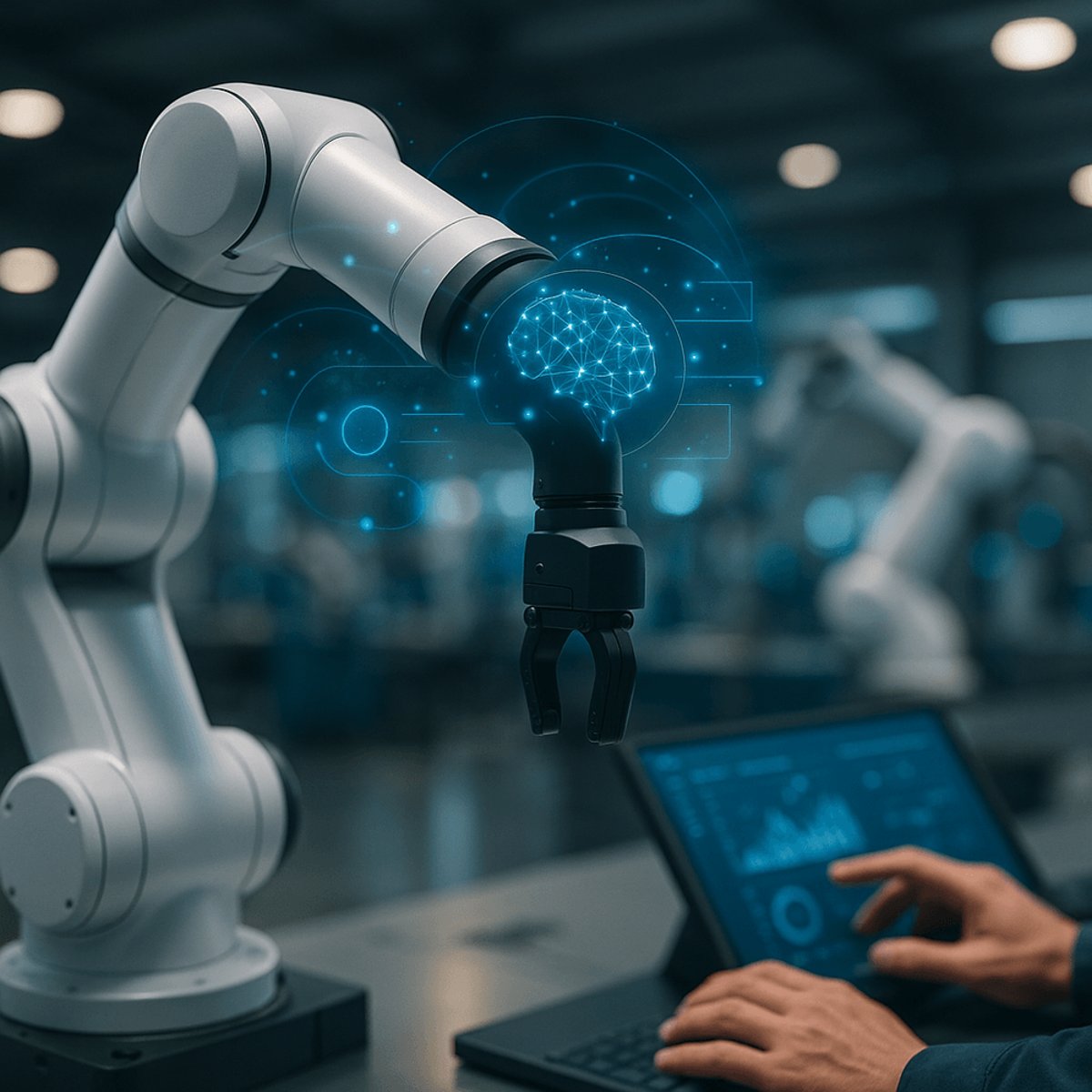
Google just made its biggest bet yet on physical AI. The company is pulling Intrinsic, its robotics software platform, out of the experimental "Other Bets" division and folding it directly into the main business - a strategic elevation that mirrors how Android transformed mobile computing. The move signals Google's intent to dominate industrial robotics the same way it conquered smartphones: by building the operating system everyone else runs on.
Google isn't content dominating search, mobile, and cloud anymore. The tech giant just promoted Intrinsic from its experimental sandbox into the big leagues, and the implications stretch far beyond robotics.
The reorganization, reported by CNBC, represents the most significant validation yet of Google's physical AI ambitions. Intrinsic, which has spent the last several years quietly developing robotics software inside Alphabet's Other Bets division alongside projects like Waymo and Verily, is now getting the full resource backing of Google's main operations.
The Android parallel isn't just marketing spin. When Google acquired Android Inc. in 2005 and released its mobile OS three years later, skeptics questioned whether the search giant could challenge Apple and Microsoft in hardware ecosystems. Today, Android powers more than 70% of the world's smartphones. Google gave it away for free, built a massive developer ecosystem, and let hardware manufacturers compete on devices while Google controlled the platform.
That's exactly the playbook Intrinsic appears designed to execute for industrial robotics. Rather than building robots, the platform offers a software layer that works across different manufacturers' hardware - handling motion planning, machine learning integration, and task orchestration. Factories could theoretically swap robot arms from different vendors while keeping the same Intrinsic-powered brains running operations.
The timing reveals Google's read on where AI is heading next. While competitors like OpenAI and Anthropic race to build more powerful language models, Google is extending its AI capabilities into physical space. The company has been testing AI models that can control robotic systems, translating natural language commands into physical actions - technology that only makes sense with a robust software platform underneath.
Industry watchers have been expecting this move. "Google has been conspicuously quiet about robotics while making massive AI investments," noted one venture capitalist who requested anonymity. "Intrinsic was always too strategic to stay in Other Bets if it showed traction." The integration suggests that traction has materialized, though Google hasn't disclosed customer numbers or revenue figures.
The broader context matters here. Manufacturing and logistics companies are desperately seeking automation solutions as labor shortages persist and wage pressures mount. The global industrial robotics market is projected to hit $80 billion by 2028, with software and AI integration representing the fastest-growing segment. Amazon has deployed over 750,000 robots across its fulfillment network. Tesla is developing humanoid robots for factory work. Every major manufacturer is exploring AI-powered automation.
But the robotics industry faces a fragmentation problem that mirrors pre-Android mobile. Different manufacturers use proprietary software stacks, making it expensive and complex for companies to deploy multi-vendor robot fleets. Developers must write custom code for each hardware platform. There's no app store equivalent where you can download a "pick and place" routine that works on any robot arm.
Intrinsic could solve that - if Google executes the way it did with Android. The company would need to convince major robotics manufacturers like ABB, FANUC, and KUKA to adopt its platform, likely by offering it for free or at minimal cost while monetizing through cloud services and enterprise support. It's a strategy that requires deep pockets and patience, exactly what moving into Google's core business provides.
The competitive landscape is already reacting. Microsoft has been investing heavily in industrial AI through its Azure cloud platform and recently expanded robotics partnerships. Nvidia offers Isaac, a robotics development platform built around its AI chips. Amazon has its own robotics expertise from internal deployments. None have articulated an "Android for robots" strategy quite as explicitly as Google now appears positioned to pursue.
There's also the AI model angle. Google's Gemini models and extensive machine learning infrastructure give Intrinsic potential advantages in the intelligence layer - the AI that helps robots adapt to new tasks, understand complex environments, and learn from experience. Physical AI requires models trained on robotic movement and spatial reasoning, not just text and images. Google has been quietly building those capabilities.
The risks are substantial. Robotics is notoriously difficult, with high failure rates even among well-funded startups. Hardware integration challenges could undermine the software platform vision. Industrial customers move slowly and value reliability over innovation. Google's track record of killing projects that don't achieve rapid scale could make potential partners nervous about long-term commitment.
But the upside potential explains why Google is making this bet now. If Intrinsic becomes the standard platform for industrial robotics the way Android dominates mobile, Google positions itself at the center of the next massive computing platform shift - one where AI doesn't just generate text and images, but physically manipulates the world.
Google's elevation of Intrinsic from experimental project to core business represents more than corporate reorganization - it's a declaration that physical AI has graduated from research curiosity to strategic priority. The Android analogy works because the underlying logic is identical: control the platform layer, let others compete on hardware, and build an ecosystem so valuable it becomes impossible to ignore. Whether manufacturers will hand Google that level of influence over industrial robotics remains the trillion-dollar question. But the company that turned "search" and "mobile OS" into verbs clearly believes the robotics platform game is worth playing at the highest level. For enterprises evaluating automation strategies and robotics manufacturers choosing software partners, Google just forced everyone's hand - the platform wars for physical AI have officially begun.