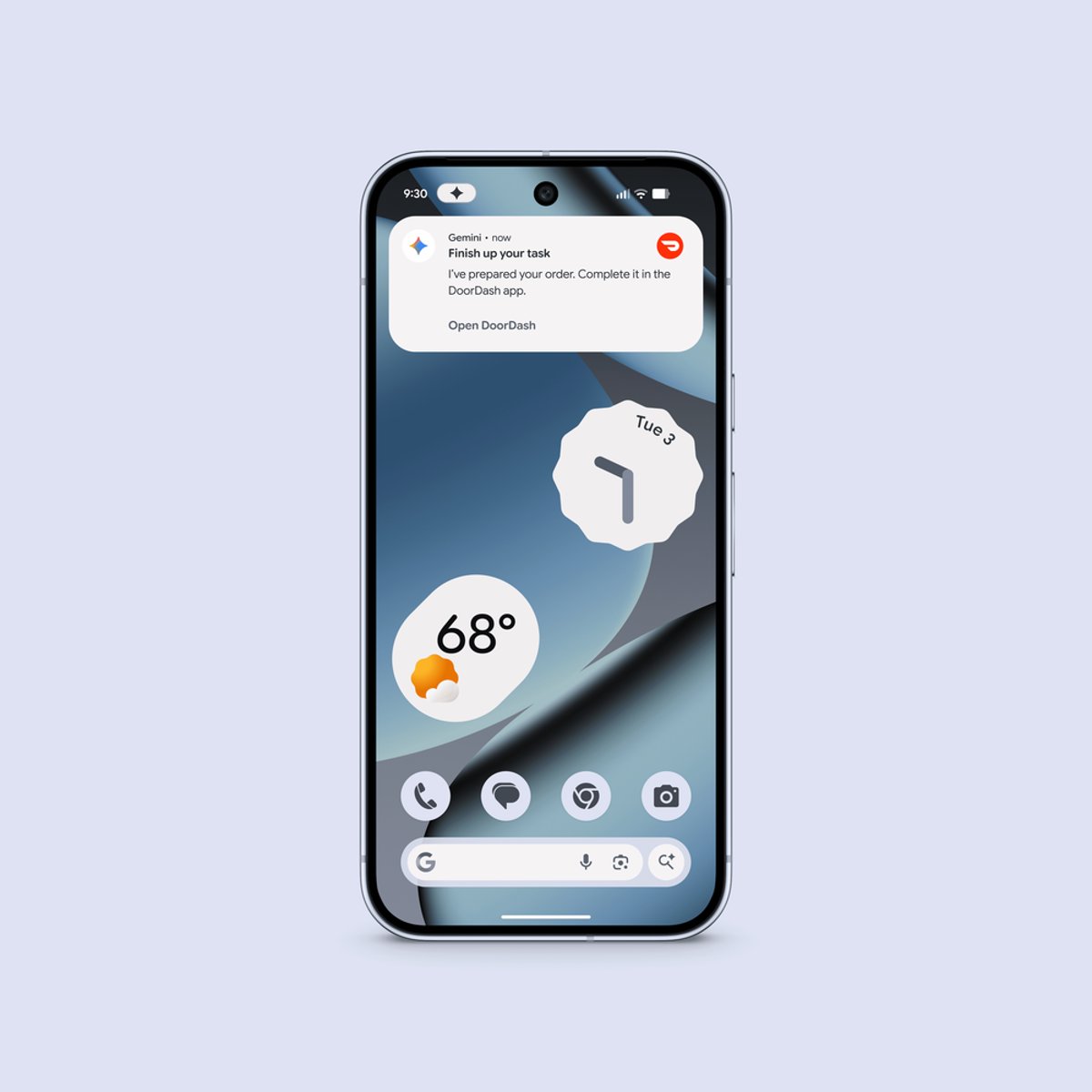
Google just crossed a critical threshold in the AI assistant race. The company's Gemini AI is rolling out task automation capabilities that let it independently navigate apps like Uber and DoorDash, marking the first time a major consumer AI assistant can execute multi-step tasks without constant human intervention. Starting with Pixel 10 phones and Samsung's Galaxy S26 series, users can now ask Gemini to hail a ride or prep a food order while the AI works autonomously in a virtual window.
Google is making its biggest bet yet that AI assistants should do more than just answer questions. The company's rolling out what it calls "task automation" for Gemini, transforming the AI from a conversational interface into an agent that can actually complete tasks on your behalf.
The feature launches first on Pixel 10 devices and Samsung's Galaxy S26 lineup, where Gemini can now handle the entire process of ordering an Uber ride or assembling a DoorDash cart. According to The Verge's hands-on coverage, users simply prompt Gemini with something like "Get me an Uber to the Palace of Fine Arts," and the AI springs into action.
What happens next represents a fundamental shift in how AI assistants operate. Gemini launches the target app in a virtual window on your device and methodically works through each step - entering addresses, selecting vehicle types, reviewing prices. You can watch the entire process unfold in real-time, with options to interrupt or take control if the AI goes off track. Or you can just let it run in the background while you do something else.
The implementation reveals Google's careful approach to agentic AI. Unlike fully autonomous systems that could theoretically rack up charges without oversight, Gemini prepares everything but stops short of final submission. When it's done, you get a notification saying "I've prepared your order. Complete it in the DoorDash app." That final tap remains firmly in human hands.
This measured rollout makes sense given the stakes. AI agents that can spend money or commit you to transactions need guardrails, especially in these early stages. Google is essentially testing whether users trust AI enough to handle the tedious parts of app navigation without wanting to surrender complete control.
The technology builds on advancements in computer vision and UI understanding that let AI models "see" and interact with app interfaces the way humans do. Instead of requiring custom API integrations with every service, Gemini can theoretically work with any app by recognizing buttons, form fields, and navigation patterns. That scalability could be the key to making agentic AI practical across thousands of apps rather than just a handful with official partnerships.
For Samsung, the Galaxy S26 integration represents a strategic advantage in the Android ecosystem. While Apple's shown interest in agentic features through App Intents and upcoming Siri upgrades, Google's move puts advanced AI capabilities on Android flagships first. The Pixel 10 naturally serves as the showcase device, but extending to Samsung's mass-market lineup means potentially tens of millions of users will get access.
The competitive implications extend beyond phones. OpenAI has talked extensively about AI agents, while Microsoft is building Copilot features that automate workflows across productivity apps. Anthropic's Claude can use computers directly through similar UI navigation. But Google is first to put agentic AI directly into consumers' hands through devices they already own.
Initial app support focuses on Uber and DoorDash, which makes strategic sense - these are high-frequency use cases where automation delivers obvious time savings. Hailing a ride or ordering dinner involves repetitive steps that rarely require creative judgment. If Google can prove the technology works reliably for these tasks, expansion to travel booking, restaurant reservations, and shopping becomes the logical next phase.
The feature also signals where Google sees AI assistants heading. Rather than positioning Gemini as a better search engine or smarter chatbot, the company's framing it as a digital employee that handles errands. That vision aligns with how enterprise AI agents are evolving - software that doesn't just provide information but executes tasks across multiple systems.
Trust will determine whether task automation takes off or stalls. Users need to believe Gemini won't order the wrong item, send a ride to the wrong address, or somehow misinterpret instructions in costly ways. Google's decision to maintain human oversight for final approval suggests the company knows that trust has to be earned gradually.
The rollout timeline remains unclear beyond the initial Pixel 10 and Galaxy S26 availability. Google hasn't said whether the feature will expand to older Pixel models or other Android devices, though on-device AI capabilities typically require newer chips with sufficient neural processing power. The Pixel 10 likely packs the necessary hardware, as does Samsung's latest flagship processor.
Google's task automation represents the first real test of whether mainstream users want AI agents doing things on their behalf. The technology's impressive, but adoption hinges on whether people trust Gemini enough to let it navigate their apps and prep transactions. If it works reliably, this could redefine what an AI assistant means - shifting from something you talk to into something that actually handles your digital busywork. The initial focus on Uber and DoorDash keeps the stakes manageable while Google proves the concept. But if users embrace it, expect this capability to spread across every app on your phone within the next year.