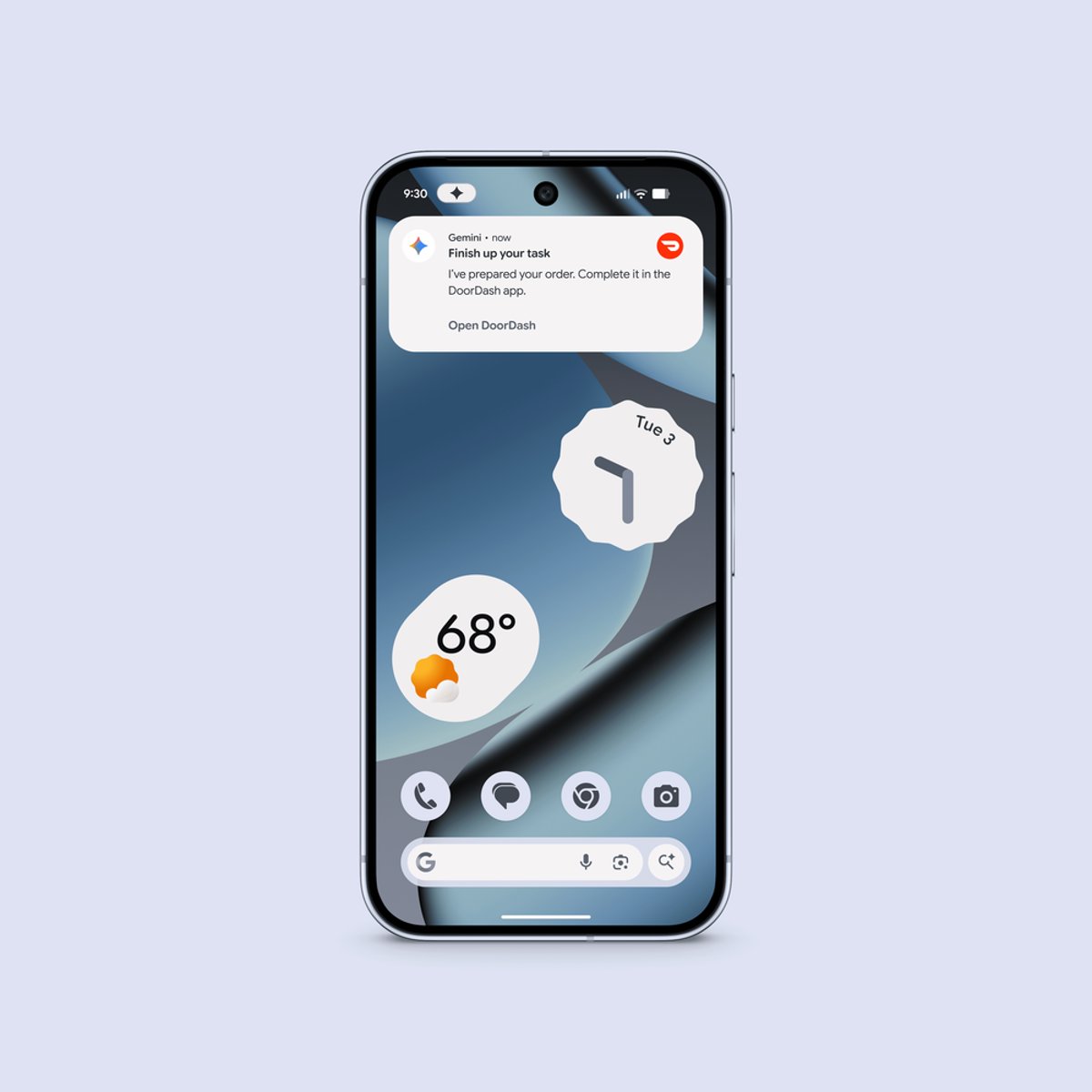
Google just crossed a major threshold in AI assistant evolution. Starting today on Pixel 10 and Samsung Galaxy S26 devices, Gemini can autonomously navigate apps like Uber and DoorDash to complete multi-step tasks - marking the first time Google's AI assistant moves from reactive responses to proactive agent behavior. The feature, called task automation, lets users watch in real-time as Gemini opens apps, fills in details, and preps orders for final user approval, according to The Verge.
Google is making its boldest bet yet on agentic AI. The company's Gemini assistant can now autonomously complete tasks across apps - not just answer questions or provide suggestions, but actually execute multi-step workflows on your behalf.
The feature, launching today on select Pixel 10 models and Samsung's Galaxy S26 series, works through what Google calls task automation. Tell Gemini "Get me an Uber to the Palace of Fine Arts," and the AI springs into action. It launches the Uber app in a virtual window, enters your destination, selects a ride type, and preps everything for your final approval, The Verge reports.
You can watch the whole process unfold in real-time or let it run in the background while Gemini handles the tedious bits. If something looks off, users can stop the automation or take control at any point. The same workflow applies to DoorDash orders - Gemini will browse menus, add items to your cart, and hand things back to you for checkout.
This marks a fundamental shift in how AI assistants operate. Previous generations of digital helpers - including earlier versions of Gemini, Siri, and Alexa - primarily responded to direct commands with information or simple actions. They'd show you a restaurant's hours or set a timer, but couldn't independently navigate complex app interfaces to complete tasks that require multiple decisions and inputs.
What Google is rolling out resembles the agentic AI capabilities that startups and enterprise software companies have been chasing for months. Instead of being a fancy chatbot, Gemini becomes something closer to a digital employee that can interpret intent, make reasonable choices, and execute workflows across different platforms. The distinction matters enormously for both consumer convenience and enterprise productivity.
The technical execution reveals just how far Google has come with on-device AI processing. Task automation runs locally on the Pixel 10 and Galaxy S26, leveraging the advanced neural processing units in both devices. This on-device approach addresses privacy concerns by keeping your app interactions and personal data on your phone rather than sending everything to cloud servers.
But Google is clearly treading carefully with the rollout. The feature launches with just two app integrations - Uber and DoorDash - and only on specific flagship devices. Users still need to manually approve final actions like submitting orders or confirming ride requests. That last-mile human approval requirement suggests Google wants to build user trust gradually before letting Gemini make purchases or commitments autonomously.
The timing aligns with broader industry momentum toward AI agents. OpenAI's been testing similar capabilities with ChatGPT, while Microsoft is building autonomous agents into its Copilot platform for enterprise workflows. Samsung's inclusion in this launch indicates the feature may expand beyond Google's own hardware ecosystem, potentially opening task automation to third-party Android manufacturers.
For Uber and DoorDash, the integration represents a new front in the battle for consumer attention. If Gemini can handle the friction of opening apps and navigating interfaces, these platforms benefit from reduced abandonment rates. But it also means Google now sits between these services and their customers - a position that could reshape mobile commerce dynamics as the feature scales.
The virtual window implementation is particularly clever. Rather than running tasks completely invisibly, Google lets users peek under the hood to see exactly what Gemini is doing. That transparency could be crucial for adoption, especially as consumers grow more cautious about AI systems operating without oversight.
What's not yet clear is how Google will expand task automation beyond rides and food delivery. Banking apps, travel bookings, and e-commerce represent obvious next steps, but each comes with unique security and trust challenges. The current implementation stops short of handling payment information directly, requiring users to complete financial transactions themselves.
This launch also signals where Google sees the competitive battleground shifting. While rivals focus on better language models or more creative AI outputs, Google is betting that usefulness - the ability to actually get things done - will matter more to mainstream users than conversational polish or artistic capabilities.
Google's task automation feature represents more than an incremental upgrade to Gemini - it's the company's opening move in the race to build AI agents that can operate independently across the digital ecosystem. By starting with low-stakes use cases like food delivery and ride-hailing, and maintaining human oversight for final approvals, Google is testing both the technology and consumer comfort levels. If this limited rollout on Pixel 10 and Galaxy S26 devices proves successful, expect rapid expansion to more apps, more devices, and eventually, more autonomous decision-making. The AI assistant wars just shifted from who can chat best to who can actually do your work for you.