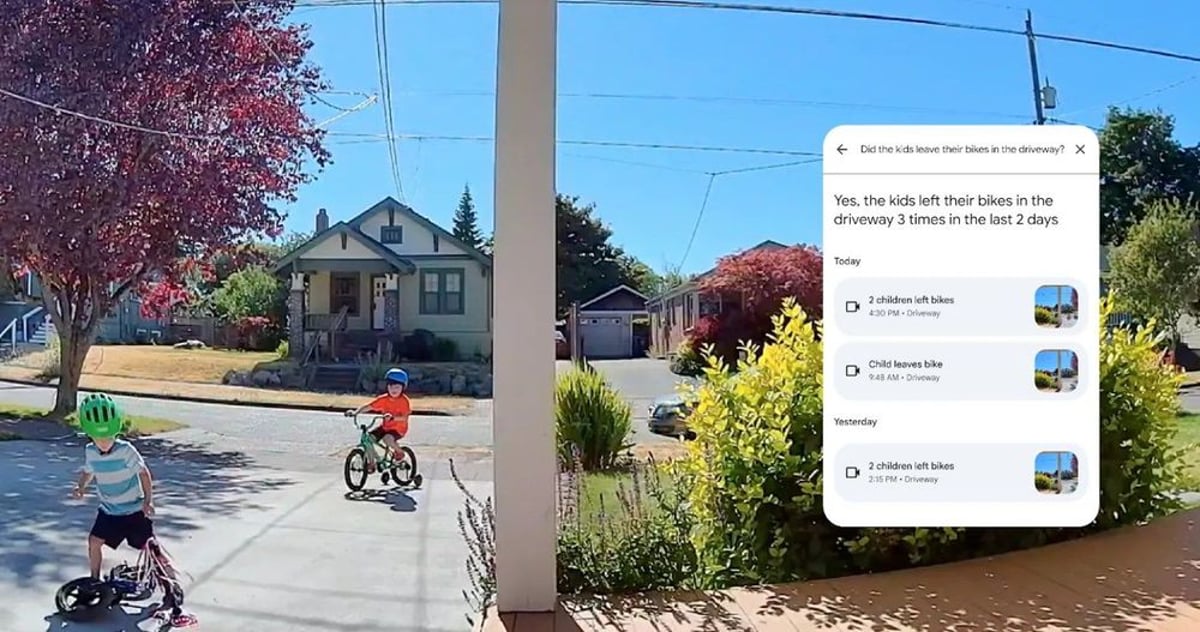
Google just turned its smart home cameras into real-time AI assistants. The company's new Live Search feature lets Gemini analyze your camera feeds as they happen, not just after the fact. Instead of scrolling through hours of footage, you can now ask "Hey Google, is there a car in the driveway?" and get an instant answer. It's a notable shift from reactive to proactive AI—but it'll cost you $20 a month.
Google is making a big bet that you'll pay extra to talk to your security cameras. The company just rolled out Live Search, a feature that brings real-time AI analysis to Google Home Premium subscribers. According to Google Home chief Anish Kattukaran, the update fixes what's been a fundamental limitation of smart home AI—until now, Gemini could only tell you what already happened.
Live Search changes that equation. Point your Nest camera at the driveway, and Gemini can tell you whether your spouse's car is parked there right now. Aim it at the backyard, and ask if the dog's digging up the flower bed again. The AI processes the video feed in real-time, understanding scenes as they unfold rather than just flagging motion events after they've been recorded.
It's the kind of feature that sounds simple but requires serious computational power. Google is essentially running continuous computer vision analysis on multiple camera streams simultaneously, then making that data queryable through natural language. The company hasn't detailed exactly which Gemini model is handling the processing, but Kattukaran confirmed that Gemini for Home is now using updated models that should improve accuracy.
The catch? Live Search requires the Advanced plan of Google Home Premium, which runs $20 monthly or $200 annually. That's a significant premium over the standard tier, and it puts Google in direct competition with security-focused platforms like Ring and Arlo, which have been pushing their own AI-powered detection features.
But Google's playing a different game here. While competitors focus on alerting you to specific events—a person detected, a package delivered—Live Search is conversational. You're not waiting for the system to decide what's important. You're asking questions on demand, treating your camera network like a visual search engine for your property.
The timing matters too. Amazon has been quietly improving Alexa's smart home capabilities, while Apple continues to position HomeKit as the privacy-conscious alternative. Google is betting that real-time AI analysis is compelling enough to justify recurring subscription revenue, a shift from the one-time hardware purchase model that's dominated the smart home market.
Kattukaran's announcement also included fixes for what he called "a long list of annoyances and idiosyncrasies" in the Google Home platform, though he didn't specify which pain points got addressed. Anyone who's wrestled with Google's occasionally temperamental smart home ecosystem knows there's been plenty to fix—from devices randomly going offline to routines that trigger unpredictably.
The broader context here is that consumer AI is moving from novelty to utility. OpenAI has been pushing ChatGPT into more practical applications, while Microsoft embeds Copilot across its product line. Google is taking a similar approach with Gemini, but anchoring it in physical spaces through cameras and sensors.
There are obvious privacy implications. Google's processing live video feeds from inside and around your home, even if that analysis happens on-device or gets immediately discarded. The company hasn't released detailed documentation about data retention policies for Live Search queries, which will likely become a point of scrutiny as adoption grows.
For now, Live Search represents the clearest example yet of what ambient AI might actually look like in practice—not a chatbot you open when you need help, but an intelligence layer that understands your physical environment and responds to natural questions about it. Whether that's worth $20 a month depends on how much you value convenience over manually checking camera feeds.
Live Search signals where consumer AI is heading—away from reactive alerts and toward conversational intelligence that understands your physical spaces in real-time. Google's betting that capability is valuable enough to drive recurring subscription revenue, but the $240 annual price tag means it'll need to prove indispensable quickly. The real test isn't whether the technology works, but whether asking your cameras questions becomes as natural as checking them manually. If it does, Google just found a compelling moat in the increasingly crowded smart home market.