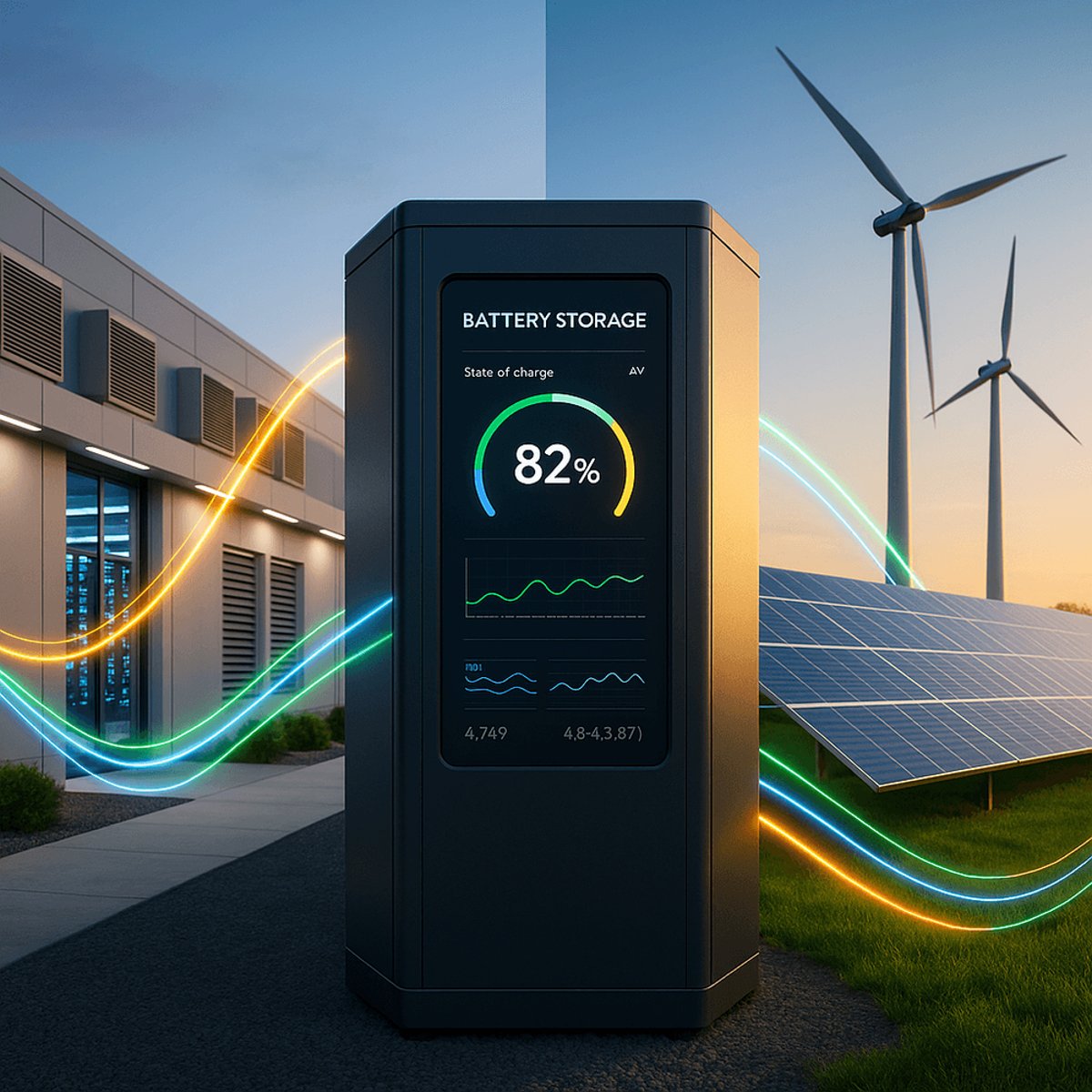
Google just sealed one of the biggest clean energy deals in tech history. The company signed a 1.9-gigawatt renewable power agreement that includes a groundbreaking 100-hour battery system from Form Energy, designed to keep its AI-hungry data centers running around the clock on wind and solar power. The deal marks a turning point in how hyperscalers are solving the reliability problem that's plagued renewable energy for decades.
Google is making a massive bet that iron-air batteries can solve one of AI's thorniest problems: how to run power-hungry data centers on intermittent renewable energy. The company just announced a 1.9-gigawatt clean energy deal that pairs wind and solar farms with Form Energy's revolutionary 100-hour battery storage system, creating what may be the most ambitious attempt yet to power AI infrastructure without fossil fuel backup.
The scale is staggering. At 1.9 gigawatts, this single deal could power nearly 1.5 million homes, and the battery system is designed to store enough energy to keep Google's operations running for more than four days straight when the sun isn't shining and the wind isn't blowing. That's a game-changer in an industry where lithium-ion batteries typically max out at four to six hours of storage.
Form Energy has been working on its iron-air battery technology for years, but this marks the company's biggest commercial deployment yet. Unlike lithium-ion batteries that rely on expensive materials like cobalt and nickel, Form's batteries use iron - one of the most abundant and cheap materials on Earth. The technology works by converting iron to rust and back again, storing energy in the chemical transformation. It's slower than lithium-ion, but the multi-day storage duration makes it perfect for backing up renewable energy at grid scale.
The timing couldn't be more critical for Google. The company's AI ambitions, from Gemini to enterprise cloud services, are driving data center power consumption through the roof. Traditional approaches to 24/7 clean energy have relied on nuclear power or natural gas peaker plants to fill gaps when renewables dip. But those options are either slow to deploy or undermine carbon-neutral commitments. Long-duration storage offers a third path - one that lets tech giants claim they're running entirely on clean power while maintaining the reliability their services demand.
Google hasn't disclosed the financial terms, but industry analysts estimate deals of this magnitude typically run into the billions of dollars over their lifetime. The investment reflects how serious hyperscalers have become about securing dedicated power infrastructure as competition for grid capacity intensifies. Microsoft recently inked nuclear deals, while Amazon has been scooping up solar farms across the country.
What sets this deal apart is the storage duration. Most grid-scale battery projects today use lithium-ion for two to four hours of backup power. Form Energy's 100-hour system represents a quantum leap in capability, enough to ride out extended periods of cloudy, windless weather that have traditionally forced renewable energy operators to fall back on fossil fuels. If the technology proves reliable at this scale, it could reshape how the entire power industry thinks about renewable baseload power.
The deal also represents a crucial validation for Form Energy, which has raised over $800 million from investors betting on long-duration storage. The company is building a manufacturing facility in West Virginia to produce the iron-air batteries at commercial scale, and the Google contract provides the kind of anchor customer that can make or break capital-intensive cleantech ventures.
For Google's data center operations, the 1.9GW of capacity will likely serve multiple facilities rather than a single mega-campus. The company has been strategically locating data centers in regions with strong wind and solar resources, and the battery storage allows it to smooth out the natural variability in renewable generation. This approach could become the template for how AI infrastructure gets built in the 2030s - massive renewable farms paired with multi-day storage, eliminating the need for fossil fuel backup entirely.
The deal puts pressure on Microsoft, Meta, and other cloud providers to show how they'll match Google's clean energy commitments while keeping their AI services online 24/7. Industry insiders expect a wave of similar announcements as hyperscalers race to lock in clean power contracts before grid capacity gets fully subscribed. The winner in the AI wars might not just be whoever builds the best models, but whoever secures the most reliable clean electricity to run them.
Google's 1.9GW clean energy deal isn't just about powering data centers - it's a referendum on whether long-duration storage can finally make renewable energy as reliable as fossil fuels. If Form Energy's iron-air batteries deliver on their 100-hour promise at commercial scale, this deal could mark the moment when AI infrastructure stopped being a climate liability and started being a catalyst for grid transformation. But the real test comes when the first extended weather event hits and the world watches to see if Google's data centers stay online on stored sunshine and wind alone.