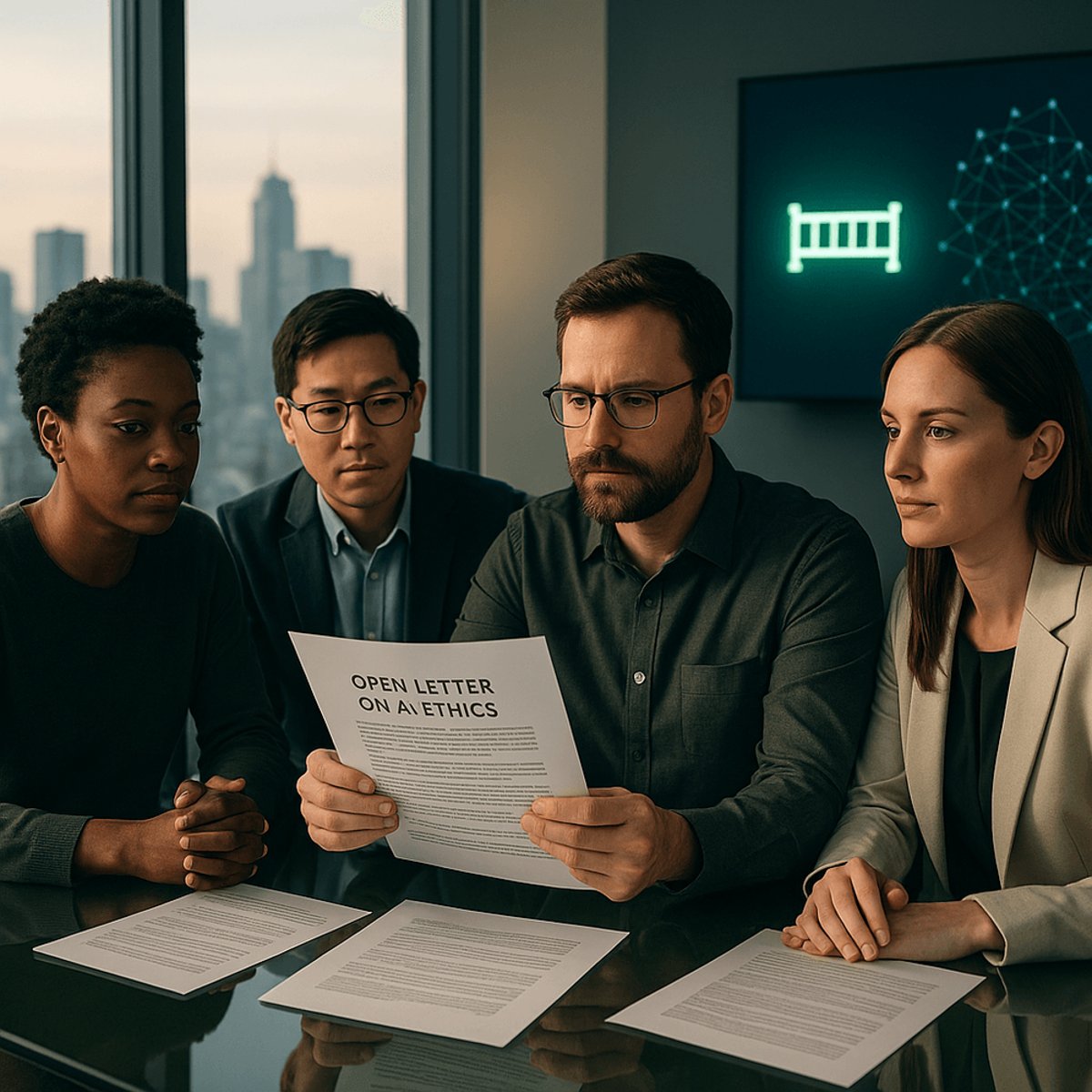
Tech workers are crossing company lines to support Anthropic's ethical guardrails on military AI. Employees from Google and OpenAI just signed an open letter backing the AI startup's firm stance against letting the Pentagon use its technology for mass domestic surveillance or fully autonomous weapons - even as Anthropic maintains an existing defense partnership. The unusual show of cross-company solidarity signals growing worker unrest over how AI gets deployed in military contracts.
The battle lines over military AI just got more complicated. Workers at Google and OpenAI are publicly backing Anthropic's decision to draw hard ethical lines around its Pentagon partnership, creating an unusual alliance across three of AI's biggest players.
Anthropic has been walking a tightrope - working with the Department of Defense while refusing to let its Claude AI power mass domestic surveillance programs or fully autonomous weapons systems. Now employees from competing AI labs are saying that's exactly the model the industry needs.
The open letter represents something rare in tech: workers at rival companies finding common cause on ethics before their employers do. It's the kind of cross-company organizing that hasn't been seen since the 2018 protests over Google's Project Maven, when thousands of employees successfully pressured the company to drop its military image recognition contract.
But this time the dynamic is different. Instead of protesting their own companies, Google and OpenAI employees are holding up a competitor's stance as the standard. The message to their own leadership is clear: if Anthropic can set boundaries with the Pentagon, why can't we?
Anthropic CEO Dario Amodei has been threading a delicate needle on defense work. The company signed a contract with the Pentagon, giving it access to Claude for approved national security applications. But Amodei drew bright red lines - no surveillance dragnet operations, no weapons that kill without human oversight.
That position puts Anthropic at odds with both the tech industry's rush toward lucrative defense contracts and the growing anti-military sentiment among AI researchers. OpenAI reversed its ban on military use in January 2024, opening the door to Pentagon partnerships. Google has steadily expanded its defense work since establishing AI principles in 2018, though it maintains its own restrictions.
The employee letter comes as the AI industry faces mounting pressure over military applications. Autonomous weapons development is accelerating globally, and U.S. defense officials are pushing for faster AI adoption across military systems. The Pentagon views AI as critical to maintaining technological superiority over China and Russia.
For tech workers, the stakes feel personal. Many joined AI labs to advance beneficial technology, not to build surveillance tools or autonomous killing machines. The 2018 Project Maven protests at Google saw more than 4,000 employees sign petitions and dozens resign. That activism forced Google to publish AI principles that restrict certain military uses.
But enforcement of those principles remains contentious. Google still works with the Pentagon through cloud contracts and other partnerships, leading to ongoing internal tensions. OpenAI's military policy shift triggered its own wave of criticism from researchers worried about autonomous weapons.
Anthropic's approach offers what some see as a middle path - engage with defense but maintain clear ethical boundaries. The company was founded in 2021 by former OpenAI executives, including Amodei, who left partly over disagreements about AI safety and commercialization.
The cross-company letter suggests workers want more than vague principles. They're looking for concrete, enforceable limits on how their AI gets used by military and intelligence agencies. Anthropic's explicit bans on surveillance and autonomous weapons provide that specificity.
Whether this translates into actual policy changes at Google or OpenAI remains unclear. Both companies have significant defense ambitions and lucrative contracts at stake. But the letter shows employee activism on AI ethics hasn't disappeared - it's just gotten more strategic, organizing across company lines rather than fighting isolated battles.
The open letter marks a new phase in tech worker organizing around AI ethics. Instead of fighting their own employers in isolation, workers at Google and OpenAI are using Anthropic's Pentagon stance as leverage to demand clearer ethical boundaries across the industry. Whether this cross-company solidarity can actually shape corporate policy remains the open question - but it signals that the tension over military AI isn't going away, it's just getting more organized.