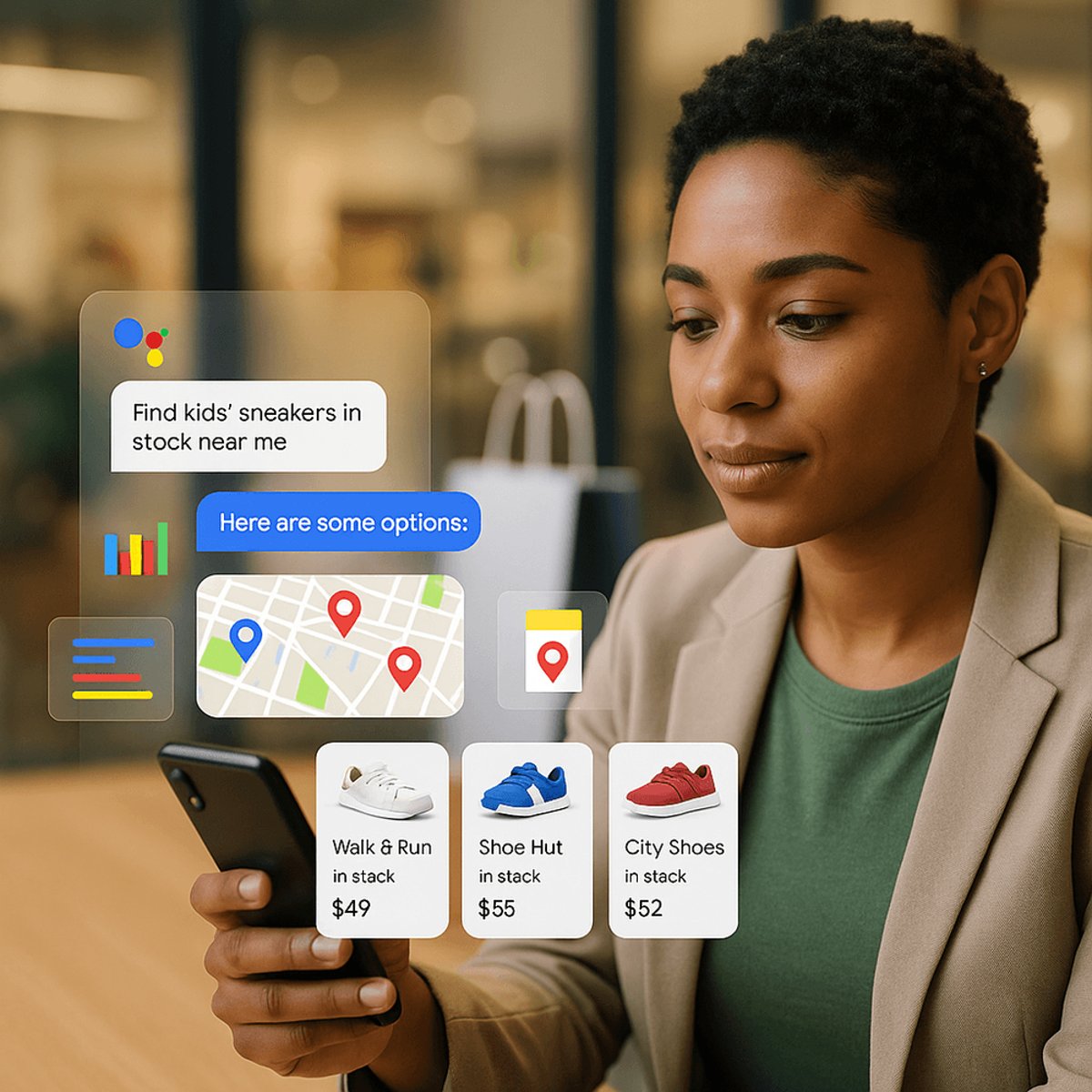
Google is turning its AI Mode into a shopping assistant that knows what's actually available near you. The search giant just rolled out local inventory tracking that shows real-time product availability at nearby stores, while also upgrading its hotel price monitoring to track specific properties instead of just city-level rates. The move signals Google's push to make its AI-powered search interface more transactional, directly competing with Amazon's shopping dominance and traditional retail apps.
Google is making a serious play for your shopping searches. The company just upgraded its AI Mode with local inventory tracking that tells you exactly which stores near you have the product you're looking for sitting on shelves right now.
The feature marks a significant evolution for AI Mode, which Google launched as an experimental conversational search interface. Instead of just answering questions about products, the AI can now bridge the gap between online research and offline purchase - showing real-time availability at brick-and-mortar locations within your area.
According to TechCrunch, the update taps into Google's Shopping Graph, which tracks inventory data from millions of merchants. When you ask AI Mode about a product, it'll surface nearby stores with current stock levels, store hours, and directions. That's a direct shot at Amazon's same-day delivery pitch and apps like Target's store inventory checker.
But Google didn't stop at shopping. The company also refined its hotel price tracking feature, which previously only worked at the city level. Now you can monitor rates for specific properties you're interested in, getting alerts when prices drop for that exact hotel rather than just general market trends in the area.
The timing isn't coincidental. Google's been under pressure to prove its AI investments can drive revenue, not just impress tech demos. Local inventory search directly addresses one of e-commerce's biggest friction points - the uncertainty of whether something's actually available nearby. If Google can become the default answer to "where can I buy this right now," that's a massive shift in shopping behavior worth billions in ad revenue.
The feature builds on Google's existing merchant partnerships through its Shopping platform. Retailers who already sync their inventory feeds with Google can now surface that data through conversational AI queries. For stores, it's a way to capture high-intent shoppers who might otherwise default to ordering online. For Google, it's another data point proving AI Mode can handle transactional queries, not just informational ones.
The hotel tracking upgrade is equally strategic. Travel queries are among Google's most lucrative search categories, and property-specific price monitoring keeps users checking back repeatedly. That's the kind of habit formation Google needs as it competes with specialized travel sites like Booking.com and Expedia, which have long offered granular price alerts.
What makes this different from Google's existing shopping features is the conversational layer. Instead of typing "Nintendo Switch in stock near me" and parsing through blue links, you can ask AI Mode to "find me a Nintendo Switch I can pick up today" and get a curated list with live inventory. The AI handles the filtering, verification, and presentation - a more seamless experience that keeps users inside Google's ecosystem longer.
The updates also hint at where Google sees AI Mode heading. This isn't just a better search box - it's becoming an agentic interface that can complete tasks on your behalf. Local inventory and price tracking are early steps toward an AI that doesn't just find information but actively helps you make purchases and bookings.
For retailers, the calculus is complicated. Surfacing inventory through Google increases foot traffic but also gives the search giant more control over the customer relationship. Merchants already navigate this tension with Google Shopping ads. AI Mode raises the stakes by potentially determining which stores even get mentioned in conversational results.
The features are rolling out now to users with access to AI Mode, which remains in experimental testing. Google hasn't announced when it'll graduate to a full public launch, but these commerce-focused updates suggest the company sees a clear monetization path - always a good sign for broader availability.
Google's betting that AI Mode can transform how people shop and book travel by collapsing the gap between search and transaction. Local inventory tracking and property-specific price monitoring are practical features that solve real friction points - exactly what Google needs to prove AI search is more than just a novelty. If the company can make AI Mode the fastest way to find what you need nearby, it won't just defend its search monopoly - it'll extend it into the physical retail world. Watch how quickly retailers adopt the inventory sync and whether users actually change their shopping habits. That'll tell us if this is a genuine shift or just another feature that looked good in the demo.