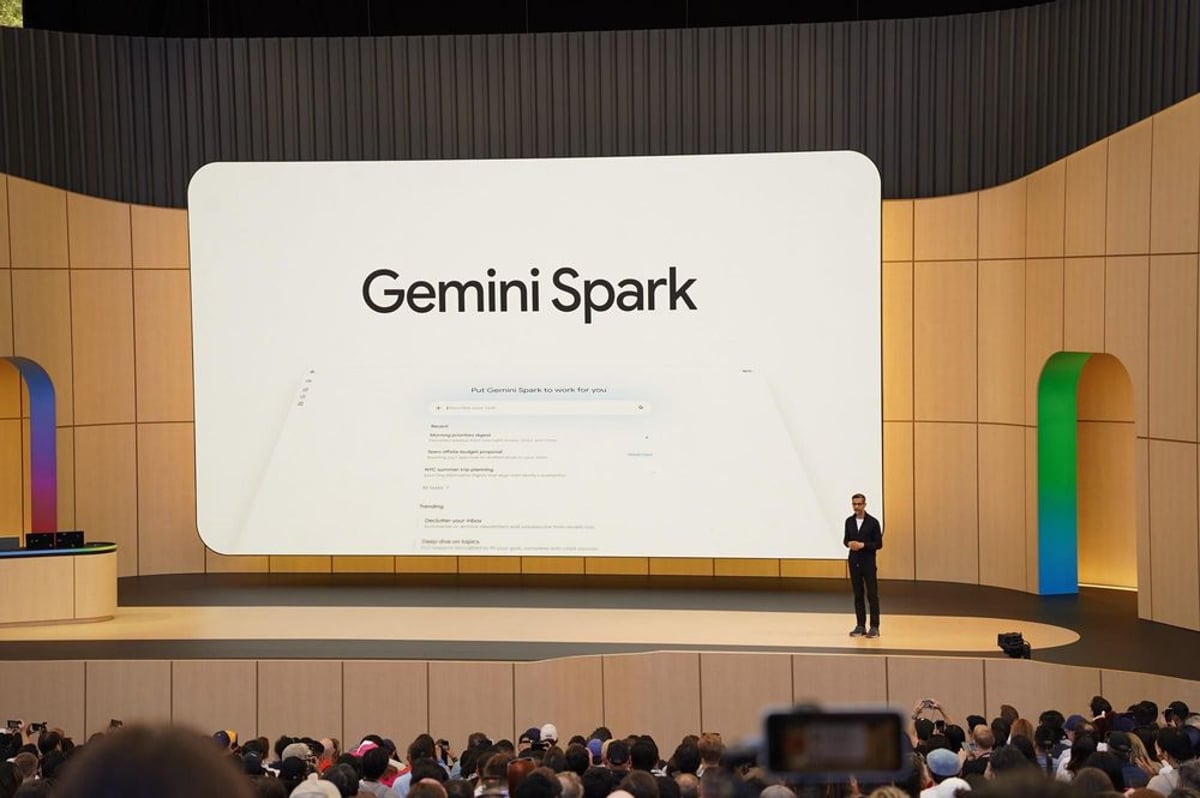
Google just launched Gemini Spark, a 24/7 autonomous AI agent that can handle multi-step tasks in the background while you step away from your device. According to exclusive early access testing by The Verge, the technology works impressively well - matching Google's demo promises - but comes with significant privacy tradeoffs and financial costs that might give enterprise buyers pause. The launch marks Google's most aggressive push yet into agentic AI, where systems act independently rather than just respond to prompts.
Google is making its boldest bet yet on autonomous AI. The company's new Gemini Spark agent promises to work 24/7 in the background, tackling complex tasks with multiple steps while you focus on other things. But early testing reveals a product that's as impressive as it is concerning.
The Verge's Jay Peters got exclusive access to Spark last week, putting the agent through its paces in real-world scenarios. His verdict? The technology delivers on Google's promises - sometimes shockingly well - but the privacy implications and potential costs might not be worth it for many users.
Google positions Spark as fundamentally different from traditional chatbots like ChatGPT. Instead of waiting for your prompts and responding immediately, Spark operates autonomously. You can assign it a task, close your laptop, and return hours later to find the work complete. The agent handles everything from research and data collection to booking appointments and managing workflows.
The pitch sounds almost too good to be true. According to Google's official Spark website, the system is "always under your direction," gives you the choice to turn it on, and is "designed to check with you before taking major actions." That last promise matters significantly, especially given the mounting concerns about AI systems operating with too much autonomy.
Peters' testing confirmed that Spark lives up to the technical demonstrations Google has been showing. The agent successfully completed multi-step tasks that would typically require constant human oversight. But that capability comes at a price - both literally and figuratively.
The financial cost remains a key consideration for potential adopters. While Google hasn't released full pricing details publicly, enterprise implementations of advanced AI agents typically carry substantial subscription fees. For businesses weighing AI automation tools, the return on investment calculation becomes critical.
But the privacy tradeoffs might prove even more significant than the price tag. Giving an AI agent permission to work autonomously means granting access to your data, accounts, and digital workspace. The agent needs broad permissions to be effective - it can't book your travel without accessing your calendar, email, and payment information. It can't manage your workflow without reading your documents and messages.
This creates a tension at the heart of agentic AI. The more capable and autonomous these systems become, the more access they require. And the more access they have, the greater the potential privacy and security risks. Google's emphasis on user control and oversight suggests the company recognizes this concern, but the fundamental tradeoff remains.
The launch puts Google in direct competition with OpenAI and Anthropic, both of which have been developing their own agentic AI systems. OpenAI's approach with GPT-4 has focused on tool use and function calling, while Anthropic's Claude has emphasized safety and oversight in autonomous operations. Google's advantage lies in its ecosystem - Spark integrates directly with Gmail, Calendar, Drive, and the company's other productivity tools.
For enterprise buyers, that integration matters enormously. A standalone AI agent requires complex API connections and workflow redesigns. An agent that already speaks to your existing tools can deliver value much faster. But it also means deeper embedding within Google's infrastructure, raising questions about vendor lock-in and data portability.
The review highlights a broader shift happening across the AI industry. We're moving from AI as a conversational tool to AI as an active participant in workflows. Meta, Microsoft, and other tech giants are all racing to build similar capabilities. The question isn't whether agentic AI will arrive - it's already here - but whether companies and individuals are ready for the implications.
Peters notes that Spark's performance matched the controlled demos Google has been showing to press and analysts. That consistency matters in an industry where demo-to-reality gaps have become notorious. When OpenAI showed off advanced capabilities earlier this year, some features took months to reach actual users. Google appears to have learned from those stumbles, shipping something that actually works as advertised.
But working as advertised doesn't mean it's ready for widespread adoption. The privacy framework needs more transparency. The pricing model needs clarity. And users need better tools to understand exactly what their AI agents are doing on their behalf and what data they're accessing.
The review also reveals interesting details about how Spark handles oversight. The agent does check in before major actions, according to testing, but the definition of "major" remains somewhat subjective. Sending an email might not qualify, but making a purchase would. The boundary between autonomous operation and human approval will likely evolve as Google gathers user feedback.
Google's Gemini Spark represents a significant technical achievement in autonomous AI, delivering on the promise of truly independent agents that can handle complex workflows. But the early hands-on testing reveals what many in the industry already suspected - the technology might be ahead of our readiness to use it responsibly. The privacy implications of granting broad access to an always-on AI agent, combined with unclear pricing and questions about oversight, suggest that Spark's path to mainstream adoption will be measured and cautious. For enterprise buyers especially, the calculation isn't just about what Spark can do, but whether the tradeoffs are worth the capability gains. As the agentic AI race accelerates, Google has proven it can build systems that work. The harder question is whether users will trust them enough to turn them on.