Google is making its biggest smart speaker bet in years with a complete hardware redesign that ditches Google Assistant for Gemini AI. The $99 Google Home Speaker, launching spring 2026, represents the company's shift toward conversational AI in the home - and it's the first device built from the ground up for Google's new smart home platform.
Google just showed its hand in the AI-powered smart home race. The company's new Google Home Speaker isn't just a hardware refresh - it's a fundamental shift away from the Google Assistant that's powered its devices for nearly a decade.
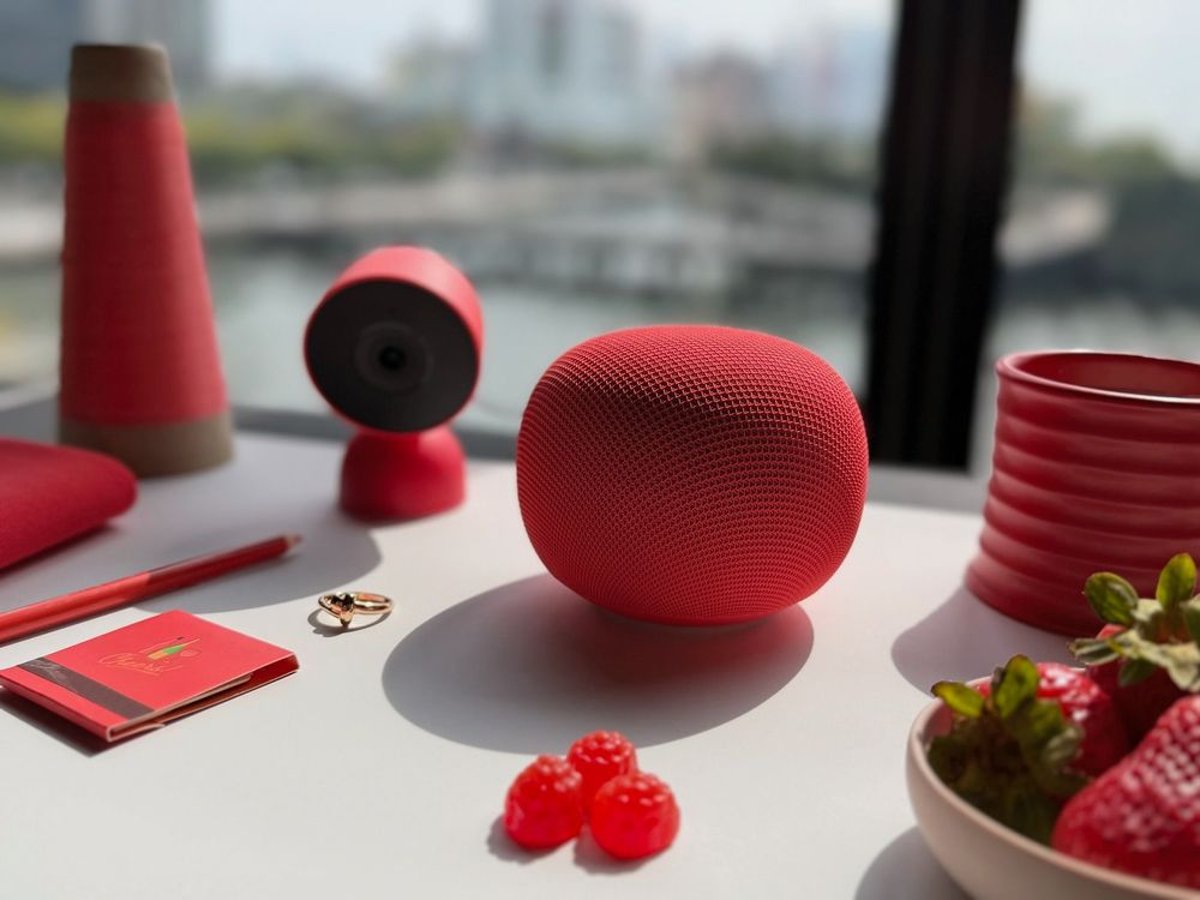
The $99 speaker, set to launch spring 2026, ditches the Nest branding of its predecessors and introduces a completely new flattened sphere design. Available in white, gray, green, and a striking berry red, it's sized between the old Nest Mini and Audio - roughly matching Apple's HomePod Mini but wider and flatter.
But the real story isn't the hardware. Google designed this speaker specifically for Gemini, its large language model that's been rapidly expanding across the company's product lineup. According to The Verge's hands-on coverage, the device features custom processing for Gemini and optimized far-field microphones.
"We've been preparing for this shift since Q2," Google Home's Anish Kattukaran told reporters during the demo. The admission reveals how significant this transition is for Google's smart home strategy.
The speaker supports both standard Gemini voice commands and Gemini Live, Google's paid conversational AI service. Where Google Assistant required precise commands, Gemini allows natural language control. Users can say "make it warmer" instead of "turn the thermostat to 68 degrees" or use complex instructions like "turn all the lights off except those in the bedroom."
This natural language processing puts Google in direct competition with Amazon's Alexa Plus, which added similar LLM-powered capabilities earlier this year. The timing isn't coincidental - both companies are racing to make voice assistants more conversational and capable.
During demos, the Gemini-powered speaker handled recipe substitutions and shopping list creation with ease. The Gemini Live mode allows interruptions and context switching, letting users pivot mid-conversation from a regular recipe to a keto version to a kid-friendly alternative.
However, there are limitations. Gemini Live currently can't take actions beyond conversation - it won't display recipes on connected Nest Hub screens or send information to phones. "It's purely a chatbot in a speaker" for now, according to the hands-on report.
The hardware itself catches up to competitors in key areas. The speaker features 360-degree audio and can pair for stereo sound or connect wirelessly to Google TV Streamers for surround sound. A new light ring at the base changes colors to indicate when Gemini is listening, thinking, or responding - a feature Apple and Amazon have offered for years.
As a Google Home hub, the device serves as both a Matter controller and Thread border router, positioning it as a central smart home command center. This infrastructure play is crucial as Google pushes its new AI-powered smart home platform.
Kattukaran pitched the device as "like having 1000 experts on your countertop," though critics might point out that smartphones already provide similar AI access. Google's long-term vision involves bringing all current Gemini capabilities to the Live experience - "that's the world we're building towards," he said.
The spring 2026 launch timeline gives Google significant runway to refine Gemini's smart home capabilities. The company is clearly betting that conversational AI will become the primary interface for connected devices, moving beyond the simple command-response model that's dominated smart speakers since Amazon launched the original Echo in 2014.
For consumers, this represents a fundamental shift in how they'll interact with their homes. The question isn't whether AI will power future smart speakers - it's whether Google's Gemini approach will prove more compelling than Amazon's Alexa Plus or whatever Apple eventually launches to compete.
Google's pivot from Google Assistant to Gemini AI in its new Home Speaker signals a broader industry shift toward conversational interfaces. While the spring 2026 launch gives the company time to refine its AI capabilities, the real test will be whether Gemini's natural language processing can deliver the seamless smart home experience that voice assistants have long promised but rarely achieved. For now, Google is betting that the future of smart homes sounds a lot more like talking to a knowledgeable friend than barking commands at a digital assistant.