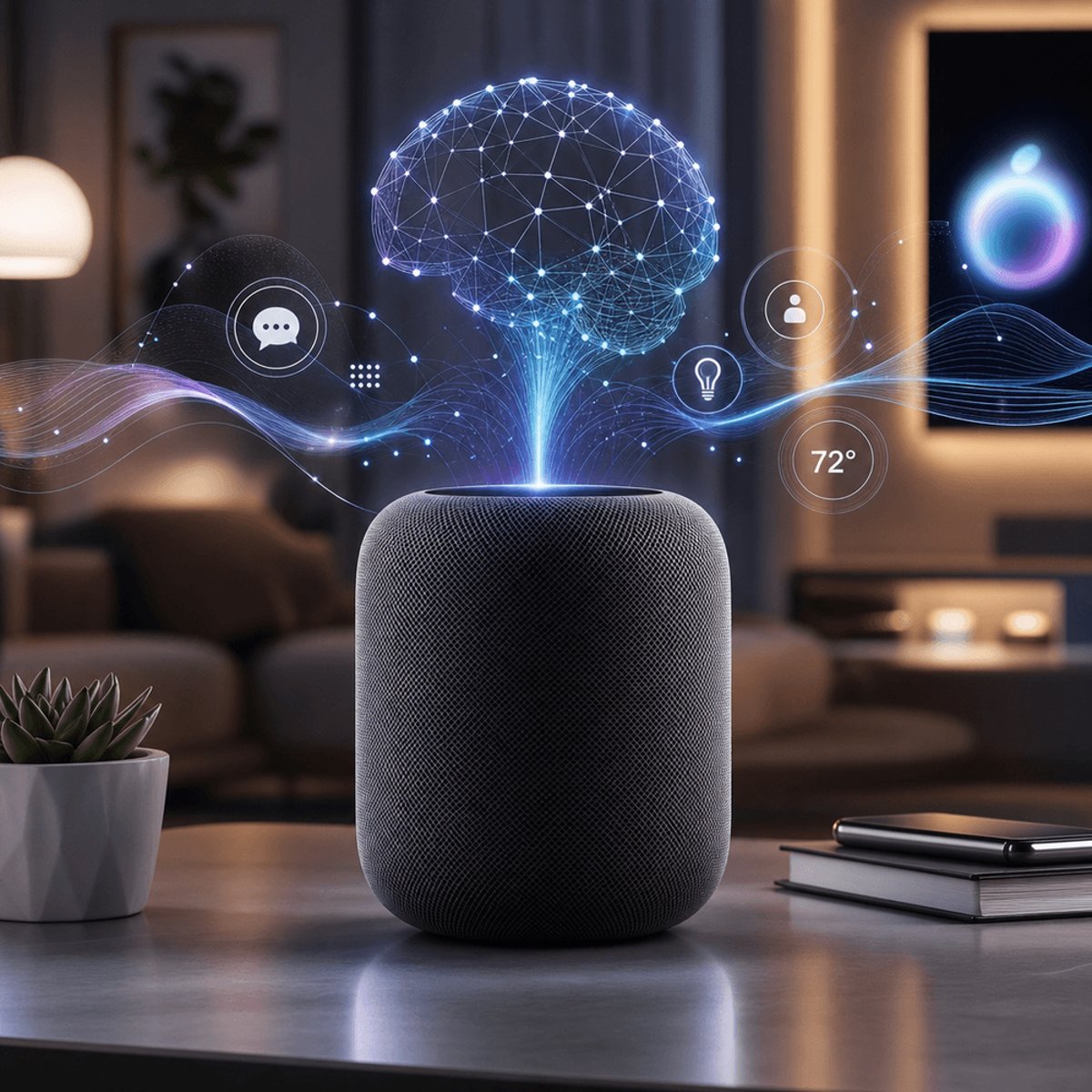
Apple's HomePod has always delivered premium sound, but that's not what's holding it back. The real challenge facing the company's smart speaker lineup isn't audio fidelity - it's Siri's lingering inability to match the conversational intelligence of rivals like Amazon's Alexa and Google Assistant. As the smart speaker market evolves into an AI-first battleground, Apple's voice assistant feels increasingly outdated, and users are noticing.
Apple's HomePod has always been the audiophile's smart speaker. Spatial audio, computational audio processing, room-tuning algorithms - the hardware team checked every box. But walk into any tech-savvy home today and you'll find Amazon Echo or Google Nest devices vastly outnumbering HomePods. The reason isn't sound quality. It's Siri.
The argument gaining traction among tech analysts is simple but devastating for Apple's smart home ambitions: nobody buys a smart speaker primarily for audio anymore. They buy it for the brain inside. And by that measure, HomePod is running on outdated silicon.
"Few smart speakers have assistants with as much potential as Siri," notes a ZDNet analysis published this weekend. "A meaningful upgrade would make the HomePod my first choice." That conditional verb - "would" - captures the current state perfectly. Potential isn't enough when Amazon's Alexa can control thousands of smart home devices and Google's Assistant can answer contextual follow-up questions that leave Siri stumped.
The smart speaker market has fundamentally shifted since Apple launched the original HomePod in 2018. Back then, sound quality served as a genuine differentiator. Today, the competition revolves around which assistant can understand natural language, maintain conversation context, automate complex routines, and integrate with the expanding universe of connected devices. On these metrics, Siri consistently trails.
Apple knows this. The company's recent AI investments signal recognition that voice assistants need serious upgrades to remain relevant. But those improvements haven't materialized in HomePod yet, leaving the device stuck in an uncomfortable middle ground - too expensive to compete with budget smart speakers, too limited to justify the premium over AI-capable alternatives.
The timing of this critique matters. As generative AI reshapes user expectations for conversational interfaces, the bar for voice assistants keeps rising. Users now expect assistants that can reason through multi-step requests, provide detailed explanations, and adapt to individual communication styles. Siri's rigid, scripted responses feel increasingly dated compared to the fluid interactions possible with newer AI models.
Consider the typical smart speaker use cases. Setting timers and playing music - Siri handles these fine. But ask it to adjust multiple smart home devices based on time of day, weather conditions, and personal preferences? That's where the limitations become apparent. Amazon's Alexa routines and Google's automation capabilities run circles around Siri's basic commands.
The hardware isn't the problem. HomePod mini and HomePod (2nd generation) pack impressive processing power and sensor arrays. The S7 chip in the latest HomePod can absolutely handle more sophisticated AI workloads. What's missing is the intelligence layer that would unlock that potential - the contextual awareness, the natural language understanding, the ability to learn and adapt.
Apple's famous ecosystem integration should give HomePod a massive advantage. The speaker knows your calendar, your location, your app usage patterns, your HomeKit setup. In theory, this could power an assistant that anticipates needs and automates routines seamlessly. In practice, Siri rarely connects these dots in meaningful ways.
The competitive pressure isn't letting up. Google's integration of AI models into Assistant demonstrates what's possible when cutting-edge language technology meets voice interfaces. Amazon's continued investment in making Alexa more conversational shows where the market is headed. Apple can't ignore this trajectory without ceding the smart home category entirely.
What would a meaningfully upgraded Siri look like? Start with better contextual awareness - remembering previous parts of a conversation, understanding pronouns and references, maintaining state across interactions. Add genuine natural language processing that handles the messy way humans actually speak. Include proactive intelligence that suggests automations based on patterns. Build in the kind of reasoning capability that modern AI models enable.
The technical foundations exist. Apple's work on large language models, its silicon capabilities, its privacy-focused approach to on-device processing - these pieces could combine into something compelling. But until those technologies actually ship in Siri, HomePod remains a beautiful speaker with a mediocre brain.
For Apple, this represents both challenge and opportunity. The company has historically excelled at arriving late to categories but nailing the execution. It did this with smartphones, tablets, and wireless earbuds. The smart speaker category isn't lost - but it requires treating AI capability as the primary feature, with audio quality as the premium bonus rather than the main event.
The question isn't whether Apple can build a smarter Siri. The question is whether it will prioritize this work with the urgency the HomePod lineup desperately needs.
Apple's HomePod dilemma crystallizes a broader truth about consumer tech in 2026 - AI capability now trumps hardware excellence. The company that revolutionized personal computing by making technology intuitive finds itself playing catch-up in the race to build truly intelligent assistants. Superior acoustics won't save HomePod if Siri can't hold a conversation. Apple has the resources, the talent, and the ecosystem advantage to fix this. What remains unclear is whether it will act before the smart speaker moment passes entirely, or whether HomePod becomes another beautifully engineered product that missed the AI revolution.