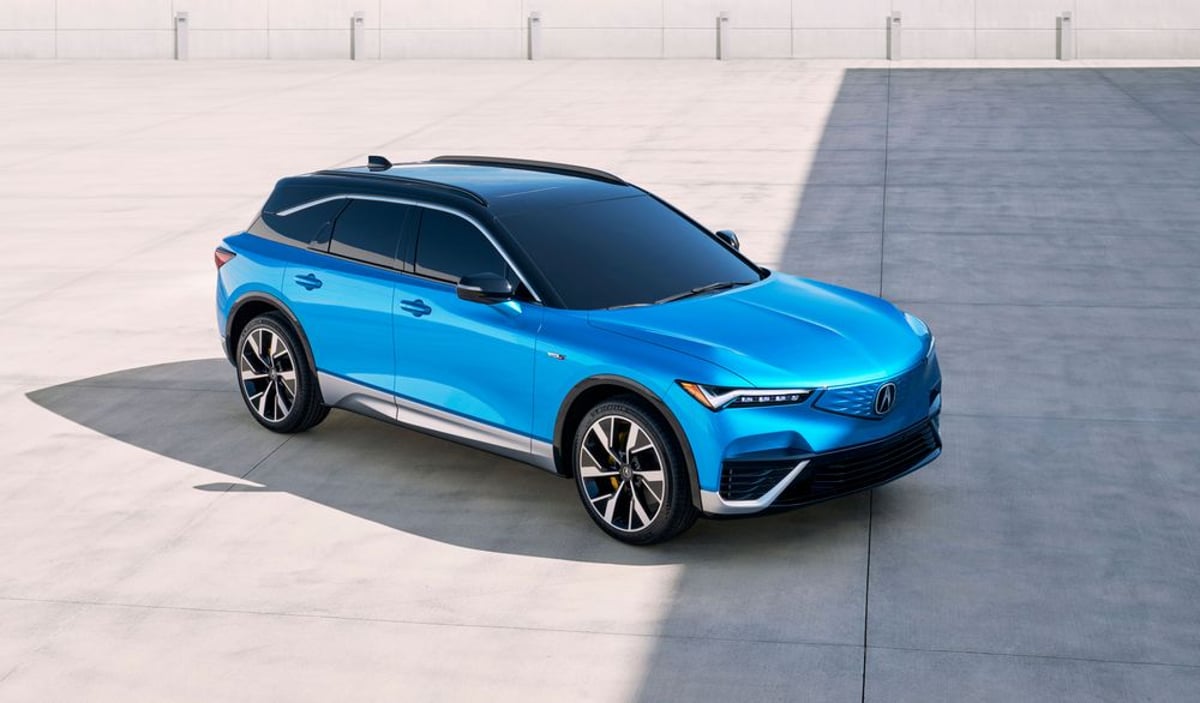
The EV market's latest casualty just landed. Honda is pulling the plug on the Acura ZDX electric crossover barely a year after launch, making it the newest victim of federal tax credit uncertainty and shifting market dynamics. The $60,000 crossover becomes another casualty in what's shaping up to be a brutal Q4 for electric vehicle makers.
The EV retreat just claimed another victim. Honda confirmed it's canceling the Acura ZDX electric crossover, ending production of a model that had barely gotten started. The news, first broken by Car Dealership Guy, marks the latest automaker to abandon EV plans as the federal tax credit expires and sales projections turn pessimistic.
The ZDX's death comes with particularly brutal timing. The electric crossover had just debuted as a 2024 model with 325 miles of EPA-rated range and a $60,000 starting price. Built through Honda's partnership with General Motors at the Spring Hill Assembly plant in Tennessee, the ZDX was supposed to resurrect a nameplate that had been discontinued over a decade ago after poor sales.
"We made this decision to better align our product portfolio with the needs of our customers and market conditions," Honda spokesperson Chris Naughton told reporters. The corporate speak barely masks what's happening across the industry - a wholesale retreat from ambitious EV timelines as policy uncertainty and cooling demand force automakers to recalculate.
The ZDX's cancellation reflects the harsh reality facing EV partnerships. While Honda brought the brand and marketing muscle, GM provided the actual manufacturing and technology through its Ultium platform. But as automakers scramble to adjust to post-tax credit market conditions, these collaborative models are proving fragile.
The crossover had unique selling points that now seem quaint given market conditions. Acura made the ZDX its first model sold exclusively online, banking on direct-to-consumer sales that bypassed traditional dealerships. Reviews praised its spacious interior, though many criticized the cabin's materials and overall feel - a common complaint about GM-platform vehicles wrapped in luxury branding.
For Honda, the ZDX cancellation clears the deck for what the company really wants to talk about - the upcoming RSX. Unlike the GM-built ZDX, the RSX will be Honda's first fully in-house electric vehicle, built on the company's new global EV platform. Production starts in Ohio in the second half of 2026, making it a cornerstone of Honda's Zero series strategy.
"ZDX has played a valuable role for the Acura brand, and will provide a foundation we will build on next year with the arrival of the all-electric Acura RSX," Naughton said in his statement. Translation: the ZDX was always a placeholder while Honda developed its own EV technology.
The broader context makes Honda's move unsurprising. EV sales are expected to drop significantly as the federal tax credit expires, forcing manufacturers to either absorb the $7,500 difference or watch demand crater. Most are choosing strategic retreats over margin compression, leading to a wave of canceled models and delayed factory plans.
For consumers who actually bought a ZDX, the cancellation raises questions about long-term support, parts availability, and resale values. Honda hasn't detailed its support plans, but the company will need to maintain service and warranty coverage for existing owners even as it shifts focus to its next-generation platform.
Honda's ZDX cancellation isn't just about one model - it's a preview of the EV market's next phase. As federal support disappears and manufacturers face reality, expect more partnerships to dissolve and more ambitious timelines to get pushed back. The companies that survive this transition will be the ones with genuine technological advantages and sustainable business models, not just regulatory compliance strategies dressed up as innovation.