HSBC just threw cold water on the 'SaaSpocalypse' panic gripping software investors. The bank's analysts are flipping Marc Andreessen's famous thesis on its head, arguing that established software giants - not AI-native startups like OpenAI or Anthropic - will capture most of the value as artificial intelligence goes mainstream. The contrarian call comes as enterprise software stocks recover from brutal February selloffs triggered by fears that AI would cannibalize traditional SaaS business models.
HSBC is making a bold contrarian bet that could reshape how investors think about the AI revolution. While much of Wall Street has been wringing its hands over whether OpenAI and Anthropic will disrupt the entire software industry, the bank's analysts are arguing the exact opposite - that legacy software giants are positioned to win big as AI transitions from buzzword to business tool.
The timing couldn't be more provocative. Software stocks just endured one of their worst months in recent memory, with investors fleeing amid fears of a 'SaaSpocalypse' where AI agents would replace traditional SaaS applications entirely. Salesforce and Oracle both saw double-digit drops as analysts questioned whether their subscription-based models could survive in an AI-first world.
But HSBC's research team sees a different picture emerging. Their thesis centers on a simple insight: enterprise customers don't want to rip out their existing software infrastructure and start over with AI-native tools. They want their current vendors to make their existing systems smarter. That structural advantage, the bank argues, gives established players an unbeatable moat.
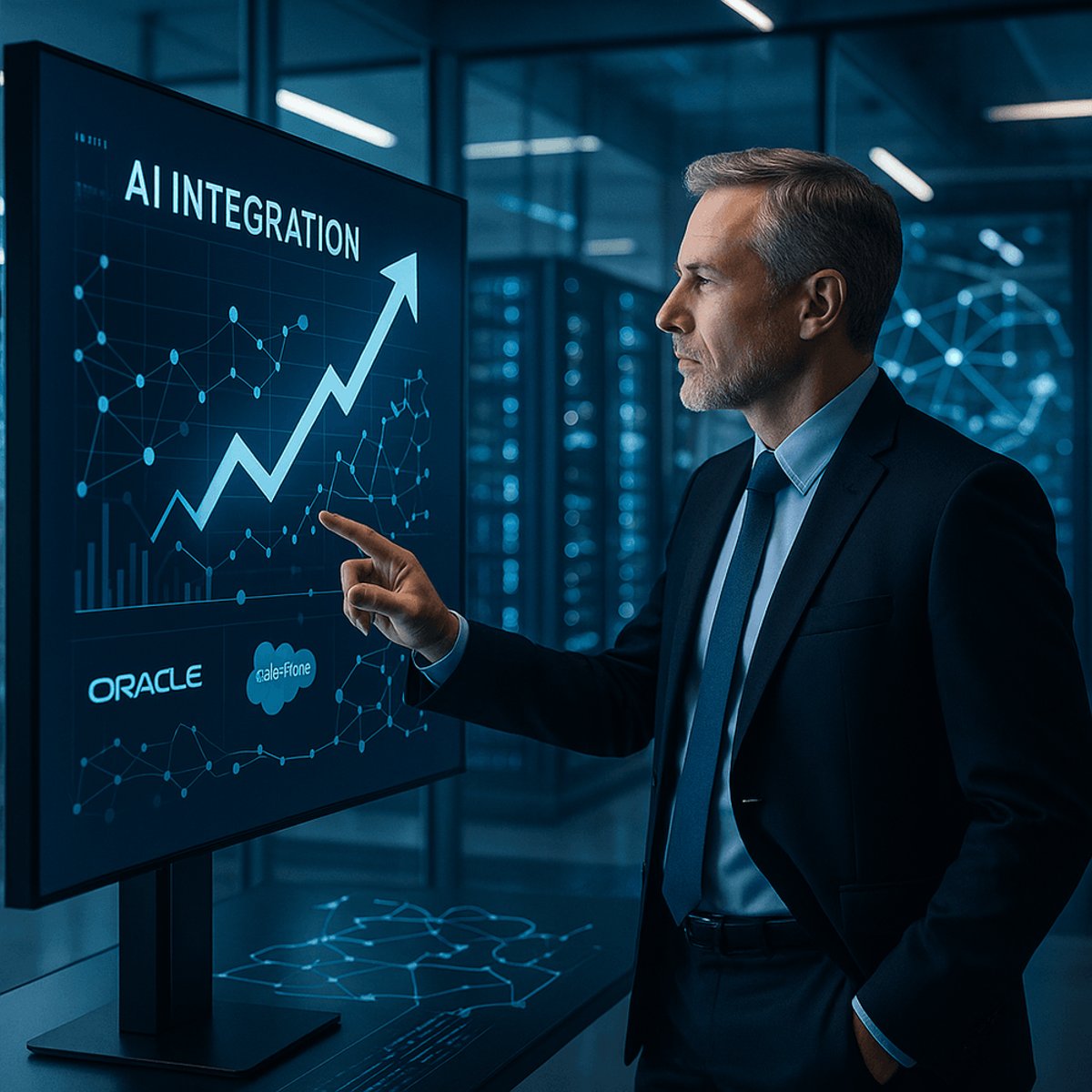
Oracle tops HSBC's conviction list, with analysts pointing to the database giant's aggressive push into AI-powered cloud infrastructure. The company has been quietly embedding machine learning capabilities across its entire product suite, from autonomous databases that tune themselves to AI-driven financial planning tools. More importantly, Oracle controls the data layer where most enterprise AI models will ultimately need to operate.
Salesforce earns the second spot on HSBC's picks, despite recent turbulence around its Einstein AI platform. The bank's analysts note that Salesforce's customer relationship data creates network effects that pure-play AI startups simply can't replicate. When every sales team in an industry uses the same CRM, the AI trained on that aggregated data becomes exponentially more valuable.
The 'software will eat AI' framing deliberately inverts Marc Andreessen's iconic 2011 prediction that software would eat the world. HSBC's analysts argue that what looked like existential disruption six months ago now appears more like a sustaining innovation - one that strengthens incumbents rather than toppling them. The reasoning mirrors how cloud computing ultimately benefited Microsoft and Amazon rather than destroying them.
What changed? The bank points to enterprise buying patterns emerging over the past quarter. IT departments that experimented with standalone AI tools from startups are now consolidating back to their primary vendors. The reason isn't technical - it's operational. Managing dozens of point solutions from AI startups creates integration nightmares, security risks, and compliance headaches that CIOs simply won't tolerate at scale.
This consolidation trend explains why OpenAI and Anthropic increasingly position themselves as infrastructure providers rather than end-user software companies. Both have pivoted toward selling APIs and foundational models that existing software vendors can embed, effectively becoming suppliers to the very companies that were supposed to disrupt.
HSBC's call also reflects growing confidence that the AI infrastructure buildout won't crater enterprise software spending the way some bears predicted. Instead of replacing software budgets, AI is expanding them - companies are paying for both their traditional SaaS licenses and new AI capabilities on top. That dual revenue stream could actually accelerate growth for companies that execute the transition well.
The bank's analysts acknowledge risks to their thesis. If AI agents truly become sophisticated enough to replace entire application categories - not just augment them - then even incumbent advantages might not matter. There's also execution risk: not every legacy vendor will successfully navigate the AI transition, and some could stumble badly while trying to retrofit decades-old codebases.
But for now, HSBC is betting that distribution beats innovation in enterprise software. The companies that already have relationships with every Fortune 500 CIO, that already process their customers' most sensitive data, that already integrate with every other system in the stack - those companies have advantages that no amount of AI cleverness can overcome quickly.
HSBC's contrarian call marks a potential inflection point in how Wall Street values the AI transition. If the bank is right that software will eat AI rather than the reverse, the February selloff in enterprise software stocks will look like a generational buying opportunity. If they're wrong, and AI-native startups truly can displace incumbents, then Oracle and Salesforce could face a much longer road ahead. Either way, the thesis forces investors to reckon with a uncomfortable truth: predicting which category of company wins in an AI-driven world requires making bets about enterprise buying behavior, not just technology capabilities. For now, HSBC is betting that CIOs will stick with the devil they know.