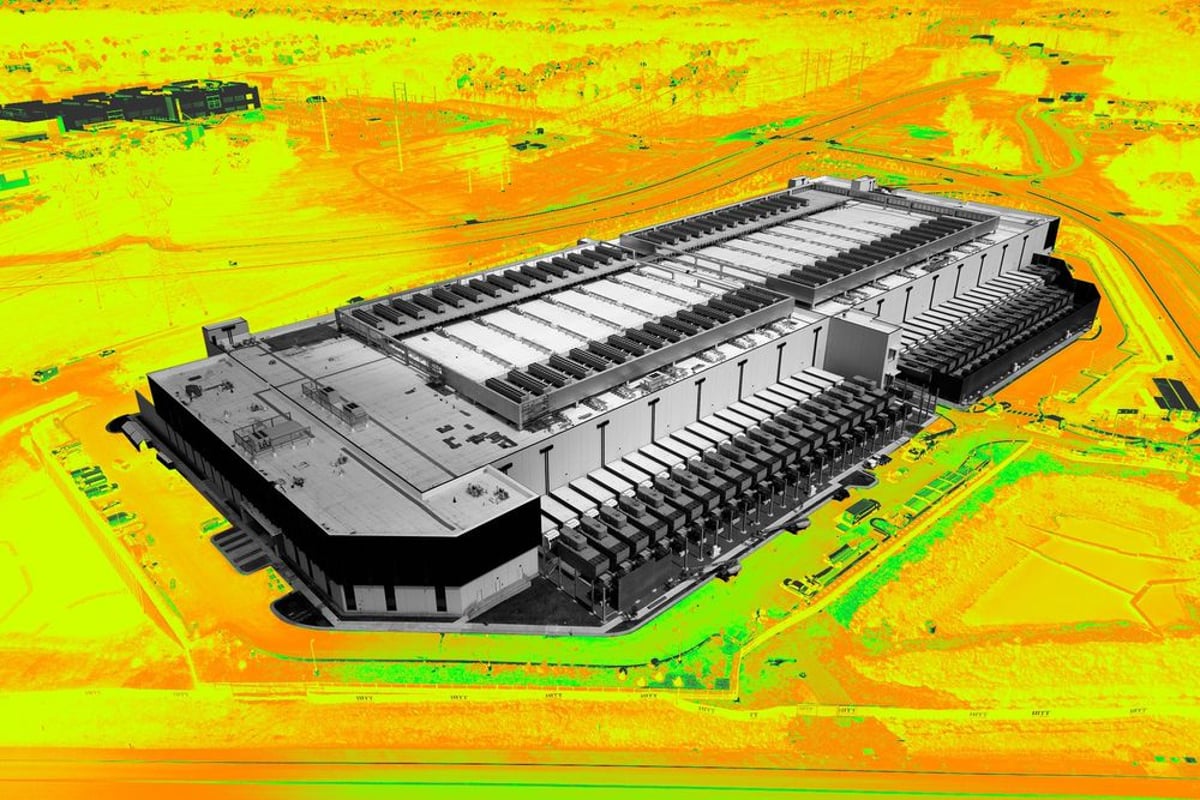
A $2 billion data center proposal in Shelbyville, Indiana has erupted into a full-blown political crisis after Mayor Scott Furgeson was caught on camera dismissing opposition to the project, saying he only sees 'No Data Center' signs in 'shitty houses' that are 'mostly rentals.' The viral TikTok clip, which has ignited backlash across social media, reveals the growing class tensions as AI infrastructure bulldozes into small American towns, pitting economic development promises against community concerns about resources, property values, and who actually benefits when Big Tech comes to town.
The AI infrastructure boom just got a face, and it's not a pretty one. Shelbyville, Indiana Mayor Scott Furgeson is facing calls for resignation after being caught on camera deriding working-class opposition to a massive data center development. 'I've seen a lot of these all over town, but I only see them in shitty houses,' Furgeson said of the 'No Data Center' signs proliferating across the city of 20,000, adding dismissively that 'most of them are rentals.'
The moment, captured on TikTok and now viewed hundreds of thousands of times, has become a lightning rod for frustrations simmering in communities nationwide as tech companies race to build the infrastructure powering AI's explosive growth. A woman in the clip immediately pushed back, telling the mayor the opponents are 'working class' people, while another voice can be heard reminding him that 'it doesn't matter whether they're rentals, they're still' human beings deserving of representation.
The project at the center of the firestorm is a $2 billion data center complex that won approval from Shelbyville's Common Council back in April. For municipal leaders like Furgeson, these facilities represent a jackpot - massive property tax revenue, construction jobs, and the prestige of landing a major tech investment. But for residents, the calculation looks different. Data centers consume enormous amounts of electricity and water, strain local infrastructure, create relatively few permanent jobs, and can drive up property costs while offering little direct benefit to existing communities.
The Shelbyville controversy exposes the fault lines emerging as the data center land grab accelerates. Microsoft, Amazon, Google, and other tech giants are locked in an infrastructure arms race to support AI workloads, which require exponentially more computing power than traditional cloud services. That's pushed data center construction into smaller markets where land is cheap and officials are eager to deal.
But Furgeson's comments reveal a troubling elitism in how some officials view these negotiations. By dismissing opposition based on housing quality and rental status, he's essentially arguing that economic development trumps the concerns of lower-income residents - the very people who often bear the brunt of infrastructure projects while seeing the fewest benefits. The backlash has been swift and bipartisan, with residents pointing out that renters pay taxes, use services, and vote just like homeowners.
The incident also highlights a information asymmetry problem. Municipal leaders are often courted aggressively by data center developers and economic development groups armed with rosy projections about tax revenue and job creation. Residents, meanwhile, have limited resources to research the actual impacts these facilities have on communities, from utility rate increases to aquifer depletion to noise pollution from cooling systems.
Shelbyville isn't alone in facing this tension. Communities from rural Virginia to Arizona have seen similar battles erupt as data center proposals surface. In some cases, residents have successfully blocked or scaled back projects. In others, they've watched developments proceed over their objections, only to find the promised economic benefits don't materialize as advertised.
What makes the Shelbyville case particularly striking is how nakedly it reveals the class dynamics at play. Furgeson's remarks suggest he views the project's economic benefits - likely in the form of commercial tax revenue and potential business relationships - as more valuable than the input of working-class constituents. It's a calculation that may make sense from a municipal budget perspective but represents a fundamental betrayal of democratic representation.
The viral TikTok clip has now become exhibit A in a larger national conversation about who benefits from the AI boom and who pays the costs. Tech companies need the infrastructure, municipalities need the tax revenue, but the residents who actually live in these communities are increasingly demanding a seat at the table - and refusing to be dismissed based on their property values or housing status.
The Shelbyville data center controversy isn't just about one mayor's poor choice of words - it's a preview of conflicts that will only intensify as AI infrastructure expansion collides with community interests. As tech companies push into smaller markets hunting for cheap power and land, the question of who gets a voice in these decisions becomes critical. Furgeson's dismissal of working-class opposition may have been caught on camera, but similar calculations are happening in city halls nationwide, just usually behind closed doors. The viral backlash suggests residents are done being steamrolled in the name of economic development they may never actually see.