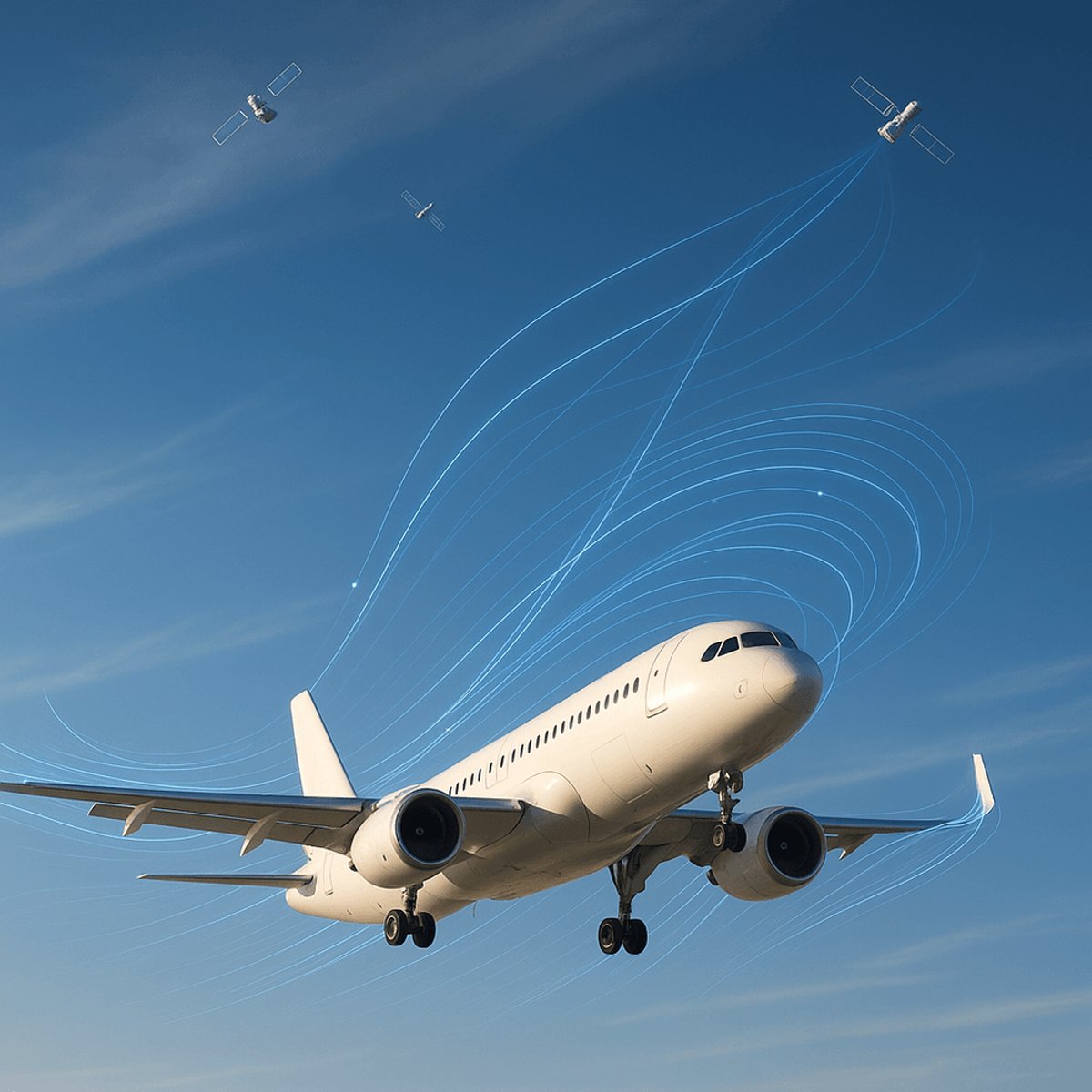
JetBlue just handed Amazon its biggest Kuiper win yet, becoming the first airline to commit to the satellite internet service for in-flight Wi-Fi. The partnership breaks SpaceX's Starlink stranglehold on aviation connectivity and signals Amazon's Project Kuiper is finally ready to challenge Elon Musk's 8,000-satellite empire with real enterprise deals.
Amazon just scored its first major airline customer for Project Kuiper, with JetBlue Airways announcing Thursday it will install the satellite internet service across a quarter of its fleet starting in 2027. The deal represents a critical breakthrough for Amazon's bid to challenge SpaceX's Starlink dominance in the aviation connectivity market.
The partnership immediately sent ripples through the aerospace industry, where Starlink has been rapidly signing airline after airline to its service. JetBlue's commitment to Kuiper marks the first time a major U.S. carrier has broken ranks with the Musk-led satellite constellation that currently boasts 8,000 operational satellites.
"Even though we still have a lot more work to do, we're super excited to have JetBlue as the first airline customer for Kuiper," Chris Weber, Kuiper's vice president of sales and marketing, told reporters on Thursday. The admission reveals just how crucial this deal is for Amazon's satellite ambitions.
JetBlue president Marty St. George outlined an aggressive timeline during the announcement call, with installations beginning in 2027 and wrapping up by 2028 across roughly 60 aircraft. The airline praised Kuiper's "high speed, low latency and high reliability" compared to traditional geostationary satellite networks, according to St. George's comments to CNBC.
The timing couldn't be more critical for Amazon's satellite program. The company faces a Federal Communications Commission deadline requiring 1,600 satellites – half its planned constellation – in orbit by July 2026. So far, Amazon has launched just 102 Kuiper satellites since April, a fraction of Starlink's massive head start.
While JetBlue becomes Kuiper's first airline win, Starlink has been systematically locking up the aviation market. Hawaiian Airlines already offers free Starlink-powered Wi-Fi, while Alaska Airlines plans to roll out the service across its fleet after acquiring Hawaiian. United Airlines and American Airlines have both announced partnerships with Starlink for loyalty program members.
The competitive dynamics reveal how crucial the aviation market has become for satellite internet providers. Airlines have long struggled with slow, expensive in-flight Wi-Fi that frustrated passengers. The shift to low-Earth orbit satellites promises dramatically faster speeds and lower latency than traditional geostationary systems.
JetBlue's decision carries additional strategic weight because the airline pioneered free in-flight Wi-Fi through its existing partnership with Viasat, which operates geostationary satellites. St. George confirmed that partnership will continue alongside Kuiper, suggesting JetBlue may eventually operate a hybrid satellite network combining different orbital systems.
The announcement comes as Amazon races to establish Kuiper as a credible Starlink alternative. Beyond airlines, the company has signed partnerships with Airbus and is targeting enterprise customers across telecommunications and government sectors. Amazon hopes to begin commercial Kuiper service later this year.
Industry observers see the JetBlue deal as a crucial credibility test for Kuiper's enterprise ambitions. Successfully delivering reliable in-flight internet to a major airline would demonstrate the constellation's readiness to compete with Starlink's established network. Failure could set back Amazon's satellite program significantly.
The aviation Wi-Fi market represents billions in potential revenue as airlines compete to offer seamless connectivity. Delta Air Lines followed JetBlue's lead in 2023 by offering complimentary Wi-Fi to loyalty members, while other carriers have announced similar programs.
For Amazon, the JetBlue partnership validates years of Kuiper development and massive capital investment. The company has committed to launching over 3,200 satellites through partnerships with multiple rocket providers, including recent deals with SpaceX despite the competitive tensions.
What happens next will determine whether Amazon can break Starlink's early dominance or remain a distant second in the satellite internet race. JetBlue's 2027 rollout timeline gives Amazon crucial months to prove Kuiper can deliver on its enterprise promises.
JetBlue's commitment to Amazon's Project Kuiper represents more than just another airline Wi-Fi upgrade – it's the first major crack in SpaceX's Starlink dominance of the aviation market. With installation beginning in 2027, Amazon has a narrow window to prove its satellite constellation can deliver enterprise-grade performance against Musk's 8,000-satellite head start. Success could open floodgates for more airline partnerships, while failure might cement Starlink's market leadership for years to come.