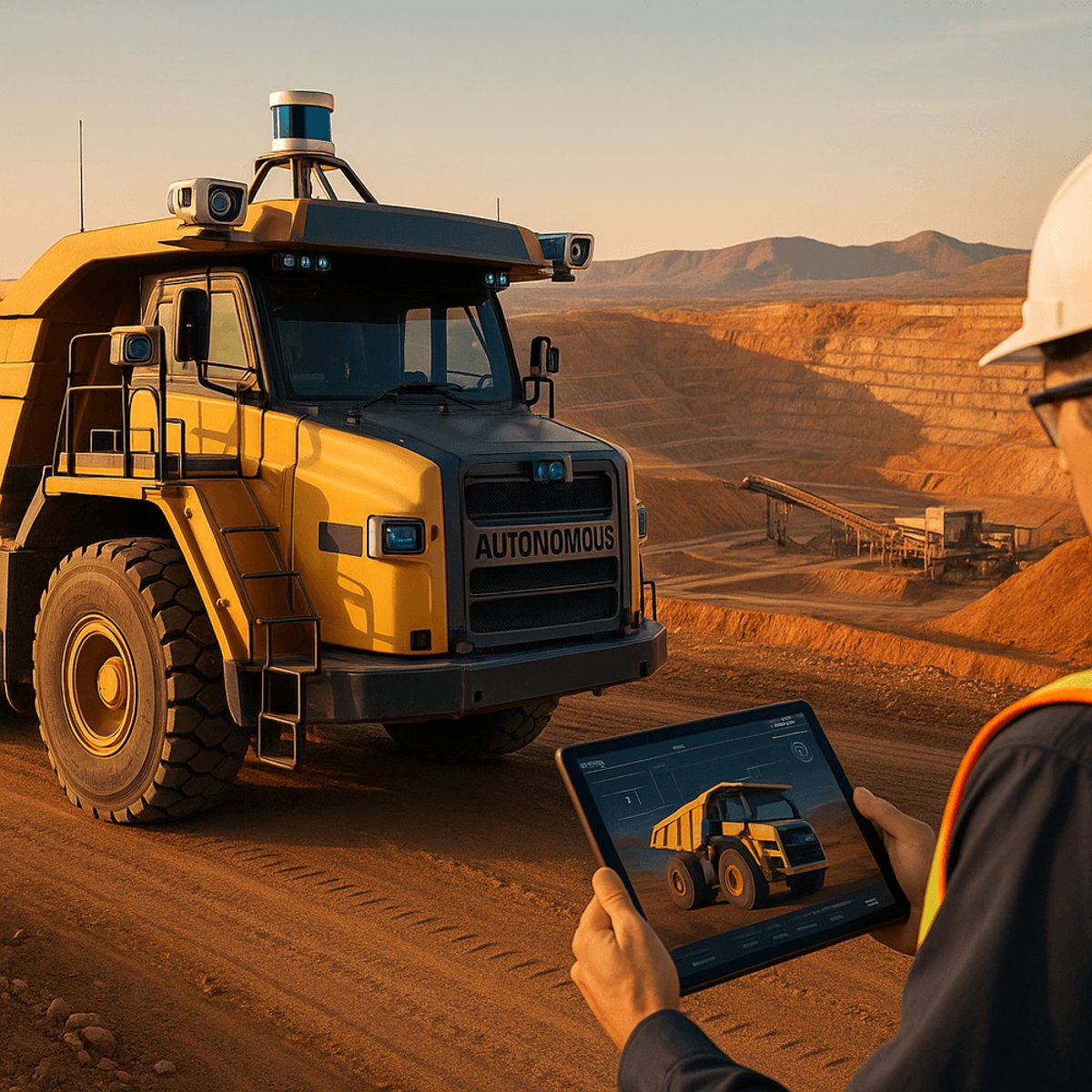
Travis Kalanick's autonomous vehicle bet just landed its first major customer. Mariana Minerals, founded by Turner Caldwell, is deploying Pronto's self-driving haulage trucks at its Utah copper mine - marking the first commercial deal since Kalanick's Atoms Inc acquired Pronto. The move signals a fresh push to bring AI-powered automation to one of the world's oldest industries, marking a new chapter for one of Silicon Valley's most scrutinized entrepreneurs..
Pronto is taking its autonomous technology underground - literally. The self-driving truck startup, now owned by Travis Kalanick's Atoms Inc, just signed its first mining customer since the acquisition. Mariana Minerals, a copper mining startup founded by Turner Caldwell, will deploy Pronto's autonomous haulage system at its Utah operation.
The timing couldn't be more strategic. As robotaxi companies burn through billions trying to navigate city streets, mining offers a controlled environment where autonomous tech can prove itself today. Mariana's open-pit copper mine presents fewer variables - no pedestrians, no traffic lights, predictable routes - making it an ideal testing ground for AI that's not quite ready for urban chaos.
For Kalanick, the deal validates his pivot from ride-hailing to industrial robotics. After stepping down from Uber in 2017, the entrepreneur has quietly assembled a portfolio of automation companies under the Atoms umbrella. Pronto's acquisition last year signaled his belief that commercial fleets - not consumer cars - would crack autonomous driving first. Mining operations, with their contained environments and clear ROI, fit that thesis perfectly.
The technical deployment starts small. Mariana will initially outfit three haul trucks with Pronto's sensor suite and AI software, which uses computer vision and machine learning to navigate the mine's roads. Human operators will monitor remotely during the pilot phase, ready to take control if needed. If successful, the fleet could expand to 15 trucks by year's end, according to sources familiar with the deployment timeline.
Copper mining faces mounting pressure to automate. Labor shortages plague the industry, while demand for copper - critical for electric vehicles and renewable energy infrastructure - continues climbing. Autonomous trucks promise to boost productivity while reducing accidents in one of the world's most dangerous professions. Rio Tinto and BHP have already deployed hundreds of self-driving haul trucks in Australia, proving the concept works at scale.
But Pronto enters a crowded field. Caterpillar and Komatsu dominate mining automation with purpose-built autonomous trucks. Pronto's retrofit approach - adding sensors and software to existing vehicles - offers flexibility but must prove it can match the reliability of integrated systems. One false move in a mine shaft could derail the entire partnership.
Mariana Minerals itself operates on the margins of the industry. The Utah site produces modest copper volumes compared to global giants, but Levandowski argues that smaller operations need automation more. Autonomous trucks running round-the-clock could help Mariana punch above its weight, assuming the technology delivers.
Financial terms weren't disclosed, though industry watchers estimate pilot programs like this run $2-5 million depending on fleet size and support requirements. For Pronto, it's less about immediate revenue than proving the tech works in harsh conditions. Dust, vibration, temperature swings - mines test autonomous systems in ways city streets never could.
This deal represents more than just another autonomous vehicle deployment. It's a test of whether Silicon Valley's most polarizing entrepreneurs can redirect their ambitions toward unglamorous but profitable industrial applications. If Pronto's trucks can haul copper reliably in Utah's desert heat, Kalanick gets validation for his post-Uber strategy. If they can't, it's another reminder that autonomy's promises often outpace its delivery. Either way, the mining industry just became the unlikely battleground where autonomous tech might finally prove it can make money - something robotaxis have yet to demonstrate at scale.