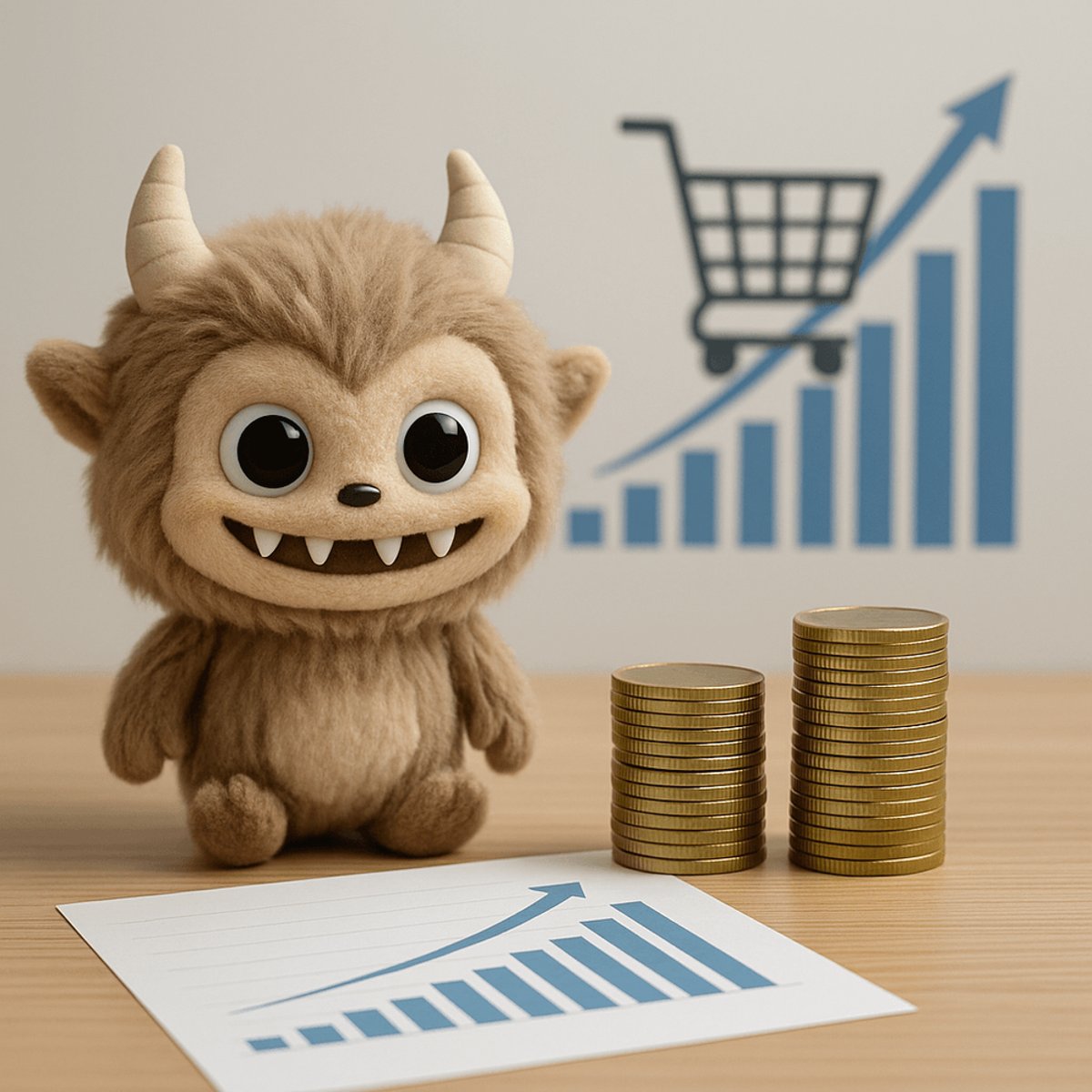
Pop Mart just dropped financial results that reveal the staggering power of viral toys in 2025. The Chinese company's Labubu plush monsters generated $670 million in the first half of this year alone—a 688% surge that puts the ugly-cute creatures on track to become a billion-dollar business by December.
Pop Mart just proved that a $10 plush toy can reshape entire market categories. The Hong Kong-listed Chinese company reported that its Monsters series—anchored by the breakout Labubu character—generated approximately $670 million in revenue during the first six months of 2025, according to financial results released this week.
The numbers are staggering by any measure. That 688% year-over-year surge doesn't just represent rapid growth—it puts Labubu on pace to eclipse sales of Mattel stalwarts like Barbie and Hot Wheels, brands that have dominated toy aisles for decades. If the trajectory holds, Pop Mart will cross the $1 billion threshold for its Monsters line before 2025 ends.
The phenomenon traces back to an unexpected catalyst: BLACKPINK member Lisa's public confession of her Labubu obsession sent shockwaves through social media and collectible markets worldwide. What started as a K-pop star's quirky hobby transformed into a global cultural moment as celebrities including Cher, Kim Kardashian, Paris Hilton, and Marc Jacobs were photographed sporting the mythologically-inspired creatures as luxury accessories.
"These ten-year-old characters have now become as popular an accessory as a Telfar bag in 2020, and they're just as hard to get your hands on," TechCrunch reporter Amanda Silberling noted in breaking the story.
The scarcity isn't accidental. Pop Mart's "blind box" strategy—where buyers don't know which variant they're purchasing—creates the same psychological hooks that drive sneaker drops and limited-edition releases. The mystery element transforms routine toy purchases into gambling-adjacent experiences, with rare variants commanding premium prices on secondary markets.
But the Labubu surge represents more than clever marketing. It signals a fundamental shift in how global consumers discover and embrace products in the social media age. Unlike traditional toy marketing cycles that relied on TV advertising and retail placement, Labubu's ascent happened organically through influencer culture and viral moments—a playbook that traditional toy giants like Mattel and Hasbro are now scrambling to replicate.
The financial implications extend beyond Pop Mart's balance sheet. The company's success demonstrates how Chinese consumer brands can achieve global scale without traditional Western distribution channels. By leveraging social platforms and celebrity culture, Pop Mart bypassed decades of brand-building investments that typically define toy industry success stories.
Investors are taking notice. The revelation positions Pop Mart as a case study in how viral products can generate outsized returns in compressed timeframes. While established toy manufacturers struggle with declining birth rates and shifting play patterns, Pop Mart's approach captures adult consumers willing to pay premium prices for collectible experiences.
The momentum shows no signs of slowing. As Pop Mart expands international retail presence and introduces new character lines, the company is betting that the Labubu phenomenon can be systematized and replicated across different mythological creatures and cultural moments.
The Labubu explosion isn't just a toy story—it's a blueprint for how viral culture can generate billion-dollar businesses in months rather than decades. As Pop Mart proves that celebrity-driven scarcity can outperform traditional marketing, established players across consumer categories are watching closely. The question isn't whether other companies can replicate this success, but how quickly they can adapt their strategies to capture the next cultural moment before it passes them by.