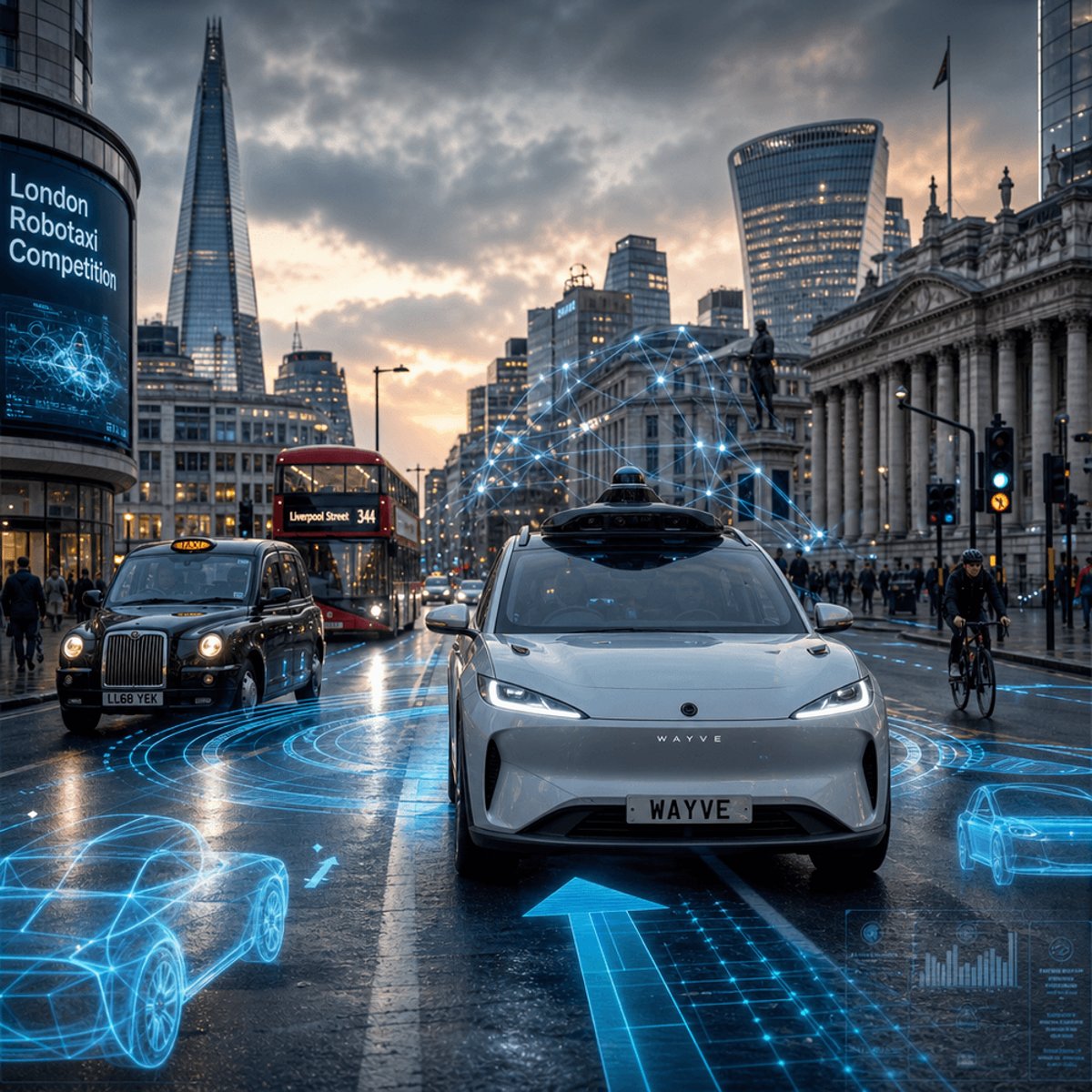
London is about to become ground zero for the autonomous vehicle industry's first major international showdown. Uber just opened an interest list for UK customers to ride in Wayve robotaxis, setting up a three-way battle with Waymo for dominance in one of Europe's most challenging urban markets. The move marks a pivotal moment for the AV industry as it pushes beyond its American comfort zone into London's narrow streets, aggressive drivers, and right-hand traffic.
Uber just fired the opening shot in what's shaping up to be the autonomous vehicle industry's most significant international battle. The ride-hailing giant announced it's accepting sign-ups from UK customers eager to experience Wayve robotaxis, directly challenging Waymo in a market that's worlds apart from the sun-soaked grids of Phoenix and San Francisco.
The timing isn't accidental. London represents the ultimate stress test for autonomous technology that's largely been refined on American roads. We're talking about a city where roundabouts outnumber stop signs, where traffic flows on the left, and where centuries-old street layouts make San Francisco's hills look like child's play. If robotaxis can crack London, the global market suddenly looks a lot more accessible.
Wayve, the UK-based AV startup that's raised over $1 billion from investors including SoftBank and Microsoft, has been testing its technology on British roads since 2018. That home-field advantage could prove crucial. Unlike Waymo's lidar-heavy approach, Wayve relies on camera-based vision and what it calls "embodied AI" - a learning system designed to adapt to new driving environments without extensive pre-mapping.
The Uber partnership gives Wayve instant access to millions of potential riders and a proven logistics platform. It's the same playbook Uber used to scale its human-driver network, now applied to autonomous vehicles. Customers joining the interest list won't get immediate access, but they're signaling demand that could accelerate deployment timelines.
Waymo, meanwhile, has been quietly building its London presence after announcing UK expansion plans earlier this year. The Alphabet-owned company brings battle-tested technology that's already completed millions of autonomous miles in the US. But London will force Waymo to prove its system can handle radically different road rules and driving cultures without the years of local testing Wayve has logged.
The competitive dynamics here are fascinating. Uber previously had a rocky relationship with autonomous vehicles after shutting down its own AV division following a fatal crash in 2018. Now it's positioning itself as the Switzerland of robotaxis, willing to integrate multiple AV providers onto its platform. That strategy lets Uber hedge its bets while the technology matures.
For London itself, this represents a massive vote of confidence in the UK's autonomous vehicle regulations. The country has been working to create a framework that balances innovation with safety, and having three major players commit resources suggests they see a clear path to commercial operation. Transport for London hasn't announced specific timelines for fully driverless operations, but these interest lists typically precede public pilots by 6-12 months.
The market opportunity is substantial. London's ride-hailing market generates billions in annual revenue, and labor costs represent the single biggest expense for companies like Uber. Autonomous vehicles could fundamentally reshape those economics, though UK unions are already mobilizing to protect driver jobs.
What makes this deployment particularly significant is the technology validation it represents. American AV companies have faced criticism that their systems only work in carefully selected geofenced areas with favorable weather and infrastructure. London's Variable weather, complex intersections, and aggressive cycling culture will provide real-world data that investors and regulators have been demanding.
Wayve's camera-based approach will get its highest-profile test yet. The company argues that relying primarily on visual data makes its system more adaptable and cheaper to deploy at scale. Waymo's sensor-heavy vehicles, while more expensive, have proven remarkably safe across millions of miles. London will show whether there's room for multiple technical approaches, or if one architecture emerges as clearly superior.
The interest list itself is a savvy marketing move by Uber. It generates buzz, builds a database of early adopters, and creates urgency without committing to specific service dates. It's the same strategy Tesla used for years with Cybertruck reservations, keeping enthusiasm high while working through technical and regulatory challenges.
London's robotaxi race represents more than just another market expansion - it's the autonomous vehicle industry's first real test of whether the technology can work beyond carefully controlled American environments. The next 12 months will determine if AVs are truly ready for global deployment or if they remain confined to sunny, grid-based cities. For Uber, Wayve, and Waymo, success in London could unlock European and Asian markets worth hundreds of billions. Failure would raise serious questions about when, or if, robotaxis can actually scale worldwide. Watch for pilot program announcements this fall as the competition heats up.