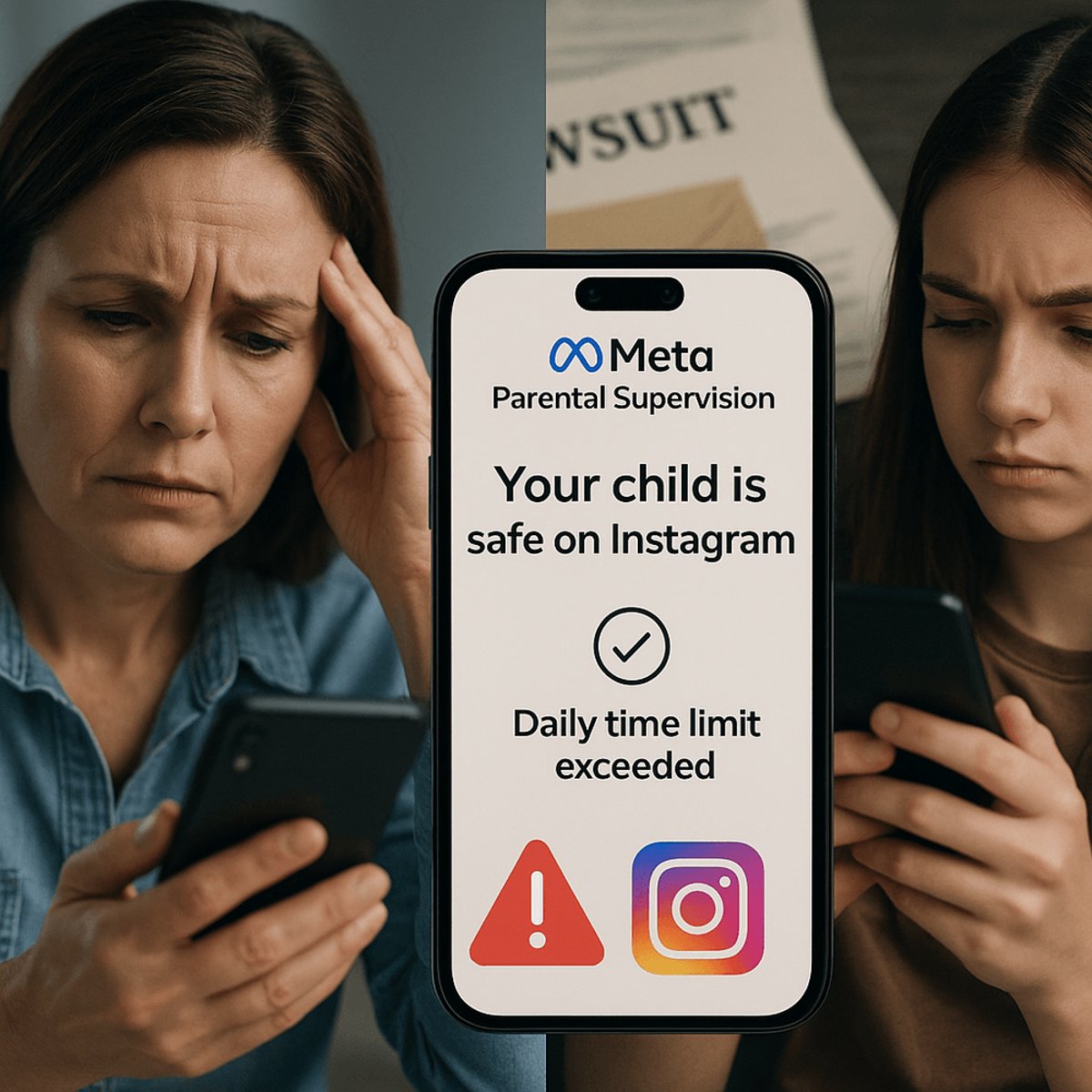
Meta's own internal research has uncovered an uncomfortable truth: the parental supervision tools the company promotes as safeguards for teen users don't actually help regulate compulsive social media use. The findings, which emerged in court filings, reveal that teens with trauma histories are particularly vulnerable to overuse, raising fresh questions about whether Meta's youth safety features address the root causes of platform addiction or simply provide legal cover.
Meta's carefully marketed parental supervision features just took a hit from an unexpected source: the company's own researchers. Internal studies conducted by Meta have found that parental supervision tools, which the company has promoted as a cornerstone of its teen safety strategy, don't meaningfully help young users regulate their social media consumption. The revelation comes at a particularly sensitive moment, as Meta faces mounting legal pressure over claims that Instagram and Facebook deliberately hook young users into compulsive usage patterns.
The research, which surfaced through court documents in ongoing litigation against Meta, paints a troubling picture of how the company's safety features perform in real-world conditions. According to findings reported by TechCrunch, the studies found that even when parents actively monitor and attempt to limit their children's platform use, teens continue to exhibit compulsive behaviors. More concerning, the research identified teens with trauma histories as especially prone to overuse, suggesting that Meta's platforms may be particularly harmful to already vulnerable populations.
This isn't the first time Meta's internal research has contradicted its public messaging. The Facebook Papers leaked by whistleblower Frances Haugen in 2021 revealed similar patterns, where company research showed Instagram harmed teen mental health even as executives downplayed concerns publicly. But these new findings cut deeper because they directly undermine the solution Meta itself has championed. The company rolled out expanded parental supervision tools across Instagram in 2022, positioning them as evidence of its commitment to youth safety.
The timing couldn't be worse for Meta. The company is currently defending itself against multiple lawsuits filed by state attorneys general and individual families, all alleging that its platforms were designed to be addictive to young users. Attorneys general from over 40 states have joined a coordinated legal effort claiming Meta knowingly deployed features like infinite scroll, autoplay videos, and algorithmic recommendations specifically to maximize teen engagement, regardless of mental health consequences.
"What this research shows is that parental tools are window dressing," said one attorney involved in the litigation, speaking on background. "Meta knew these features wouldn't solve the underlying problem because the platform itself is engineered to be compulsive." The internal studies could provide plaintiffs with powerful ammunition, demonstrating that Meta was aware its promoted solutions were ineffective while continuing to market them as adequate safeguards.
The findings about trauma and social media use add another layer of complexity. Mental health experts have long warned that individuals with adverse childhood experiences are more susceptible to addictive behaviors, including problematic social media use. If Meta's research confirms this pattern but the company has taken no meaningful steps to identify or protect these at-risk users, it could face allegations of negligence or worse. The research suggests Meta has detailed knowledge of exactly which user populations are most vulnerable yet continues to serve them the same engagement-maximizing content as everyone else.
For context, Meta has invested heavily in its Teen Safety narrative over the past two years. CEO Mark Zuckerberg has repeatedly testified before Congress about new features designed to protect young users, from default private accounts for teens to time limit reminders. But if the company's own research shows these tools don't work, critics argue it amounts to a sophisticated PR strategy rather than genuine reform. The disconnect between public promises and private knowledge could prove legally and reputationally devastating.
The social media industry as a whole is facing a reckoning over youth safety. TikTok, Snapchat, and YouTube have all introduced similar parental control features under regulatory pressure. If Meta's research demonstrates these approaches are fundamentally flawed, it raises questions about whether the entire industry's self-regulatory framework is built on sand. Lawmakers in the EU and US have been pushing for age-verification requirements and stricter content controls, but platforms have argued their voluntary measures are sufficient.
The research also complicates Meta's relationship with regulators. The company agreed to a $1.4 billion privacy settlement with European authorities in 2023 and remains under a Federal Trade Commission consent decree in the US. If regulators determine Meta misrepresented the effectiveness of its parental controls while under enhanced oversight, it could trigger additional penalties and more aggressive intervention.
The revelation that Meta's own research contradicts its public safety narrative marks a critical moment in the ongoing debate over tech platforms and youth wellbeing. As litigation intensifies and regulators scrutinize the industry more closely, companies can no longer rely on superficial parental controls as proof of responsibility. The research doesn't just suggest that current tools are inadequate - it indicates Meta has known this for some time while continuing to promote them as solutions. For parents, policymakers, and the millions of teens using these platforms daily, the message is clear: the self-regulatory approach hasn't worked, and more fundamental changes may be necessary to protect vulnerable users from compulsive engagement patterns that platforms themselves have engineered.