Micron Technology is crushing the broader tech market with a blistering 62% stock rally as memory chip prices spike on insatiable AI demand. The Boise-based semiconductor giant heads into its latest earnings report riding a wave that's left competitors and tech peers in the dust, with CEO Sanjay Mehrotra pointing to increasingly sophisticated AI models driving unprecedented need for faster, higher-capacity memory solutions.
Micron Technology is having the kind of year that makes semiconductor analysts rethink their models. The memory chip giant's stock has rocketed 62% higher as a perfect storm of AI demand and supply discipline sends memory prices into a spike that's reshaping the entire chip landscape.
The rally comes as Micron prepares to report earnings amid what industry watchers are calling the most favorable memory pricing environment in years. CEO Sanjay Mehrotra laid out the thesis in January, telling investors that "as generative AI models get more sophisticated, companies need more memory and faster memory," according to CNBC. That prediction is now playing out in real time across the chip sector.
The performance gap between Micron and its tech peers tells the story of where AI money is flowing. While the broader technology sector has posted modest single-digit gains, Micron's 62% surge reflects a fundamental shift in how enterprises are approaching AI infrastructure. It's not just about compute anymore - memory bandwidth and capacity have become the new bottleneck as companies race to deploy larger language models and more complex AI workloads.
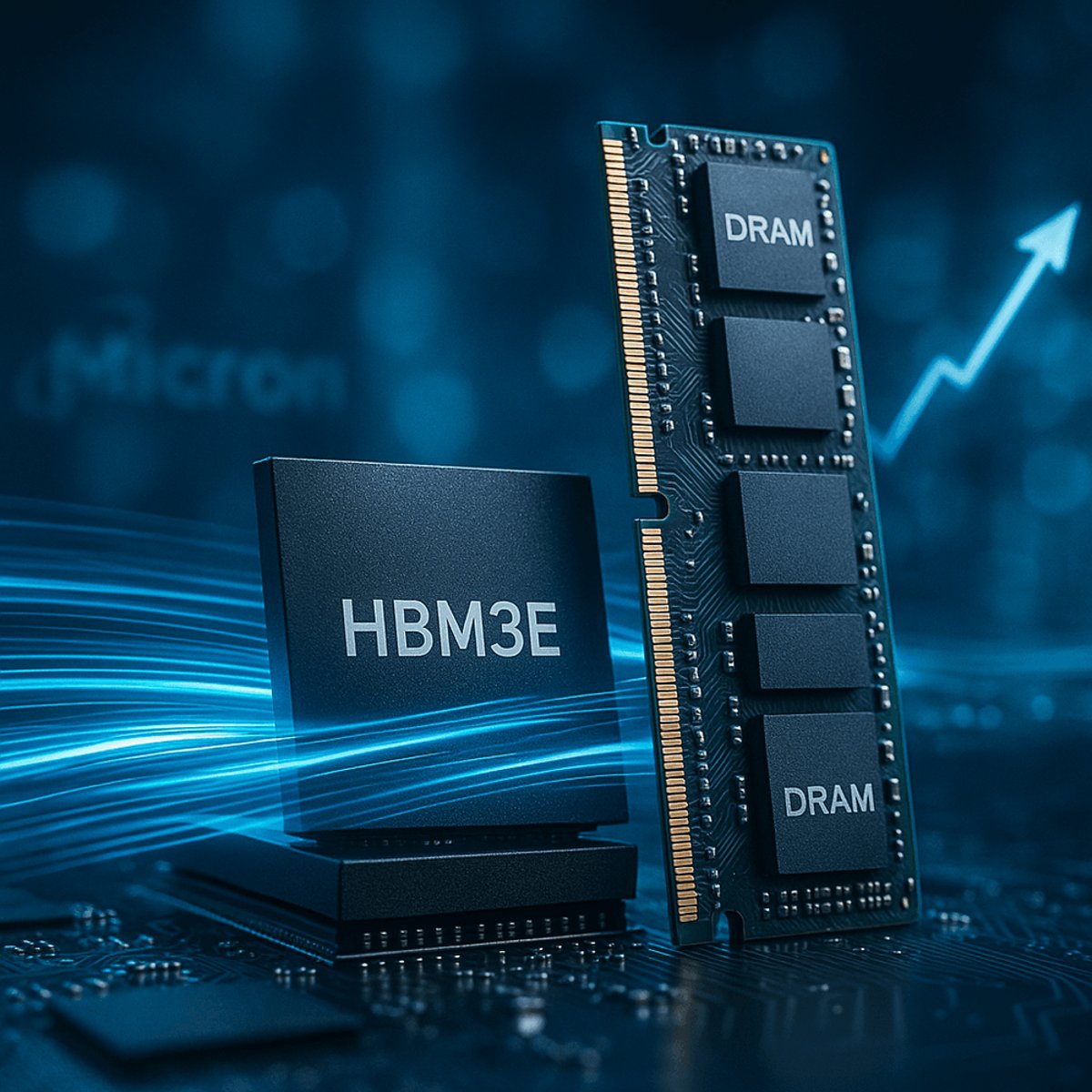
Memory pricing dynamics are notoriously cyclical, but this upturn has caught even seasoned chip investors off guard with its velocity. DRAM and NAND flash prices have been climbing steadily since late 2025 as hyperscalers like Amazon, Microsoft, and Google compete for limited high-bandwidth memory supply to power their AI ambitions. Micron's advanced HBM3E memory - designed specifically for AI accelerators - has become particularly scarce, with lead times stretching into multiple quarters.
The competitive landscape shows why Micron is winning. South Korean rival SK Hynix has dominated headlines with its early HBM3 ramp, but Micron's broader portfolio across DRAM, NAND, and specialty memory gives it exposure to the entire AI infrastructure build-out. Every AI server needs not just high-bandwidth memory for GPUs, but also massive amounts of conventional DRAM and fast NAND storage - all areas where Micron competes.
The timing couldn't be better for Micron's earnings report. Wall Street is hungry for confirmation that memory pricing strength extends beyond a single quarter, and that AI demand is structural rather than speculative. Analysts expect management to provide guidance on HBM3E production ramps, utilization rates at its advanced fabs, and crucially, visibility into second-half enterprise AI spending.
What makes this cycle different from previous memory booms is the end-market composition. Traditional memory upcycles were driven by smartphone refreshes or PC demand - volatile consumer markets prone to sudden inventory corrections. AI infrastructure spending, by contrast, represents multi-year buildouts by cash-rich hyperscalers making strategic bets on foundation models and enterprise AI services. That's the kind of demand visibility that supports sustained pricing power.
The stock's outperformance has also attracted attention from chip investors who've rotated out of pure-play AI beneficiaries like Nvidia into semiconductor companies with improving fundamentals. Micron's rally suggests the market is pricing in not just a cyclical recovery, but a structural re-rating as memory becomes mission-critical AI infrastructure.
Still, risks remain. Memory pricing can reverse quickly if hyperscaler spending slows or if Chinese competitors flood the market with lower-cost alternatives. Micron also faces ongoing geopolitical headwinds, with China representing both a major market and a source of competitive pressure. Trade restrictions and export controls add another layer of uncertainty to long-term forecasts.
For now, though, Micron is riding the AI wave at exactly the right moment. The company's decades of investment in advanced memory technologies are paying off just as the industry's biggest customers are desperate for every gigabyte of high-performance memory they can secure. Whether that translates into sustained earnings growth or a short-lived cyclical pop will become clearer when Micron reports results and management opens up about what they're seeing in AI customer pipelines.
Micron's 62% stock surge isn't just another semiconductor rally - it's a signal that the AI infrastructure boom has moved beyond GPUs into the memory layer that makes those chips actually work. As enterprises race to deploy more sophisticated AI models, the companies controlling advanced memory supply hold rare pricing power in an industry notorious for boom-bust cycles. The upcoming earnings report will reveal whether this is the start of a multi-year memory supercycle or a shorter-lived spike. Either way, Micron's outperformance shows that in the AI era, memory matters just as much as compute.