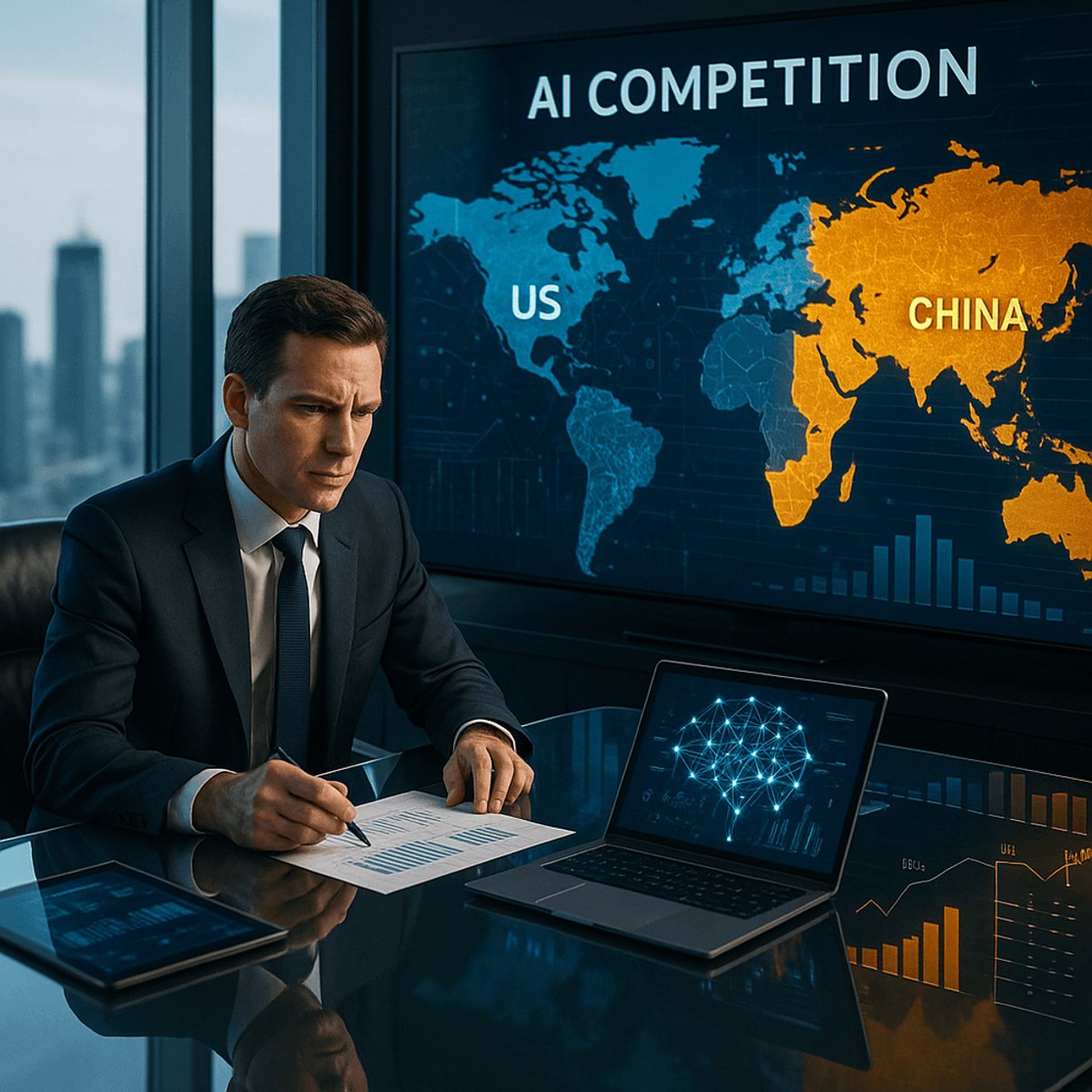
Microsoft President Brad Smith is sounding the alarm on what he sees as an emerging competitive threat to American tech dominance. In remarks that underscore growing tensions in the global AI race, Smith warned that US companies should "worry a little" about the massive government subsidies Beijing is pumping into Chinese AI firms, according to CNBC. The warning comes as American tech giants face mounting pressure to maintain their lead in artificial intelligence while Chinese competitors operate with state backing.
Microsoft President Brad Smith just put American tech on notice about a competitive threat that doesn't play by market rules. In a candid assessment that cuts through the usual diplomatic hedging, Smith told executives that US companies should "worry a little" about the torrent of government cash flowing to Chinese AI firms from Beijing.
The warning isn't just corporate posturing. Smith's comments reflect a fundamental shift in how the global AI race is being fought, with Chinese companies increasingly operating as extensions of state industrial policy while American firms navigate without equivalent backing. For Microsoft, which has poured billions into its AI infrastructure through partnerships like its OpenAI alliance, the subsidies create an unlevel playing field that could reshape competitive dynamics.
"American firms will have to compete with subsidies provided by Beijing to Chinese companies," Smith said in remarks reported by CNBC. The statement acknowledges what industry insiders have whispered for months: China's state-directed approach to AI development is creating competitors that don't need to worry about quarterly earnings or investor returns.
The timing of Smith's warning is significant. It comes as Chinese AI firms like DeepSeek have demonstrated surprising capabilities despite US export controls on advanced chips, suggesting that government funding is helping them punch above their technical weight class. Beijing has made AI a cornerstone of its Made in China 2025 initiative, pouring state resources into domestic champions while simultaneously restricting foreign competition in the Chinese market.
For Microsoft, the competitive threat is existential in some markets. The company generates substantial revenue from its Azure cloud platform and AI services, but faces limited access to China's massive market while Chinese firms enjoy both domestic protection and export ambitions. Smith's role as both Microsoft's president and its top diplomat on geopolitical issues gives his assessment particular weight.
The subsidy gap extends beyond direct cash infusions. Chinese AI firms benefit from preferential access to government data, regulatory fast-tracking, and guaranteed public sector contracts that American companies must compete for in open bidding. They also operate under different privacy and data protection regimes that can accelerate development cycles but raise ethical concerns.
Smith's "worry a little" framing might actually understate the challenge. While American tech giants like Microsoft, Google, and Amazon have invested heavily in AI, they're doing so with private capital and shareholder scrutiny. Chinese competitors face different pressures, optimizing for strategic goals rather than return on investment.
The warning also highlights a broader policy question facing Washington: how should the US respond to state-backed competition without abandoning market principles? Some industry voices have called for increased government support for AI research and development, while others worry that industrial policy could distort innovation incentives.
For Microsoft, navigating this landscape means balancing multiple priorities. The company must maintain its technology lead through continued investment, lobby for policy frameworks that address unfair competition, and manage its limited China exposure without completely abandoning a market of 1.4 billion people. Smith's public comments suggest the company is leaning into the competitive framing, potentially laying groundwork for policy advocacy.
The geopolitical dimension adds another layer of complexity. AI competition increasingly intersects with national security concerns, export controls, and alliance management. Microsoft has positioned itself as a responsible actor willing to work with governments on AI governance, but that approach becomes harder when competitors operate as instruments of state power.
What makes Smith's warning particularly notable is its departure from the usual tech industry optimism about global markets and open competition. By explicitly calling out subsidies as a concern, he's acknowledging that the rules-based international order for technology competition is fraying, replaced by something more zero-sum and nationalistic.
Smith's warning marks a pivotal moment in how American tech leaders talk about Chinese competition. By openly acknowledging the subsidy threat, Microsoft is signaling that the AI race has moved beyond pure technology battles into economic statecraft. For investors, enterprise customers, and policymakers, the message is clear: the next phase of AI development will be shaped as much by government industrial policy as by algorithmic breakthroughs. US tech firms face a choice between competing on an unlevel field or pushing for policy responses that could fundamentally reshape how America approaches strategic technology sectors. Either way, the era of treating AI as just another software market is over.