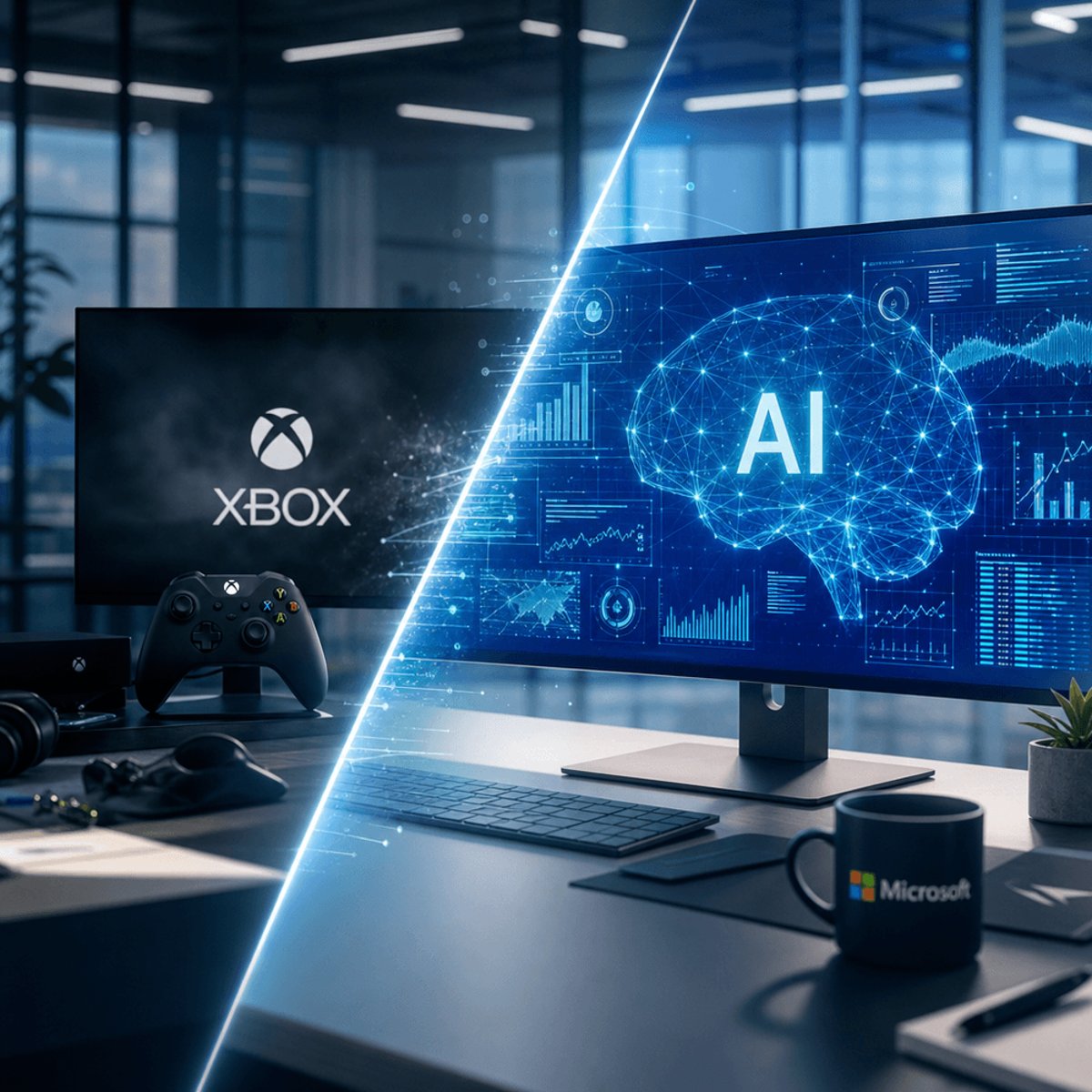
Microsoft is cutting 4,800 jobs across the company in what's being called a significant restructure, with the Xbox gaming division taking a particularly hard hit. The layoffs represent roughly 2.1% of Microsoft's total workforce, with 1,600 positions eliminated at Xbox alone. The move signals a strategic shift for the tech giant as it realigns resources amid changing market dynamics in both enterprise and consumer technology.
Microsoft just dropped a bombshell that's sending ripples through the tech industry. The company announced it's eliminating 4,800 positions in what executives are describing as a significant restructure, with the Xbox gaming division shouldering a disproportionate share of the cuts at 1,600 jobs.
The layoffs hit roughly 2.1% of Microsoft's workforce, which currently stands at approximately 228,000 employees globally. But the numbers tell only part of the story. The concentration of cuts at Xbox - representing a third of all eliminated positions - suggests Microsoft is fundamentally rethinking its gaming strategy at a time when the division faces mounting pressure to justify its massive investments in acquisitions and Game Pass.
This isn't Microsoft's first major workforce reduction in recent years. The company has been steadily recalibrating its operations, balancing legacy business units against explosive growth areas like AI and cloud computing. What makes this round particularly notable is the timing and the target. Xbox has been Microsoft's bet on the future of interactive entertainment, with the company spending billions to acquire studios and build out its gaming ecosystem.
The restructuring comes as Microsoft pours unprecedented resources into AI infrastructure and development. The company's partnership with OpenAI has positioned it as a leader in generative AI, but that leadership comes with enormous costs. Data centers, specialized chips, and top-tier AI talent don't come cheap, and companies across the tech sector are making tough choices about where to allocate capital.
For Xbox, the cuts likely reflect harsh realities about the gaming market. Despite Microsoft's aggressive expansion through acquisitions, the division has struggled to match the profitability of competitors like Sony and Nintendo. Game Pass, while popular with subscribers, has yet to prove it can generate the sustained revenue growth Microsoft needs to justify continued heavy investment.
The broader tech industry is watching closely. This restructure follows similar moves by other major players who've been trimming workforces while simultaneously investing billions in AI capabilities. Amazon, Google, and Meta have all announced significant layoffs over the past year, often while posting strong earnings and accelerating AI investments.
What's emerging is a new pattern in big tech: companies are willing to cut established divisions to fund transformational bets on AI. The calculus is straightforward but brutal - legacy products and services that can't demonstrate explosive growth potential are being deprioritized in favor of AI infrastructure that promises to reshape entire industries.
For the 4,800 employees affected, the restructure means immediate disruption and uncertainty. Microsoft typically offers severance packages and career transition support, but that's cold comfort in a tech job market that's become increasingly selective. The skills that made someone valuable in Xbox game development or traditional software engineering don't automatically translate to the AI-focused roles where Microsoft is still hiring aggressively.
The Xbox cuts also raise questions about Microsoft's gaming ambitions. The company spent $68.7 billion to acquire Activision Blizzard, positioning itself as a gaming powerhouse. But if the division is now shedding 1,600 positions, it suggests Microsoft may be reconsidering how it operates in the gaming space - potentially moving toward a leaner, more focused strategy rather than the broad ecosystem approach it's pursued.
Industry analysts see this as part of a longer-term realignment. Tech companies overextended during the pandemic boom, hiring aggressively to meet surging demand. Now they're correcting course, optimizing operations for a market that values profitability and AI capabilities over pure growth. Microsoft's cuts, while painful for those affected, reflect the company's determination to stay competitive in what CEO Satya Nadella has called the "platform shift" of AI.
Microsoft's decision to cut 4,800 jobs with heavy concentration in Xbox reveals the brutal trade-offs facing big tech. As companies race to dominate AI, established divisions are being squeezed to fund the future. For Microsoft, that means betting big on AI infrastructure while trimming gaming operations that haven't delivered expected returns. The restructure won't be the last - expect more tech giants to make similar moves as they optimize for an AI-first world. What remains to be seen is whether these cuts position Microsoft for long-term success or if the company is sacrificing proven businesses for an uncertain AI future. Either way, the message is clear: in today's tech landscape, every division must justify its existence against the capital demands of artificial intelligence.