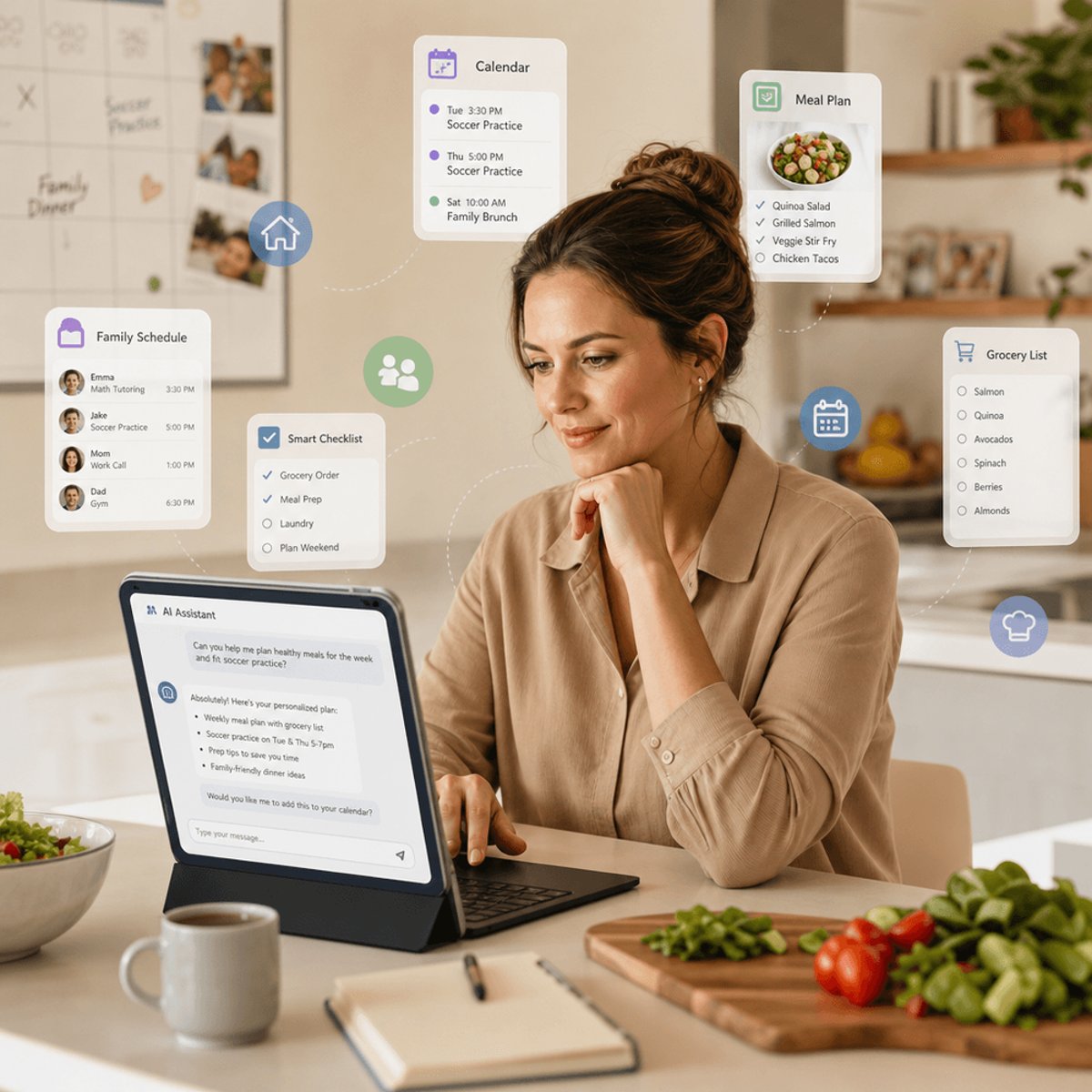
A new creator economy niche is exploding on social media, and it's revealing something unexpected about how AI is actually being adopted in American homes. Momfluencers are packaging ChatGPT as a digital household manager - not just for meal planning or scheduling, but as what they're calling a 'better coparent than men.' According to a new Wired investigation, these influencers aren't just using OpenAI's tools themselves - they're monetizing the knowledge by selling courses teaching other mothers to do the same, raising questions about both the domestic labor gap and the emerging market for consumer AI education.
OpenAI probably didn't envision this use case when it launched ChatGPT, but a cottage industry of mom influencers is repackaging the AI chatbot as the solution to an age-old problem: the unequal distribution of household labor. And they're making money doing it.
According to reporting from Wired, a growing cohort of momfluencers is positioning AI tools - particularly ChatGPT - not as productivity enhancers or creative assistants, but as digital household managers that can shoulder what sociologists call the 'mental load' of running a family. We're talking meal planning, activity scheduling, grocery lists, birthday party coordination, even navigating school bureaucracy.
But here's where it gets interesting from a business perspective. These influencers aren't just sharing tips for free. They're building entire course offerings teaching other mothers how to effectively prompt AI for domestic tasks, creating what amounts to a new educational vertical in the creator economy. The pitch resonates because it frames AI adoption through the lens of a documented social problem - studies consistently show women perform significantly more unprofessional household management work than male partners, even in dual-income homes.
The monetization angle reveals something crucial about how consumer AI knowledge is being packaged and sold. While enterprise software companies spend billions on AI implementation consulting, regular users are turning to influencer courses to learn the same tools. It's the democratization of AI education, but through a creator economy lens rather than traditional tech training. The courses reportedly cover prompt engineering basics, workflow automation for household tasks, and integration strategies for family calendars and planning.
This trend sits at the intersection of several larger movements in tech adoption. First, it shows how quickly AI tools have moved from early adopter circles into mainstream consumer behavior. Second, it highlights the influencer economy's ability to identify and monetize emerging technology skills before traditional education catches up. Third, and perhaps most tellingly, it exposes a market gap - people want AI training, but they want it contextual to their actual lives, not generic productivity advice.
The framing as a 'better coparent than men' is deliberately provocative, but it speaks to real frustration with household labor dynamics that predates AI by decades. What's changed is the availability of tools that can actually automate cognitive tasks, not just physical ones. ChatGPT can generate weekly meal plans accounting for dietary restrictions, budget constraints, and what's already in your pantry. It can draft emails to teachers, coordinate carpool schedules, and troubleshoot toddler sleep issues at 3 AM.
The business model mirrors other creator economy plays - build an audience by sharing free tips on TikTok or Instagram, then funnel engaged followers into paid courses or coaching programs. Some momfluencers are reportedly charging hundreds of dollars for comprehensive AI household management programs. If even a fraction of their follower bases convert, that's a significant revenue stream built entirely on teaching people to use free or low-cost AI tools more effectively.
From OpenAI's perspective, this represents organic growth in an unexpected consumer segment. The company has focused much of its public messaging on business productivity and creative professional use cases, but moms optimizing household logistics might represent a larger total addressable market. It's also largely invisible in usage statistics - these aren't enterprise licenses or high-profile creative projects, just millions of everyday queries about dinner ideas and permission slip deadlines.
The 'Where are all the dads?' question in the original reporting cuts to the heart of why this phenomenon is noteworthy beyond just tech adoption metrics. The fact that it's predominantly mothers seeking out and teaching these skills reflects both who currently carries the household management burden and who's motivated to find solutions. If AI truly democratizes access to cognitive assistance, why is the educational market so gendered?
That question has implications for how tech companies think about product development and marketing. If your AI assistant is being positioned as a replacement for an absent or unhelpful human partner, that's both a massive market opportunity and a reflection of product-market fit you didn't intentionally design for. It also suggests that the most compelling AI use cases for regular consumers might not be the ones developers anticipated.
The creator economy angle can't be understated. This represents influencers identifying a technology trend early, developing expertise faster than traditional educational institutions, and monetizing that knowledge gap. It's the same playbook that's worked for fitness influencers, finance coaches, and productivity gurus, now applied to AI literacy. And it's probably more effective than corporate AI training for the target audience, because it's taught by peers who understand the specific context and pain points.
What started as momfluencers sharing ChatGPT hacks has evolved into a genuine business vertical that reveals something important about AI adoption. The technology is spreading fastest not through enterprise rollouts or developer tools, but through peer education in communities with real, pressing needs. The monetization of AI literacy through influencer courses suggests we're entering a phase where knowing how to effectively use these tools is itself a marketable skill. And the gendered nature of this particular trend - mothers teaching mothers to automate cognitive household labor - highlights both the persistence of traditional domestic dynamics and the potential for AI to reshape them. Whether that happens through better tools or simply makes the underlying inequity more visible remains to be seen. But the market has spoken: there's money in teaching people to turn AI into a more reliable household partner.