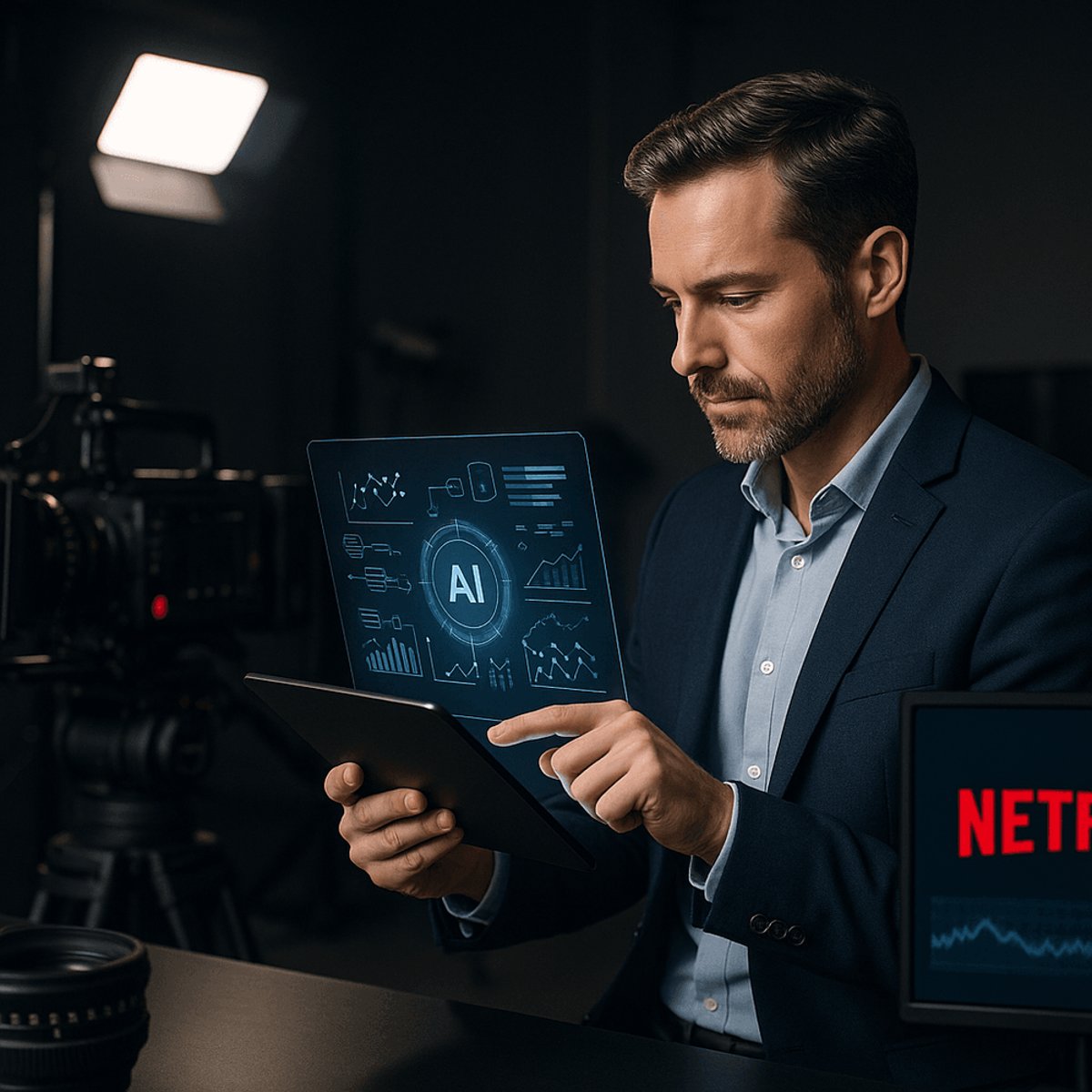
Netflix just made its boldest bet yet on AI-powered content creation, acquiring InterPositive, the AI filmmaking company founded by Academy Award winner Ben Affleck. The acquisition marks a watershed moment as Hollywood's biggest streaming platform absorbs technology designed to preserve human creative judgment while leveraging artificial intelligence for production workflows. Terms weren't disclosed, but the deal signals Netflix's determination to stay ahead in the escalating arms race over AI-assisted entertainment production.
Netflix is bringing Ben Affleck's vision for AI-assisted filmmaking in-house. The streaming giant announced today it's acquiring InterPositive, the AI production company the Oscar-winning director launched to explore how artificial intelligence could augment human creativity without replacing it. Financial terms remain undisclosed, but sources familiar with the matter suggest the deal values the startup in the mid-eight figures.
The timing couldn't be more charged. Hollywood's still processing the aftershocks of last year's strikes, where AI protections became a central negotiating point. Now Netflix - which spent $17 billion on content in 2025 alone - is doubling down on technology that could fundamentally reshape how that content gets made.
"We wanted to preserve what makes human storytelling human, which is judgment," Affleck told TechCrunch in a statement. That philosophy distinguishes InterPositive from the wave of generative AI startups promising to automate scriptwriting or replace VFX artists entirely. Instead, Affleck's team built tools meant to handle repetitive production tasks - think scheduling optimization, continuity tracking, or preliminary shot composition - while keeping creative decisions firmly in human hands.
It's a nuanced pitch that apparently resonated with Netflix co-CEO Ted Sarandos, who's been publicly cautious about AI hype while privately investing heavily in the technology. The company's already using machine learning for everything from thumbnail personalization to dubbing workflows. Absorbing InterPositive gives Netflix a Hollywood-vetted AI platform with built-in credibility among the creative community that's been deeply skeptical of the technology.
The acquisition also hands Netflix a powerful recruiting tool. Affleck's not just a two-time Oscar winner - he's directed critically acclaimed films like Argo and The Town, giving him credibility with A-list talent who might otherwise balk at AI involvement in their projects. If Netflix can position InterPositive's tools as filmmaker-friendly efficiency boosters rather than job-killing automation, it could ease adoption across its sprawling production slate.
But the deal raises uncomfortable questions for an industry already anxious about AI's trajectory. What happens when a studio that greenlit 500-plus projects last year owns the AI tools that could theoretically reduce how many people each project needs? Netflix insists InterPositive will operate as a resource for creators, not a cost-cutting mandate. Still, the optics are tricky - especially as rival studios scramble to develop their own AI strategies.
Competitors aren't sitting idle. Disney has been quietly testing AI tools for visual effects pre-visualization. Warner Bros. Discovery partnered with AI startup Cinelytic for script analysis. Amazon Studios is experimenting with AI-generated background dialogue for crowd scenes. The InterPositive acquisition suggests Netflix believes the winner in streaming's next phase won't just have the best content library - they'll have the best content production infrastructure.
Affleck launched InterPositive in late 2024 with backing from undisclosed entertainment industry investors, though he maintained majority ownership until this sale. The company remained largely stealth, with Affleck testing its tools on smaller independent projects before shopping the technology to studios. Netflix emerged as the winning bidder after what sources describe as a competitive process involving at least two other major streamers.
The deal's structure reportedly includes earn-outs tied to InterPositive's integration across Netflix productions, plus a commitment to maintain the team's autonomy as an internal R&D division. Affleck will serve as a creative advisor, though his specific role remains undefined. That flexibility might be strategic - his involvement lends legitimacy without binding him to a traditional executive position that could conflict with his directing career.
For Netflix, the acquisition is about future-proofing. The company faces slowing subscriber growth in mature markets and intensifying competition from rivals who've collectively spent north of $100 billion building content arsenals. If AI tools can shave even 10% off production timelines or budgets while maintaining quality, the ROI justifies the acquisition price several times over. And if those tools come with Affleck's imprimatur, that's insurance against the backlash that's sunk other AI entertainment initiatives.
The entertainment industry's watching closely. If Netflix can successfully deploy InterPositive's technology without triggering labor disputes or creative revolts, expect every studio to pursue similar acquisitions. If the integration stumbles - or if the tools prove less revolutionary than promised - it might cool Hollywood's AI fever dreams. Either way, Affleck's just ensured his technology will shape how hundreds of millions of viewers experience stories for years to come.
Netflix's InterPositive acquisition isn't just about buying AI tools - it's about buying legitimacy for AI in Hollywood. By bringing Affleck's human-centered approach in-house, Netflix is betting it can thread the impossible needle of using artificial intelligence to boost efficiency without alienating the creative talent that makes its content valuable in the first place. Whether that vision survives contact with the realities of quarterly earnings pressure and production demands will determine if this deal looks prescient or premature a year from now. For an industry still figuring out AI's role, Netflix just made the most expensive statement yet about where it thinks the technology fits.