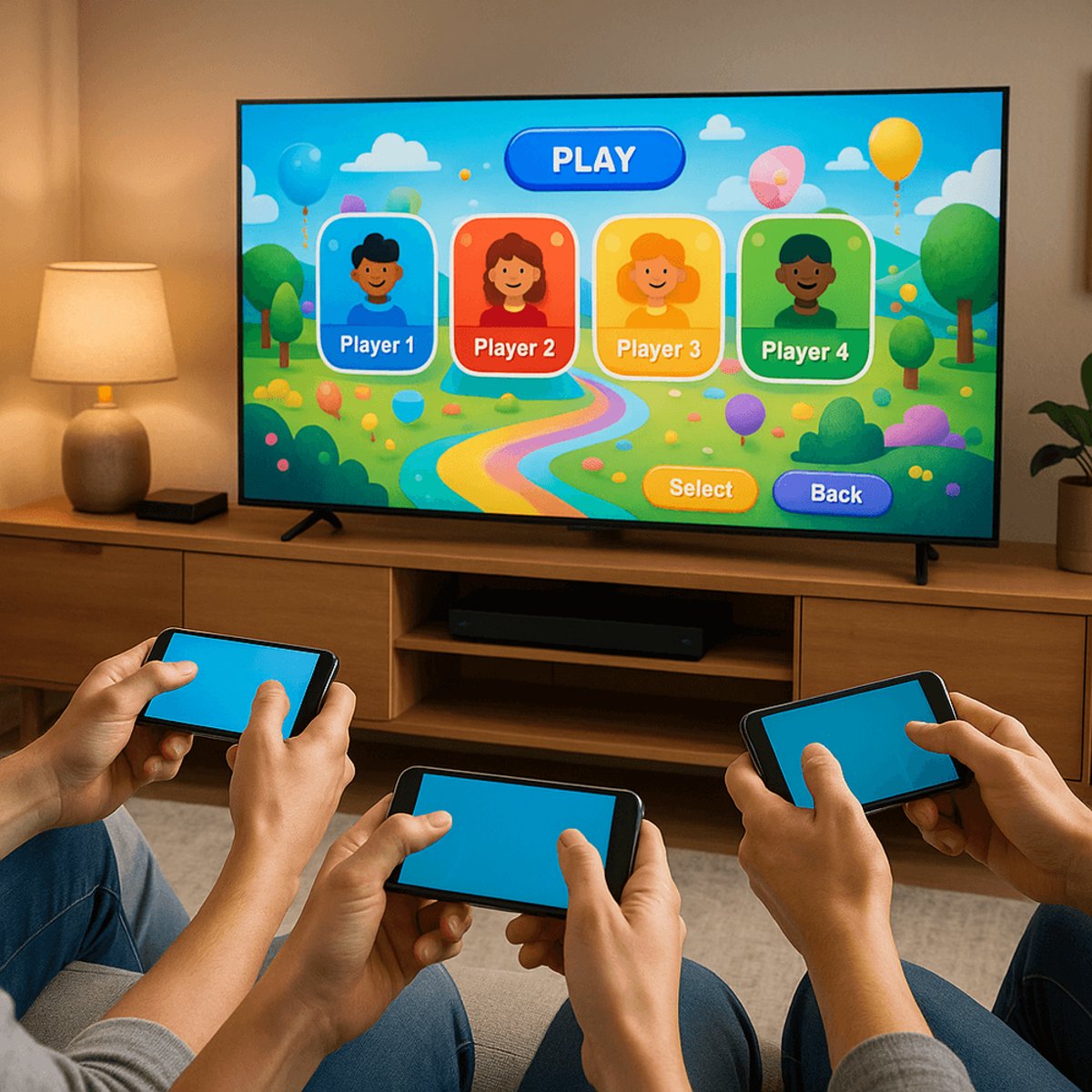
Netflix just made the living room a gaming arena. Starting this week, subscribers can play games directly on their smart TVs using their phones as controllers - a move that transforms Netflix from a streaming service into a full entertainment platform. After years of mobile-only gaming, this TV expansion signals Netflix's serious play against traditional gaming giants.
Netflix just crossed a major threshold in its streaming evolution. The company quietly activated TV gaming for subscribers this week, finally delivering on promises that began circulating in early 2023. Users can now navigate to the "Games" tab on their Netflix TV app, select a title, and use their smartphone as a wireless controller.
The timing couldn't be more strategic. While competitors like Apple and Amazon have struggled to crack the living room gaming market, Netflix is leveraging its existing TV infrastructure and massive subscriber base. The move transforms every Netflix-enabled smart TV into a potential gaming console, reaching households that might never buy dedicated gaming hardware.
Netflix's initial game lineup focuses entirely on party titles - a smart choice that turns gaming into a social experience. The five launch titles include Boggle Party for up to eight players, LEGO Party with four-player competition, and Party Crashers where groups try to identify the outsider who doesn't know what everyone's discussing. There's also Pictionary: Game Night and Tetris Time Warp for competitive scoring.
"Launching group-focused games encourages more customers to participate and keeps users engaged with the streaming service even when they're not watching content," according to Netflix's official announcement. The strategy directly addresses Netflix's core challenge: increasing user engagement and time spent on the platform.
This TV gaming launch represents a significant escalation from Netflix's mobile gaming efforts, which began four years ago with limited success. The mobile games, while critically acclaimed in some cases, never gained meaningful traction with Netflix's subscriber base. Industry analysts have long questioned whether Netflix subscribers actually want games, but the TV approach changes the equation entirely.
The technical implementation builds on groundwork Netflix laid in 2023. The company first developed iOS controller apps and conducted limited testing, but the full TV experience remained elusive until now. Users simply download the Netflix app on their phone, which automatically connects to the TV version when gaming begins.
For the gaming industry, Netflix's TV push represents a new competitive threat. Traditional console makers like Sony and Microsoft have dominated living room gaming for decades, while mobile gaming companies like King and Supercell control smartphone experiences. Netflix's hybrid approach - using phones as controllers for TV games - creates a unique middle ground that could attract casual gamers who find consoles intimidating but want more social gaming than mobile offers.
The party game focus also positions Netflix against social gaming platforms and family entertainment options. Instead of competing directly with hardcore gaming experiences, Netflix is targeting the same demographic that might gather for board game night or party activities.
Netflix's broader gaming strategy, revealed in recent interviews, focuses on four game categories including these party titles. The company has been testing various approaches since launching mobile games, from indie titles to games based on popular Netflix shows like Stranger Things.
The rollout begins in select countries with plans for global expansion. Netflix hasn't specified which regions get access first, but the company typically tests new features in smaller markets before worldwide launches. With over 260 million subscribers globally, even limited adoption could make Netflix a significant gaming platform overnight.
What makes this particularly interesting is the timing. Gaming revenues have softened across the industry in 2024, with major publishers reporting declining engagement. Netflix's entry could either capitalize on this weakness or face the same headwinds affecting established players.
Netflix's TV gaming launch isn't just about adding another feature - it's about redefining what a streaming platform can be. By turning every smart TV into a gaming device and every phone into a controller, Netflix is creating a new category that doesn't require additional hardware purchases. The success will depend on whether subscribers actually want to game in their living rooms, but Netflix's massive reach gives it a unique advantage to find out. If this works, expect every streaming service to follow suit.