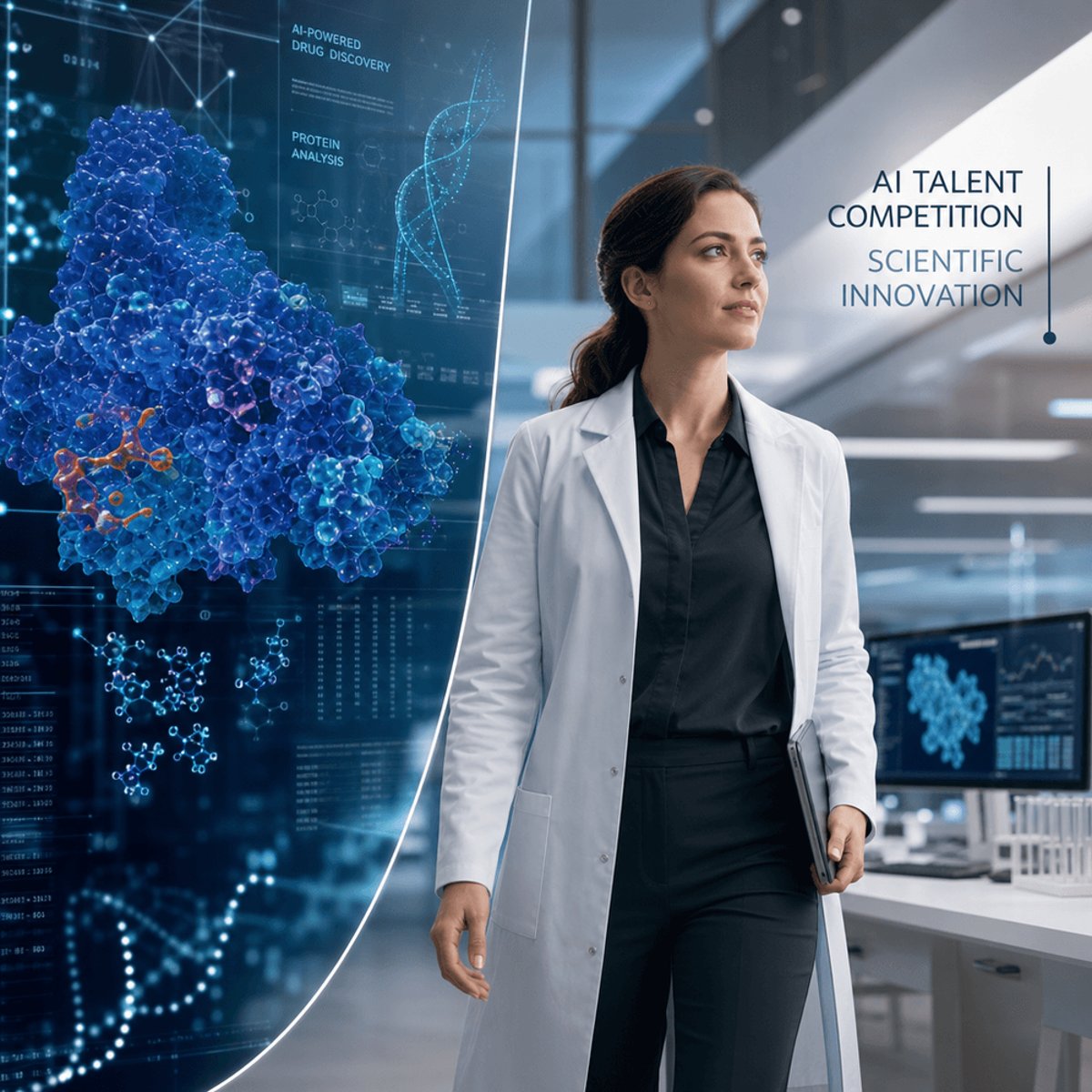
John Jumper, the Nobel Prize-winning scientist behind AlphaFold, is leaving Google DeepMind for Anthropic in one of the biggest talent shifts in AI this year. The move signals growing competition for top research minds as AI labs race to build more capable systems. Jumper's departure comes amid what appears to be a broader exodus of senior talent from DeepMind, though the full scope remains unclear.
Google DeepMind just lost one of its brightest stars. John Jumper, who shared the 2024 Nobel Prize in Chemistry for creating AlphaFold, is heading to Anthropic in a move that's sending shockwaves through the AI research community.
The timing couldn't be more striking. Jumper's AlphaFold system revolutionized biology by predicting protein structures with unprecedented accuracy, solving a 50-year-old grand challenge in science. Now he's taking that expertise to a rival lab best known for building Claude, one of the most capable large language models on the market.
But Jumper isn't leaving alone. According to the original TechCrunch report, he's just one of several big names departing DeepMind right now. The report notes that "Jumper isn't the only big name leaving Google DeepMind," though specific details about other departures haven't been disclosed yet.
The exodus raises questions about what's happening inside DeepMind. Google merged its DeepMind and Google Brain teams in 2023, creating a single powerhouse AI organization. Since then, the lab has shipped major products like Gemini and continued pushing boundaries in areas from game-playing AI to robotics. But managing a combined organization of that scale isn't easy, and talent retention has clearly become an issue.
For Anthropic, landing Jumper is a massive win. The company, founded by former OpenAI researchers Dario and Daniela Amodei, has positioned itself as the safety-focused alternative in AI development. Adding someone with Jumper's credentials in computational biology opens new doors. It suggests Anthropic might be expanding beyond pure language model work into scientific applications where AI can accelerate drug discovery, materials science, and other research domains.
Jumper's AlphaFold work proved that AI could crack problems humans struggled with for decades. The system can predict how proteins fold into 3D shapes based on their amino acid sequences, a breakthrough that's already being used by researchers worldwide to understand diseases and design new drugs. AlphaFold's database now contains structure predictions for over 200 million proteins, essentially mapping the entire known protein universe.
What's interesting is the contrast between DeepMind's approach and where Anthropic might take things. DeepMind built AlphaFold as a specialized system trained specifically for protein folding. Anthropic, meanwhile, has focused on building general-purpose models that can tackle many different tasks. Bringing Jumper into that environment could lead to fascinating hybrid approaches - imagine Claude-level language understanding combined with deep domain expertise in biology and chemistry.
The competitive dynamics here matter too. OpenAI has been making noise about scientific AI applications. Microsoft is pouring resources into AI-powered drug discovery through partnerships. Even Meta has released its own protein folding models. The race to apply AI to hard science problems is heating up, and Anthropic just recruited arguably the best player in the field.
For Google, losing Jumper stings. DeepMind's scientific breakthroughs have been key to justifying the company's massive AI investments to skeptical observers. AlphaFold gave Google a concrete example of AI solving real-world problems beyond chatbots and ad optimization. Replacing that caliber of researcher won't be easy, especially if other senior people are walking out the door at the same time.
The bigger story is what this says about AI talent wars in 2026. We're past the phase where researchers moved primarily for intellectual freedom or interesting problems. Now it's about resources, company direction, and where people think the most important work will happen next. Jumper's choice to leave a Nobel Prize-winning project at Google for a startup - even a well-funded one like Anthropic - suggests he sees something compelling in the smaller lab's approach.
We don't yet know what role Jumper will take at Anthropic or what he'll work on first. We also don't know who else is leaving DeepMind or why. But the fact that multiple senior researchers are departing around the same time points to something more than isolated decisions. Whether it's strategic disagreements, cultural friction after the merger, or simply better offers elsewhere, Google DeepMind clearly has a retention problem on its hands.
Jumper's move to Anthropic marks more than just another executive shuffle in Silicon Valley's AI wars. It's a signal that the next frontier in artificial intelligence isn't just making chatbots smarter - it's applying these systems to humanity's hardest scientific challenges. For Google, it's a wake-up call about talent retention at a moment when keeping top researchers matters more than ever. For Anthropic, it's validation that their approach is attracting world-class minds. And for everyone else watching this space, it's a reminder that we're still in the early innings of figuring out which companies will lead AI's next decade. The researcher who solved protein folding just made his bet. Now we wait to see what he builds next.