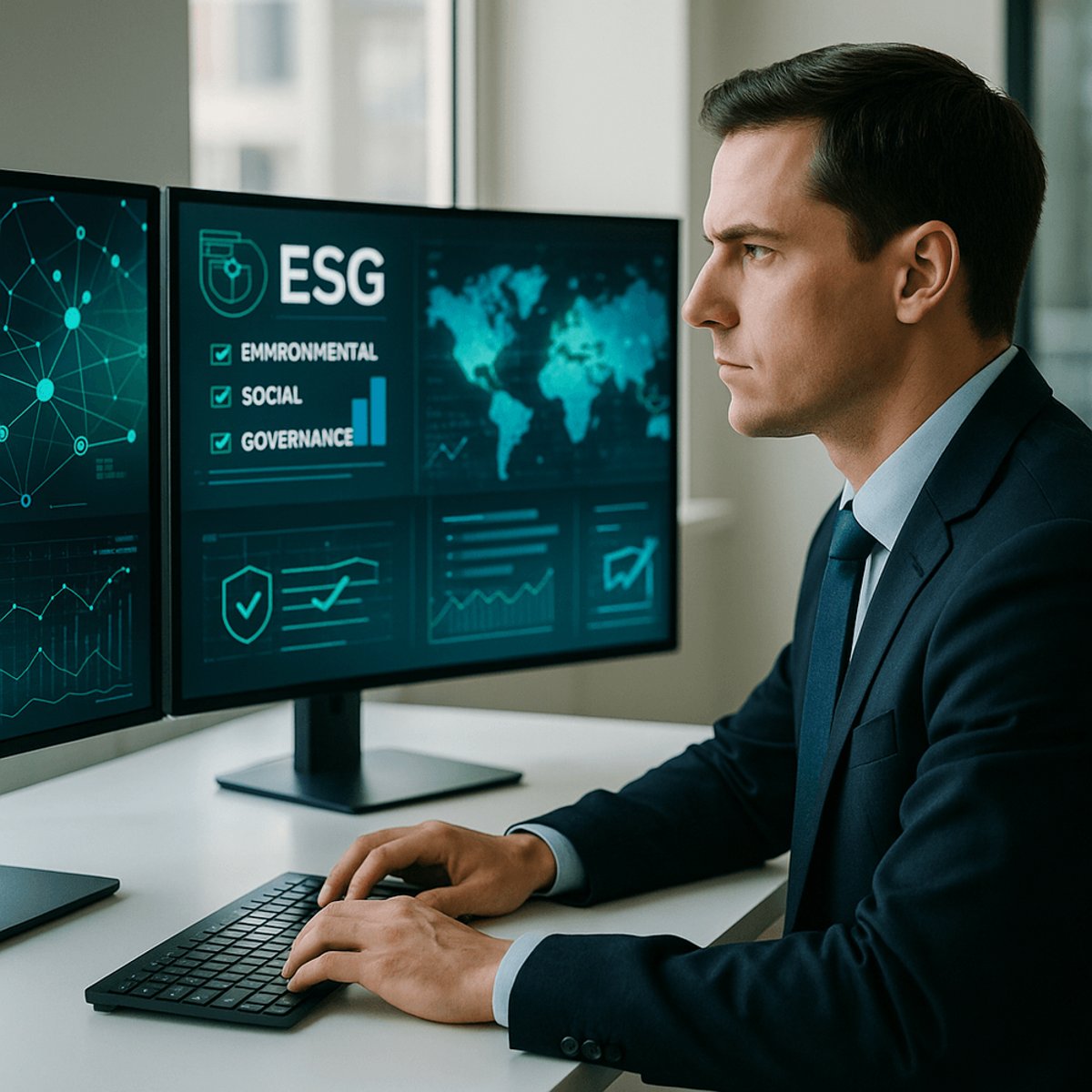
Norway's $2 trillion Government Pension Fund Global is deploying Anthropic's Claude AI model to screen its massive investment portfolio for ethical and environmental concerns, marking one of the largest institutional adoptions of AI for ESG compliance. The move comes as the fund faces mounting pressure from the Trump administration over recent divestment decisions targeting U.S. and Israeli companies, according to a CNBC report.
The world's largest sovereign wealth fund just handed Anthropic a vote of confidence that reverberates far beyond Norway's borders. Norges Bank Investment Management, which oversees Norway's $2 trillion Government Pension Fund Global, is now using Claude AI to help navigate the increasingly fraught terrain of ethical investing.
The timing is no coincidence. The fund has been reviewing its ethical framework after drawing sharp criticism from the Trump administration for recent decisions to divest from certain U.S. and Israeli companies. By turning to AI, NBIM is attempting to bring more systematic rigor to decisions that have become political lightning rods.
For Anthropic, this deployment represents a significant enterprise win in the institutional finance sector. The company has positioned Claude as the more safety-conscious alternative in the large language model race, emphasizing constitutional AI principles that align well with ethical screening applications. While OpenAI and Microsoft have dominated headlines with consumer-facing AI products, Anthropic is quietly building a foothold in sensitive institutional use cases where trust and explainability matter most.
The Norwegian fund manages investments equivalent to roughly $370,000 for every citizen of Norway, built from decades of oil revenue. Its ethical guidelines exclude companies involved in weapons production, tobacco, coal, and human rights violations. But as geopolitics grows more complex, so do the judgment calls. The fund has divested from dozens of companies in recent years, from coal miners to tech firms accused of enabling surveillance.
Now Claude is helping parse that complexity at scale. The AI can rapidly analyze corporate disclosures, news reports, and regulatory filings across thousands of portfolio companies, flagging potential ethical concerns for human review. It's not making the final calls, but it's dramatically expanding the fund's monitoring capacity.
The approach reflects a broader trend in institutional finance. According to the Global Sustainable Investment Alliance, ESG-focused investment strategies now account for more than $35 trillion in assets under management globally. But the manual work of screening portfolios doesn't scale with that growth. AI offers a way forward, though it brings its own concerns about algorithmic bias and transparency.
The Trump administration's criticism adds another dimension to the story. U.S. officials have accused European institutional investors of using ESG criteria as a pretext for political decisions targeting American and Israeli companies. Norway's response, essentially, is to make the process more systematic and AI-driven, potentially deflecting accusations of political bias by pointing to algorithmic screening.
But that strategy carries risks. If Claude flags companies based on training data that reflects certain political or cultural assumptions, the fund could face new accusations that it's simply outsourcing bias to a black box. Anthropic has invested heavily in making Claude's reasoning more transparent and auditable, but the technology remains far from perfect.
The deployment also highlights the growing competition in enterprise AI. While Google and Microsoft have pushed their models aggressively into business software, Anthropic is carving out a niche in high-stakes applications where mistakes carry massive consequences. A sovereign wealth fund screening trillions in investments fits that profile perfectly.
For other institutional investors, Norway's move will be closely watched. If Claude proves effective at identifying ethical red flags while withstanding political scrutiny, expect a wave of similar deployments across pension funds, endowments, and asset managers. The technology could become table stakes for large-scale ESG investing.
The fund's parallel review of its ethical framework suggests this isn't just a technology play. NBIM is rethinking how it makes these decisions in an era when every divestment can trigger international backlash. AI might help manage the complexity, but the fundamental questions about where to draw ethical lines remain deeply human and political.
What happens next will test both the technology and the governance model. Can an AI system trained on vast amounts of global data make screening decisions that satisfy Norwegian lawmakers, international partners, and political critics simultaneously? Or will the deployment simply shift the debate from human judgment to algorithmic accountability, with all the complications that entails?
Norway's decision to deploy Claude AI for ethical investment screening marks a pivotal moment for both enterprise AI adoption and the future of ESG investing. As the world's largest sovereign wealth fund navigates mounting geopolitical pressure, it's betting that AI can bring systematic rigor to decisions that have become increasingly politicized. For Anthropic, the deployment validates its positioning as the trusted choice for high-stakes institutional applications. But the real test lies ahead - whether algorithmic screening can satisfy the competing demands of ethical investing, political accountability, and financial performance at a scale that will influence how trillions of dollars flow through global markets.