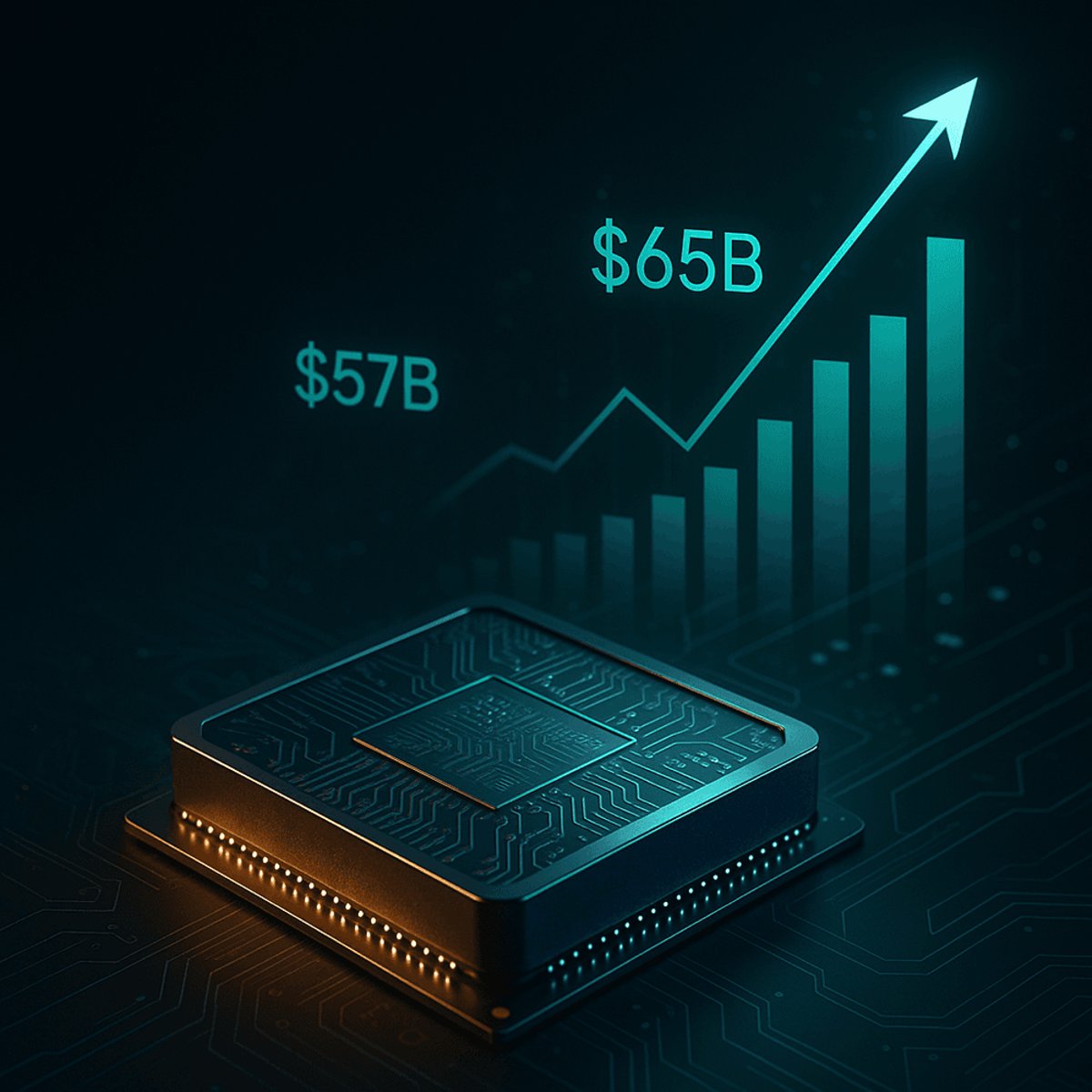
Nvidia just demolished Wall Street's expectations with $57 billion in third-quarter revenue and a jaw-dropping $65 billion forecast for Q4. CEO Jensen Huang called Blackwell chip sales "off the charts" while dismissing AI bubble concerns, sending the stock up 5% overnight and reigniting faith across the semiconductor sector.
Nvidia just torched every doubt about the AI boom's staying power. The chip giant's third-quarter results, released after markets closed Tuesday, showed revenue hitting $57 billion - crushing analyst estimates and proving that demand for AI infrastructure isn't slowing down, it's accelerating.
CEO Jensen Huang didn't mince words during the earnings call, describing sales of Nvidia's next-generation Blackwell chips as "off the charts". The company's forecast for the current quarter came in at around $65 billion, well above Wall Street's already optimistic projections.
The results sent Nvidia shares surging 5% in after-hours trading, dragging the entire semiconductor sector along for the ride. Advanced Micro Devices and Broadcom both jumped, while power infrastructure plays like Eaton also rallied as investors bet on continued AI buildout demand.
What's particularly striking is how Huang handled persistent questions about an AI bubble. Instead of the usual corporate deflection, he told analysts the company sees "something very different" from the dot-com era speculation. That confidence matters because Nvidia sits at the center of the AI ecosystem, counting Amazon, Microsoft, Google, and Oracle as major customers alongside virtually every AI startup worth watching.
But there's an interesting wrinkle buried in the earnings details. Despite announcing a massive $100 billion investment partnership with OpenAI just two months ago, Nvidia disclosed there's "no assurance" of a final agreement with the ChatGPT maker. That's either refreshing honesty about deal complexity or a signal that even the biggest AI partnerships aren't guaranteed.
The timing couldn't be better for Nvidia. While tech stocks have been volatile amid concerns about AI return on investment, these results show actual revenue flowing from the AI revolution, not just promises. The Blackwell architecture, in particular, represents a significant leap in AI training capabilities, and Huang's "off the charts" description suggests supply is barely keeping up with demand.
For the broader market, Nvidia's performance validates the massive capital expenditures that Amazon, Microsoft, and Google have been pouring into AI infrastructure. When your customers are spending billions on data centers and you can't make chips fast enough, that's not bubble territory - that's a fundamental shift in how computing gets done.
The ripple effects are already showing. Futures markets opened higher Wednesday morning, with semiconductor ETFs leading the charge. Power grid infrastructure stocks are also climbing as investors realize that all this AI computing needs massive amounts of electricity.
Nvidia's blowout quarter doesn't just validate the AI investment thesis - it proves we're still in the early innings of a massive technology shift. With Blackwell demand exceeding all expectations and major tech giants continuing their AI spending spree, the semiconductor giant has effectively silenced bubble concerns while positioning itself as the essential infrastructure provider for the next computing era. The real question now isn't whether AI demand will continue, but whether Nvidia can scale production fast enough to meet it.