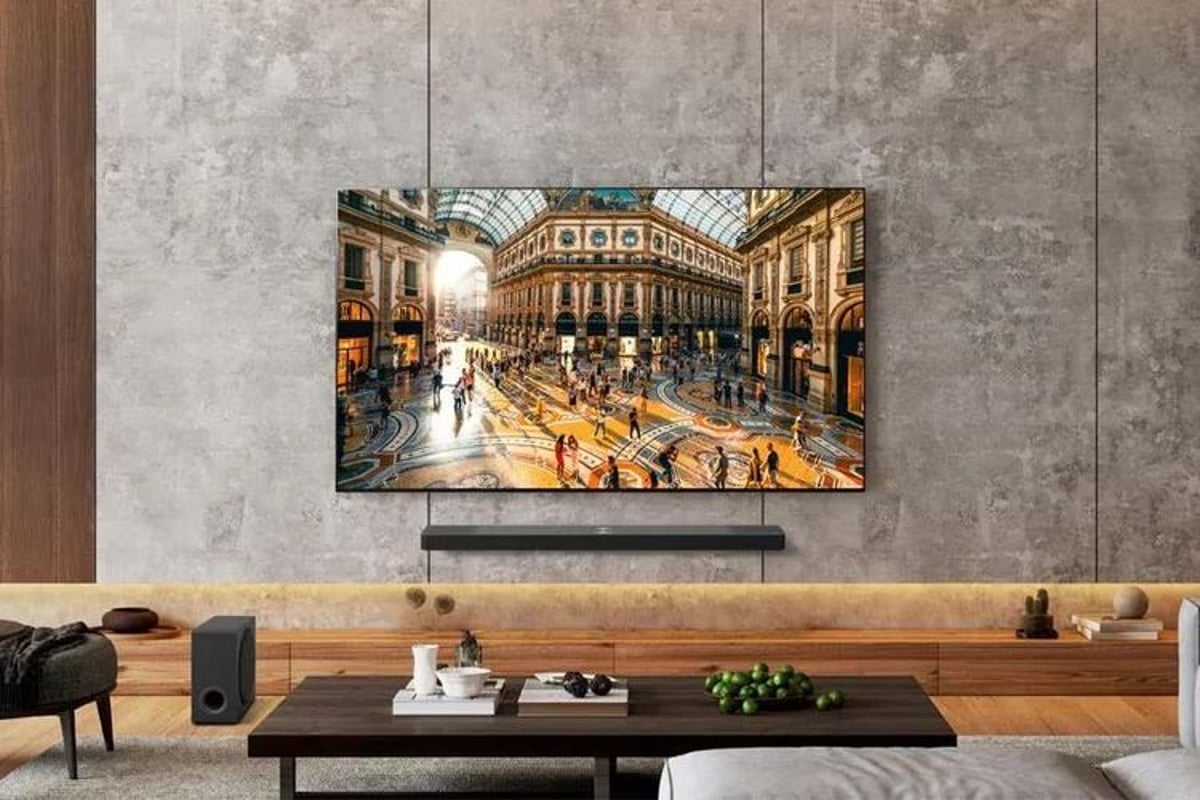
The display technology landscape just hit a major inflection point. LG's B5 OLED TV dropping to $896 on Cyber Monday marks the first time premium OLED technology has broken the psychological $900 barrier for a 55-inch model. This isn't just another Black Friday deal - it's evidence that manufacturing scale and competition are finally democratizing what was once cutting-edge display tech reserved for early adopters and enthusiasts.
Display technology just crossed a threshold that industry watchers have been predicting for years. LG's decision to price its B5 OLED at $896 during Cyber Monday isn't just aggressive holiday marketing - it's a signal that OLED manufacturing has reached the scale needed for mass market adoption.
The pricing pressure comes from multiple directions. Samsung's QD-OLED technology in models like the S95F has forced traditional WOLED manufacturers like LG to compete more aggressively on price. Meanwhile, Chinese manufacturers like TCL and Hisense are pushing their own OLED variants at even lower price points, creating a race to the bottom that benefits consumers.
What's particularly interesting about the B5's positioning is how it maintains most premium features while cutting costs. The TV delivers over 800 nits in HDR according to RTINGS testing - not flagship brightness levels but sufficient for most viewing environments. More critically for the gaming market, it includes four HDMI 2.1 inputs and native 120Hz refresh rates with VRR support.
This gaming focus reveals another market dynamic at play. The console gaming boom during the pandemic created massive demand for high-refresh displays. Sony and Microsoft both built their latest consoles around 4K/120Hz capabilities, essentially mandating that TV manufacturers include these features to capture gaming dollars.
The B5's sub-$900 pricing also puts pressure on LCD and Mini-LED competitors. Traditional LED-backlit TVs from brands like TCL and Roku typically sell in the $400-600 range for 55-inch models, but they can't match OLED's perfect blacks and pixel-level brightness control. As OLED prices continue dropping, the value proposition for LCD technology becomes increasingly questionable.
Manufacturing improvements are driving these cost reductions. LG Display has been optimizing its WOLED production processes for years, improving yields and reducing waste. The company's new Paju plant in South Korea specifically targets mid-range OLED production, focusing on efficiency over cutting-edge features.
Competitive dynamics in the streaming market also play a role. As Netflix, Amazon Prime, and Apple TV+ invest billions in 4K HDR content, consumers need displays capable of showing off that quality. OLED's superior contrast makes HDR content look dramatically better than on traditional LCD panels.
The broader implications extend beyond consumer electronics. As OLED manufacturing scales up for TVs, it creates economies of scale that benefit other applications. Automotive displays, gaming monitors, and even smartphones benefit from the improved production efficiency and reduced costs.
Looking at historical patterns, this pricing trajectory mirrors what happened with LCD technology in the mid-2000s. Premium features that once cost thousands gradually became standard as manufacturing matured and competition intensified. OLED appears to be following the same path, just faster.
For tech companies, this trend creates both opportunities and challenges. Streaming services can justify higher content production budgets knowing consumers have displays capable of showcasing that quality. Gaming companies can develop more visually demanding titles. But hardware manufacturers face margin pressure as premium features become commoditized.
The B5's sub-$900 pricing represents more than just a good deal - it's evidence that display technology is maturing faster than traditional semiconductor curves. As OLED becomes mainstream, we'll likely see accelerated adoption of even newer technologies like MicroLED and QD-OLED. The real winners are consumers who get access to premium display quality that would have cost thousands just a few years ago, and content creators who can finally count on their audiences having capable displays.