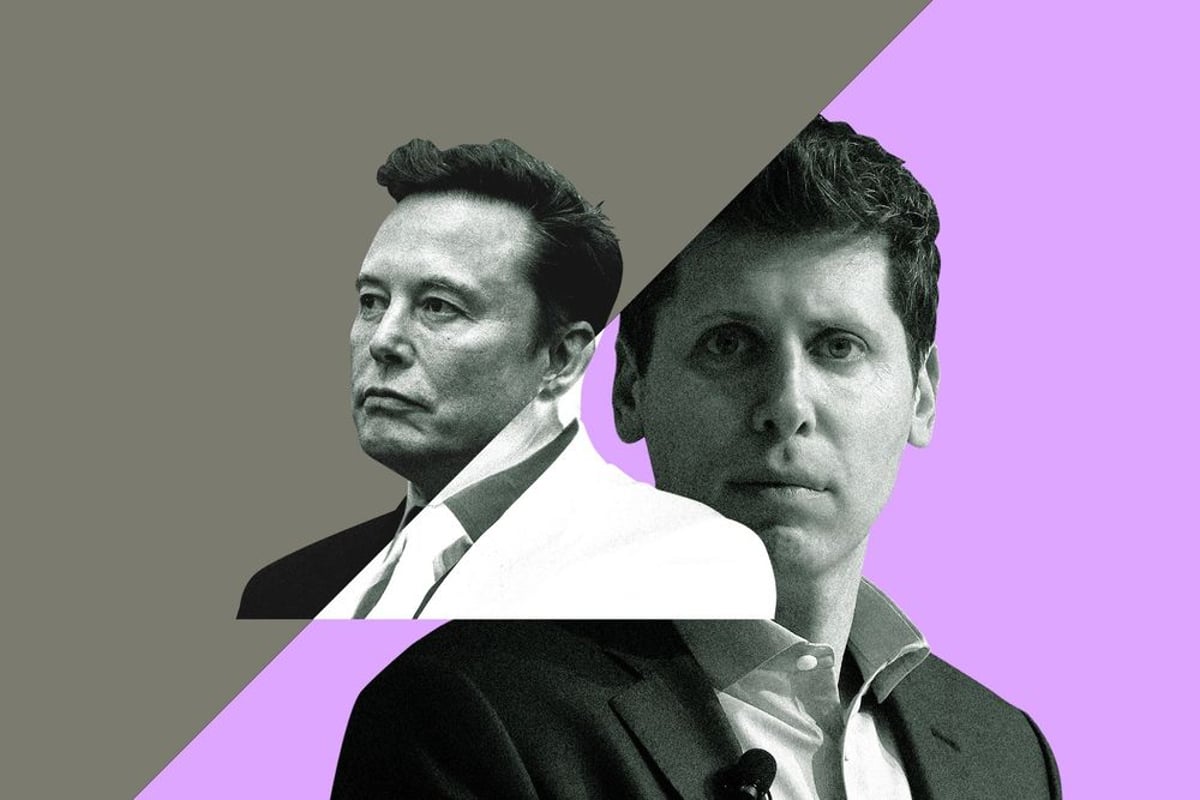
OpenAI just scored a major legal victory against Elon Musk's xAI, with a federal judge dismissing allegations of trade secret theft and employee poaching. US District Judge Rita F. Lin granted OpenAI's motion to dismiss Tuesday, ruling that xAI failed to show any actual misconduct beyond eight employees leaving for OpenAI around the same time. The decision, while allowing xAI to refile with modified claims, marks another chapter in the increasingly bitter rivalry between Sam Altman's AI giant and Musk's competing venture.
OpenAI just notched a decisive courtroom win against Elon Musk's xAI, with a federal judge tossing out allegations that the ChatGPT maker orchestrated a systematic campaign to poach talent and steal trade secrets. The decision, handed down Tuesday by US District Judge Rita F. Lin, exposes the challenge facing companies trying to prove employee movement constitutes corporate theft in Silicon Valley's notoriously fluid talent market.
The court ruling pulls no punches about xAI's failure to substantiate its claims. "xAI does not point to any misconduct by OpenAI," Judge Lin wrote in her decision. "Instead, it points to eight former xAI employees who left for OpenAI at around the same time," but critically, xAI provided no indication that OpenAI directed their actions while they were still employed at Musk's company. That timing distinction proved fatal to xAI's case.
The lawsuit centered on accusations that OpenAI engaged in a coordinated effort to lure away key engineering talent from xAI, which Musk launched in 2023 as a direct competitor to OpenAI, the company he co-founded but later left amid strategic disagreements. xAI specifically alleged that two former employees "stole its source code" on their way out the door, according to The Verge's reporting. But the judge found those allegations unsupported by concrete evidence of OpenAI's involvement.
The dismissal comes with an important caveat - it's "with leave to amend," meaning xAI gets another shot to refile with modified claims that address the court's concerns. That's a fairly standard legal maneuver, giving xAI's attorneys a chance to beef up their evidence and sharpen their arguments about what exactly OpenAI allegedly did wrong. Whether Musk's legal team can produce the smoking gun the judge wants to see remains an open question.
This legal skirmish reflects the broader war for AI talent that's been raging across Silicon Valley. Companies like OpenAI, Google, Meta, and Microsoft have been aggressively competing for the limited pool of researchers and engineers with cutting-edge machine learning expertise. When eight employees all jump ship around the same time, it naturally raises eyebrows, but proving improper recruiting versus people simply following better opportunities is notoriously difficult.
The battle between OpenAI and Musk has grown increasingly bitter since he launched xAI with the stated goal of building a "maximum truth-seeking AI" that would compete directly with ChatGPT. Musk has been publicly critical of OpenAI's direction since his departure, particularly its shift from a nonprofit research lab to a capped-profit company backed by Microsoft's billions. The former Tesla and SpaceX executive has accused OpenAI of abandoning its original mission of developing AI safely for humanity's benefit.
For OpenAI, the timing of this win couldn't be better. The company is navigating multiple legal challenges while simultaneously trying to maintain its technological edge and justify its reported $157 billion valuation. Legal distractions drain resources and management attention at a moment when the AI race is intensifying. Every courtroom victory helps cement OpenAI's position as the industry leader that others are chasing rather than catching.
The ruling also sets an important precedent about what actually constitutes improper employee solicitation in the AI industry. Judge Lin's decision suggests that companies need to show active wrongdoing - recruiting employees while they're still bound by agreements, stealing specific proprietary information, or coordinating departures - rather than just pointing to the fact that talented people chose to leave. That's a higher bar than some companies might like, but it reflects the reality of an industry where the best engineers have their pick of opportunities.
What happens next depends entirely on whether xAI's legal team can dig up evidence that OpenAI did more than just hire people who wanted to work there. If they can show emails, messages, or documents proving coordinated poaching or theft of specific trade secrets, they might have a case. But if all they've got is eight employees who decided the grass looked greener at OpenAI, this lawsuit is probably headed for permanent dismissal.
OpenAI's courtroom victory over xAI sends a clear message about the burden of proof required in trade secret disputes involving employee mobility. While xAI can refile with stronger evidence, the judge's skepticism about allegations based solely on hiring patterns suggests these claims face an uphill battle. For the broader AI industry, the ruling reinforces that talent moving between companies isn't inherently illegal - companies need to prove actual misconduct, not just the movement itself. As the fight for AI supremacy intensifies, expect more legal battles like this one, but also expect courts to demand concrete evidence before restricting how the industry's most valuable resource - skilled engineers - choose their employers.