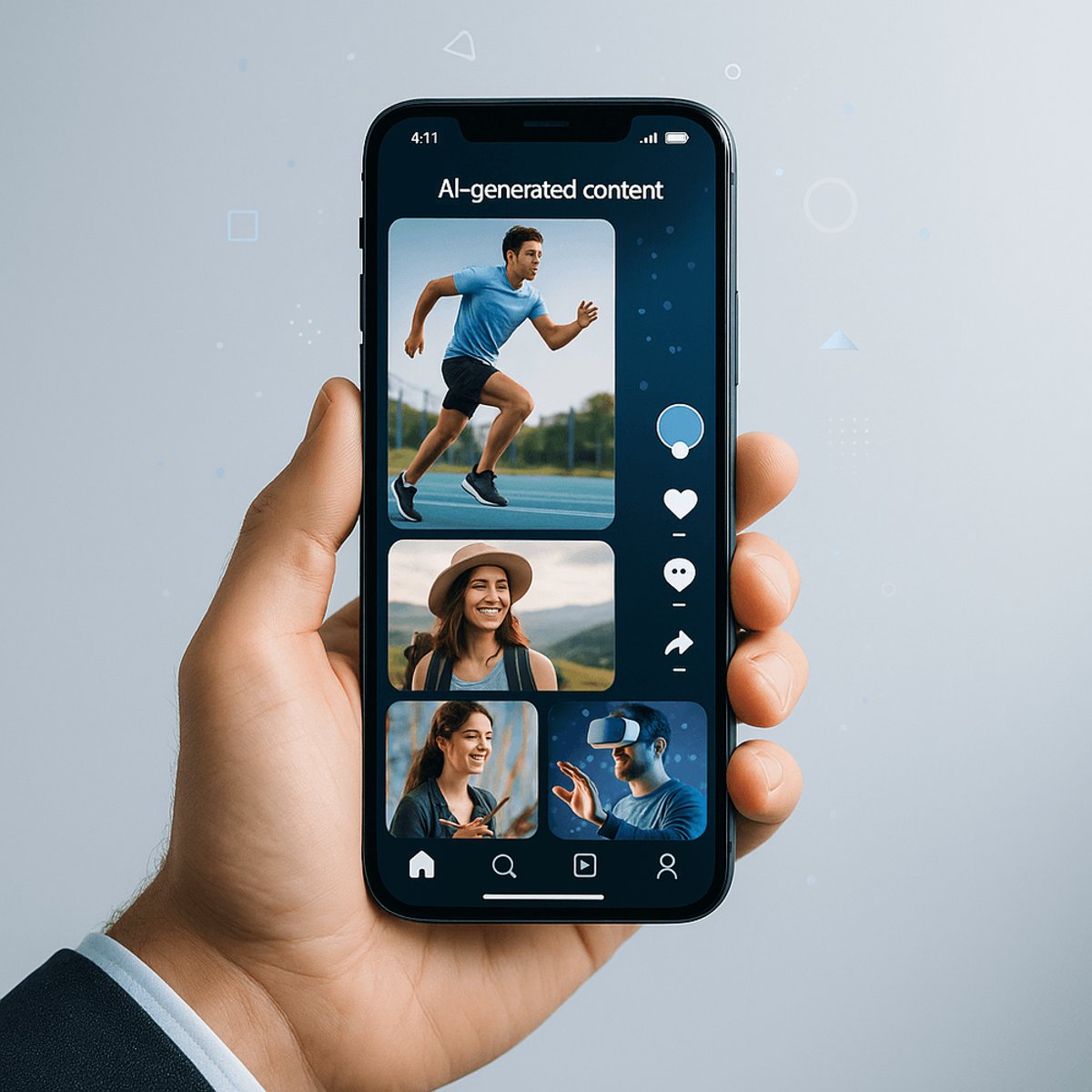
OpenAI just dropped its biggest play yet against social media giants - a TikTok competitor built entirely around AI-generated videos. The company launched Sora 2 alongside a dedicated social app that lets users create videos of themselves and friends, then share them in an algorithmic feed that feels remarkably familiar to anyone who's scrolled TikTok lately.
OpenAI is making its boldest move yet into social media territory. The company announced Tuesday it's launching both Sora 2, a next-generation video AI model, and a companion social app that puts AI-generated content at the center of a TikTok-style feed.
The timing couldn't be more strategic. While Meta fumbled last week with its lackluster "Vibes" AI video feed - which users quickly dismissed as mindless content - OpenAI is betting big that personalized AI videos will crack the social media code where others have failed.
Sora 2 represents a major leap forward in AI video generation. "Prior video models are overoptimistic - they will morph objects and deform reality to successfully execute upon a text prompt," OpenAI wrote in their announcement. "For example, if a basketball player misses a shot, the ball may spontaneously teleport to the hoop. In Sora 2, if a basketball player misses a shot, it will rebound off the backboard."
The company's demo videos showcase this improved physics understanding with beach volleyball games, skateboard tricks, and diving board jumps that look genuinely realistic - a far cry from the uncanny valley content that's plagued earlier AI video tools.
But the real innovation lies in the social app's "cameos" feature. Users upload a one-time video and audio recording to verify their identity and appearance, then can drop themselves into any AI-generated scene. Even more intriguingly, they can share these "cameos" with friends, giving others permission to include their likeness in generated videos.
"We think a social app built around this 'cameos' feature is the best way to experience the magic of Sora 2," the company explained. It's a clever hook that could differentiate Sora from existing platforms - imagine creating a video of you and your college friends cliff diving in Hawaii without anyone actually traveling there.
The Sora iOS app launches today in the US and Canada, with plans for rapid international expansion. While the social platform remains invite-only, ChatGPT Pro subscribers get immediate access to the underlying Sora 2 model. OpenAI's keeping the app free initially "so people can freely explore its capabilities," with plans to charge only for extra video generation during peak demand periods.
The algorithmic feed will feel familiar to anyone who's used TikTok or Instagram Reels. OpenAI plans to personalize recommendations based on user activity, location data from IP addresses, post engagement history, and even ChatGPT conversation data - though users can opt out of that last bit. The company's also building in parental controls, letting parents manage infinite scroll limits and direct messaging permissions.
But OpenAI's entering treacherous waters. The company has already struggled with safety issues in ChatGPT, and social media amplifies these challenges exponentially. The cameos feature, while innovative, opens obvious avenues for abuse. Even if someone trusts a friend with their AI likeness, that person could generate deceptive or harmful content.
Non-consensual AI-generated videos remain a persistent problem across the industry, with few laws explicitly governing platform responsibility. While OpenAI says users can revoke access to their likeness anytime, the damage from malicious content often happens faster than moderation can catch it.
The launch puts OpenAI in direct competition with established social giants at a time when AI-generated content is becoming mainstream. TikTok and Meta have been experimenting with AI tools, but neither has built an entire platform around machine-generated videos.
This move also signals OpenAI's evolution from a pure AI research company to a consumer platform business. With ChatGPT's massive user base as a foundation, the company's betting it can bootstrap a social network by offering something genuinely new - personalized AI content that goes beyond simple text generation.
The success of Sora's social platform will likely depend on whether users embrace AI-generated content as authentic social expression or dismiss it as artificial. Early adoption among younger users, who've already normalized AI tools in their creative workflows, could determine whether this becomes the next big social platform or another ambitious experiment that fails to find its audience.
OpenAI's Sora represents the first serious attempt to build a social platform entirely around AI-generated content. While the technology is impressive and the cameos feature offers genuine innovation, the company faces massive challenges around content moderation and user safety that have plagued every major social platform. Success will depend on whether users embrace AI videos as authentic social expression and whether OpenAI can solve safety problems that the industry has struggled with for years. If they pull it off, this could reshape how we think about both social media and AI-generated content.